




By Bijaya Kumar Pradhan
PURI/KONARK : Hello everyone and Namaskar to all from the bottom of my heart.Come with me on a secret journey—a journey that explores why Odisha is truly called “India’s Best Kept Secret.”When we think about Odisha, what comes to mind? Beautiful beaches, dense forests, majestic hills, rivers, lakes, ancient temples, rich culture, and vibrant traditions. All these together have earned Odisha the famous tourism tagline—“Best Kept Secret.”But let me ask you something—
Is that all? Or is there something even deeper, something hidden in history?Today, we explore a powerful and thought-provoking question.If someone wants to become a monk and meditate for truth and enlightenment, where would they go?Delhi? Mumbai?Or the Himalayas?The obvious answer is the Himalayas.Now here comes the mystery.If Gautama Buddha was born in Lumbini, which lies close to the Himalayas,then why didn’t he go there for meditation? Why did he travel all the way to Rajagriha instead? It was a lack of geographical knowledge? Of course not.
This question opens the door to a deeper debate. Some scholars, like Santanu Kumar Acharya in his book “Jeje Malapare”, suggest an alternative view—that Buddha may have been born in Odisha.
According to this interpretation, Buddha crossed the ancient Anuma River—believed by some to be the Mahanadi River—and moved eastward before reaching Rajagriha, where he met King Bimbisara. Ancient texts mention terms like “Tosala” and “Hemavanta.”Some researchers connect Tosala with ancient regions near Bhubaneswar, while Hemavanta is interpreted as “golden hills,” possibly referring to Khandagiri and Udayagiri.There is also mention of places like “Lumbe,” which some connect symbolically to Lumbini. Another important claim suggests that present-day Kapilaprasad could be the ancient Kapilavastu—the childhood home of Buddha.Researchers like Chakradhar Mohapatra and Ajit Kumar Tripathy have supported this theory and called for further research and excavation. At the same time, it is important to acknowledge that the global academic consensus still recognizes Lumbini, Nepal, as Buddha’s birthplace. But Odisha’s connection to Buddhism is undeniable.
Major Buddhist sites such as Ratnagiri,Lalitgiri,Udayagiri, and Langudi prove that this land was once a major centre of Buddhist learning and culture .Now imagine this journey—A young prince, Siddhartha Gautama, leaves his home in search of truth. He travels through forests, crosses rivers, meets sages and teachers—but finds no answers. He undergoes extreme austerity, suffers hunger, and reaches the edge of death .Then comes a turning point. A woman named Sujata offers him a bowl of kheer.
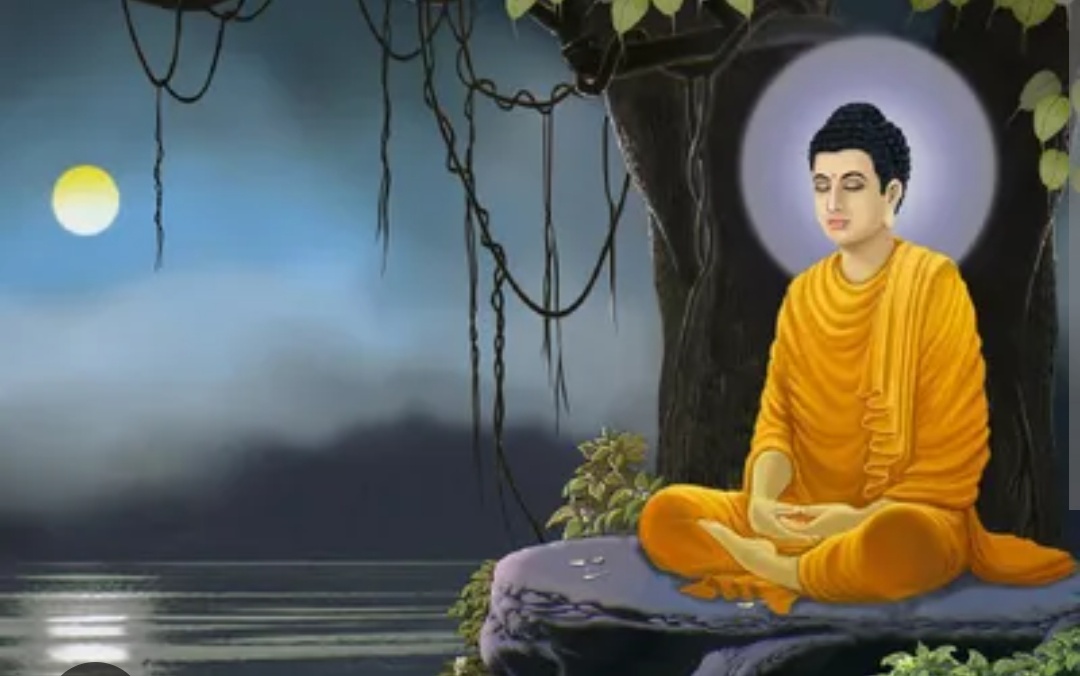
That simple act leads to a powerful realization—neither extreme luxury nor extreme suffering leads to truth. This becomes the foundation of the Middle Path. With renewed strength, he meditates under the Bodhi Tree at Bodh Gaya—and attains enlightenment. He becomes the Buddha. From there, with support from kings like Bimbisara and Ajatashatru, he spreads his teachings across society. Now let’s reflect again. Odisha celebrates Akshaya Tritiya with rituals like ploughing and seed sowing—similar to Vapramangala, a festival associated with Buddha’s early life.
In connection to Sidharth Goutam life Many names connected to him —like Dandapani, Siddhartha, Anuruddha, Mahanama,Amita,Pamita —are still culturally familiar in Odisha .Even after his Mahaparinirvana at Kushinagar,connections through relics, traditions, and cultural memory continue to link Odisha with Buddhist heritage. So what is the real “Best Kept Secret” of Odisha?Not just its natural beauty. Not just its temples and culture. But perhaps—a deeper, hidden historical connection to one of the greatest spiritual figures in human history. A mystery. A debate. A story still waiting to be fully revealed. If you have your own thoughts, questions, or interpretations—come, join this journey. Because sometimes, the greatest secrets are not lost…they are simply waiting to be rediscovered.
At the time of the birth of Gautama Buddha, his father Suddhodana was in a transitional phase of becoming a ruler of the Sakya clan. This was not yet a fully developed monarchy. It was a time when political systems were evolving.In that era, individuals who possessed wealth—such as land, cattle, forests, and military strength—were often regarded as leaders or rajas. However, this recognition was not complete without the approval and blessings of Brahmins and Purohits. Their endorsement played a crucial role in legitimizing kingship.Now, if we look towards Odisha during that same period, some interpretations suggest a different structure.
According to the budhist text and certain scholars it was known during Budhas period odisha functioned as a Gana or non-monarchic society—where centralized kingship was either weak or absent. In such a system, people were more engaged in their daily livelihoods, agriculture, and trade, rather than courtly or royal life.This context helps explain why Suddhodana and his family are often associated with agricultural practices. Festivals like Akshaya Tritiya—which marks the beginning of farming activities—were celebrated with great importance, reflecting a society deeply connected with land and cultivation.
Now let us consider the geographical argument.
Traditionally, the distance between Kapilavastu and Devadaha is said to be around 20–30 km, which could be covered within a day. If that were the case, then a question arises:Why would Mahamaya undertake a journey and give birth in the forest at Lumbini instead of reaching her destination?
One interpretation suggests that the journey was much longer than commonly believed. If Kapilavastu were located much farther away—possibly in regions connected to present-day Odisha—then the journey to her parental home would have taken several days.During such a long journey, it is natural that Maya Devi experienced labor pain and gave birth midway, in a forested resting place—Lumbini.
Another important point comes from Buddhist travel accounts.
Some texts mention that the distance from Kapilavastu to Rajagriha was around 400 miles. Interestingly, this distance aligns more closely with a route extending from eastern regions like Odisha to Rajagriha, rather than from the traditionally identified Kapilavastu in Nepal.It is also believed that Buddha may have taken a natural land route through the forests and plateau regions of present-day Chota Nagpur Plateau to reach Rajagriha on foot.
Beyond distance, the environment described in Buddha’s early life also offers clues.Descriptions of dense forests, fertile agricultural land, hills, and local traditions resemble the geographical and cultural landscape around Bhubaneswar and surrounding regions.
There are also interpretations related to architecture and settlement.
Some readings of Buddhist texts suggest that Suddhodana maintained multiple residences. In this theory, apart from a primary center like Kapilprasad, additional settlements may have existed in areas corresponding to present-day Old Town and Ashok Nagar in Bhubaneswar.
Interestingly, during the development of modern Bhubaneswar—especially around the Secretariat area—excavations revealed stone boundary structures. Some interpret these remains as indications of large, organized settlements in ancient times, possibly including palace complexes with gardens and protected enclosures.
Now let us move to a deeply emotional and cultural connection.
After the Mahaparinirvana of Buddha, traditions mention that his body was wrapped in a fine cloth before cremation. According to regional belief, a silk Pata cloth from Maniabandha—a place famous for its weaving tradition—was offered for this purpose.This belief, whether symbolic or historical, reflects a strong emotional and cultural bond between the people of Odisha and Buddha.Even today, the weavers of Maniabandha preserve ancient traditions and values that resonate with the teachings of Buddha—simplicity, discipline, and devotion to ethical living.
Apart from the most powerful line been found from the budhist text to justify that Budha belongs to Odisha is that, when sidharth stated education at the age of eight sudhadana sent for Sabbamitta of distinguished descent and of high lineage in the land of “Uddikka” .(Modern day odisha ). The name itself show that there is no other land in the Nepal at that point whose name is “Uddika” .
In conclusion,
These interpretations and narratives present an alternative way of looking at history. They attempt to connect geography, culture, distance, and tradition to re-examine the life journey of Buddha.However, it is important to acknowledge that the widely accepted historical and archaeological consensus continues to identify Lumbini in Nepal as the birthplace of Buddha.What these perspectives offer is not a final answer, but an invitation—an invitation to explore, question, and understand history more deeply.
( The Writter Bijaya Kumar Pradhan hails from Konark,Puri,Odisha, A social worker, Researcher, Columnist and Author views expressed are personal, can be reached at E-Mail-bijayapradhan271@gmail.com, You tube-@PBR-CLIPS, Mob-9348702070).