








By Our Correspondent
BHUBANESWAR: Odisha LoP Naveen Patnaik tweets, “With grave concern, I bring to the attention of Chief Minister Mohan Charan Majhi about the recent passage of the Mines and Minerals (Development and Regulation) Amendment Bill, 2026 by Parliament. This legislation poses a serious threat to Odisha’s fiscal autonomy and constitutional rights over its natural resources.
The provisions introduced in this Bill will disproportionately impact mineral-rich states like Odisha, leading to massive revenue losses and stifling our state’s developmental agenda. The Amendment raises critical concerns through the provisions: Encroachment of State Land and Fiscal Jurisdiction, Restriction on State Revenue Powers and Delegation of Power to the Centre.
Odisha’s natural wealth belongs to her people, and the revenue generated from mining operations is crucial for financing healthcare, education, social welfare schemes, and infrastructure development across the state. By stripping the state of its power to impose taxes and cesses on its own mineral-bearing lands, the Union Government has dealt a heavy blow to federalism and state revenue autonomy.
Given the gravity of this situation and its long-term adverse implications for Odisha’s economy, I strongly urge Shri Majhi to convene an All-Party Meeting immediately to build a unified consensus on safeguarding Odisha’s federal rights and mineral revenues. Urge you to summon a Special Session of the Odisha Legislative Assembly to formally pass a unanimous Resolution opposing this Amendment Act and protesting the Union Government’s usurpation of state powers.
Fiscal autonomy is a constitutional principle built into our federal system. This Bill directly undermines a critical pillar of the Centre-State relationship, taking India’s federal structure in a distinctly retrogressive direction and striking at the foundation of cooperative federalism.
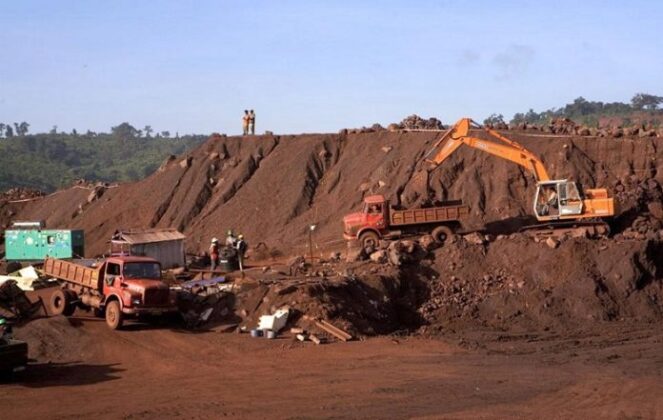
This issue transcends political affiliations, as it directly impacts the financial stability and future growth of Odisha. If the Central Government takes away the State’s authority over mineral-bearing lands and its right to levy cesses, only pollution, displacement and burden of mining will remain with Odisha, while the benefits are taken away from its people. I hope you will act swiftly in the paramount interest of the people of Odisha.”
The main exception under new Section 9D is that states may still impose tax, cess or other levy on mineral rights or mineral-bearing lands if it follows conditions or restrictions prescribed by the Central Government (rules still to be framed under amended Section 13).
It applies only to major minerals; minor minerals stay fully under state control. Already recovered amounts are not refundable. Royalty, auction premiums and DMF remain unaffected.
The arrears stem from the Supreme Court’s August 14, 2024 order. After its July 2024 ruling upholding states’ power to tax mineral rights and mineral-bearing lands, the Court allowed recovery of such taxes only from April 1, 2005 (the financial year after the 2004 Kesoram judgment). Earlier conflicting rulings had left many state levies unpaid; the 2024 decision made those amounts recoverable, without interest or penalty, in 12-year instalments from 2026.
Wasn’t stopped. The 2004 Kesoram judgment (State of West Bengal v Kesoram Industries) held that the 1989 India Cement statement “royalty is a tax” was a typographical error—royalty is not a tax. States can therefore tax mineral rights (Entry 50 List II) and mineral-bearing lands (Entry 49). This conflicted with the larger India Cement bench, creating uncertainty until the 2024 ruling followed Kesoram. Recovery was limited to from 1 April 2005 (the FY after Kesoram) to balance equities, as states had begun acting on that judgment.
Before 2005, under the 1989 India Cement ruling, royalty counted as a tax. Odisha could collect only central royalties, dead rent and surface rent under MMDR. Extra state levies on mineral rights or land were barred.
After the 2004 Kesoram judgment clarified royalty is not a tax, Odisha enacted the ORISED Act (effective Feb 2005) taxing mineral-bearing land up to 20% of its annual value. The Orissa HC struck it down in Dec 2005; the state’s appeal stayed pending.
The 2024 SC ruling (affirming Kesoram) set the recovery start at 1 April 2005—the FY after Kesoram—so states that acted on that judgment could claim dues while protecting companies that had relied on India Cement earlier. No interest or penalty applies; payment is staggered over 12 years from 2026.
The ~₹1 lakh crore Odisha arrear is the estimated uncollected ORISED tax on mineral production value from 2005–2024. It remained unpaid solely because of the unresolved legal conflict until the 2024 constitution-bench decision.
Under the ORISED Act 2004, the tax was levied at a rate not exceeding 20% of the annual value of the mineral-bearing land.
Annual value means one-half the value of minerals produced from the land in the two preceding years (at sale prices excluding royalty, taxes and similar charges). It is neither based on profits nor on the land’s static capital value.
MP has an identical structure and 20% cap on annual value (same definition). Jharkhand uses per-tonne cess (recently ~₹250-450 coal, ₹400-600 iron ore). Chhattisgarh levies low fixed rates like ₹5-11/t or % of royalty.
China: resource tax 1-9% (iron) plus mining rights yields ~1-4%. USA: state severance taxes typically 1-5% of net/gross for hardrock; no federal royalty on most public-domain hardrock. India’s combined take (royalty + cess + DMF) is higher.
China: Resource tax (royalty-like, ad valorem on sales) is 1-9% for iron (provinces set exact rate) and 2-10% for coal. Extra mining-rights yield: annual 1.8% of sales for iron (dressing products) + 2.4% for coal (raw), plus upfront competitive bid and small area fees.
USA: No federal royalty on hardrock public-domain lands (only fixed claim fees). State severance taxes (extra production tax on all lands) typically 1-5% of net/gross: AZ 2.5% of half net proceeds; NV 2-5% net proceeds (sliding); CO 2.25% gross above $19M. Royalties apply only on state lands.