






By Our Correspondent
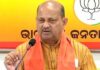
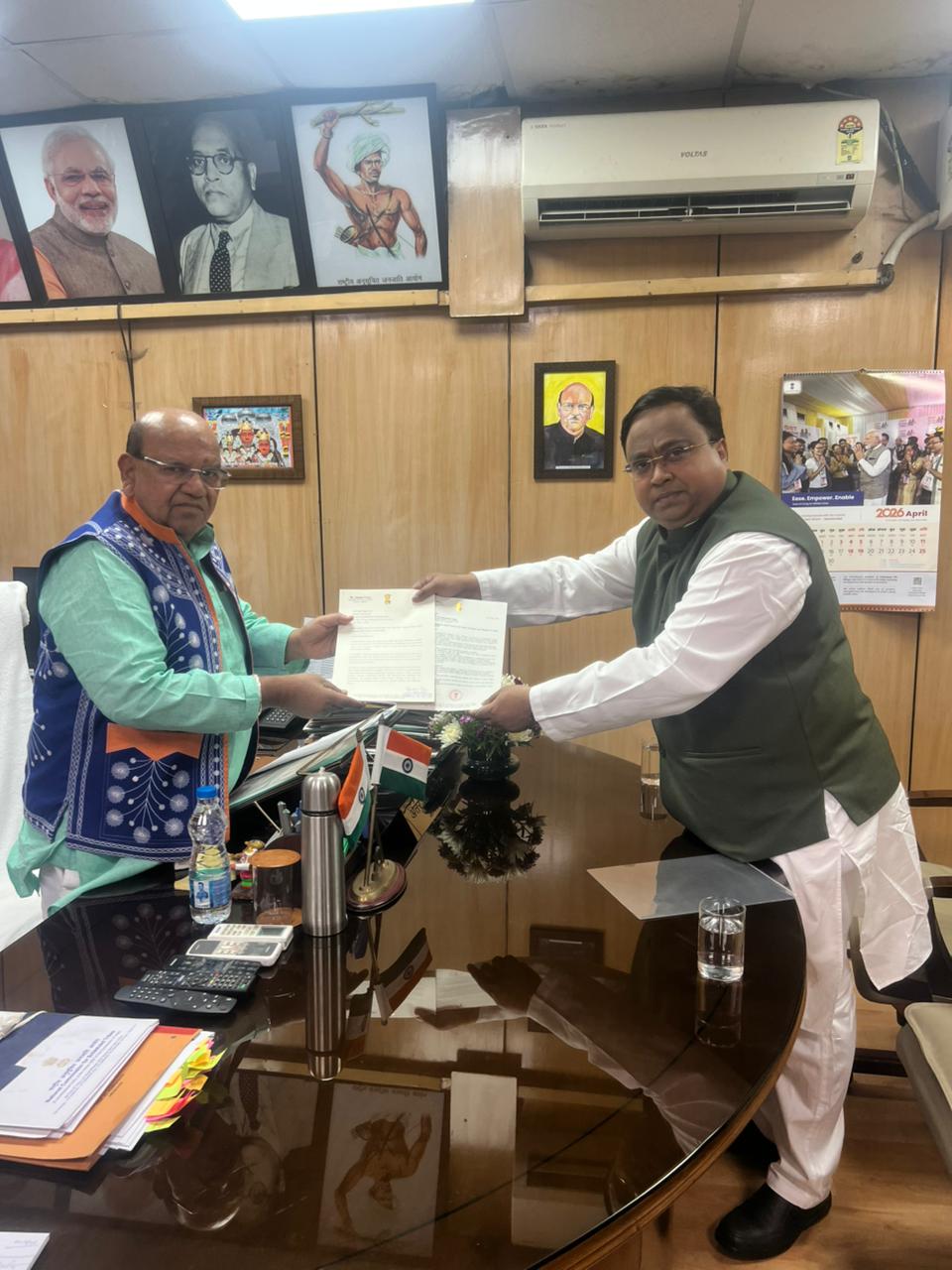
BHUBANESWAR: Sijimali case linking to Vedanta Group bauxite mining instituted at National Commission of Scheduled Tribes, New Delhi on Monday by BJD MP Dr. Sasmit Patra before Chairperson, NCST Antar Singh Arya,
Chairperson. National Commission of Scheduled Tribes, accepted petition of BJD MP Dr. Sasmit Patra this morning at his office in New Delhi on the alleged Police atrocities and excesses against the tribal brothers and sisters in Sijimali, Odisha and alleged violations of PESA and FRA relating to the construction of road and bauxite project.
The Commission assured action including instituting of case, issuance of notice and seeking reply. Pursuant to it, a team may visit Sijimali from NCST. Dr. Sasmit Patra would be also served intimation as the Petititoner of this Case before the National Commission of Scheduled Tribes and Hon’ble Chairperson would personally hear this matter.
Key Points Raised in Dr. Patra’s Letter: The letter (invoking Article 338A of the Indian Constitution, which empowers the NCST as a constitutional guardian for Scheduled Tribes) highlights serious concerns about constitutional and statutory compliance. It frames the issues as going beyond “administrative lapses” to core protections for tribal communities.
Specific allegations and questions include:Prima facie non-compliance with the Forest Rights Act (FRA), 2006: Whether individual and community forest rights were properly recognized and vested before project activities began.
Violation of safeguards under the Panchayats (Extension to Scheduled Areas) Act (PESA), 1996: Concerns over whether free, prior, and informed consent of Gram Sabhas was obtained lawfully, or if processes were diluted/bypassed.
Possible offences under the SC/ST (Prevention of Atrocities) Act, 1989: Alleged disproportionate or targeted use of force against Scheduled Tribe communities.
Failure to adhere to principles of proportionality and due process in policing, especially in a context involving constitutionally protected tribal groups asserting their rights.
Patra describes the situation as involving confrontations linked to the bauxite mining project and associated infrastructure (e.g., road construction), with reported injuries to tribal persons.
Requests to the NCST:He urges the Commission to act urgently due to the “immediacy and gravity” of the situation, warning that delays could erode trust and escalate matters.
Specific demands:
Immediately institute an independent enquiry and depute a senior-level fact-finding team to Sijimali to assess the ground situation.
Invoke powers under Article 338A(8) to call for records, examine officials, and fix accountability for any violations.
Undertake a focused review of FRA and PESA compliance, particularly the legality and integrity of Gram Sabha processes.
Examine allegations of police excesses, including circumstances of force used and adherence to legal safeguards.
Recommend urgent interim protections, such as restraint on coercive actions and measures to safeguard affected tribal communities from further harm.
Background of the Issue:Sijimali refers to hills in Rayagada (and parts of Kalahandi) districts in southern Odisha, a Fifth Schedule Area with a significant Scheduled Tribe population.
The conflict stems from a proposed bauxite mining project (approximately 1,549 hectares, with substantial forest land) awarded to Vedanta Limited via auction in 2023 for a 50-year lease. The project aims to extract high-grade bauxite (estimated 311 million tonnes) to support aluminum production, linked to Vedanta’s Lanjigarh refinery.
Local tribal communities (supported by groups like Maa Mati Mali Suraksha Manch) have been protesting since around 2023, opposing the project due to fears of:
Displacement and loss of ancestral lands/forests.
Environmental damage (including to streams, biodiversity, and an elephant corridor).
Livelihood threats, as they depend on the hills for sustenance.
Tensions escalated in early April 2026 over the construction of an approach road to the mining site. Clashes between protesters and police (reported around 7 April 2026 near areas like Kantamal/Kashipur) resulted in injuries to both tribals (including women) and police personnel. Reports mention tear gas, allegations of excessive force, arrests, and community claims of coercion in Gram Sabha processes.