









By Our Correspondent
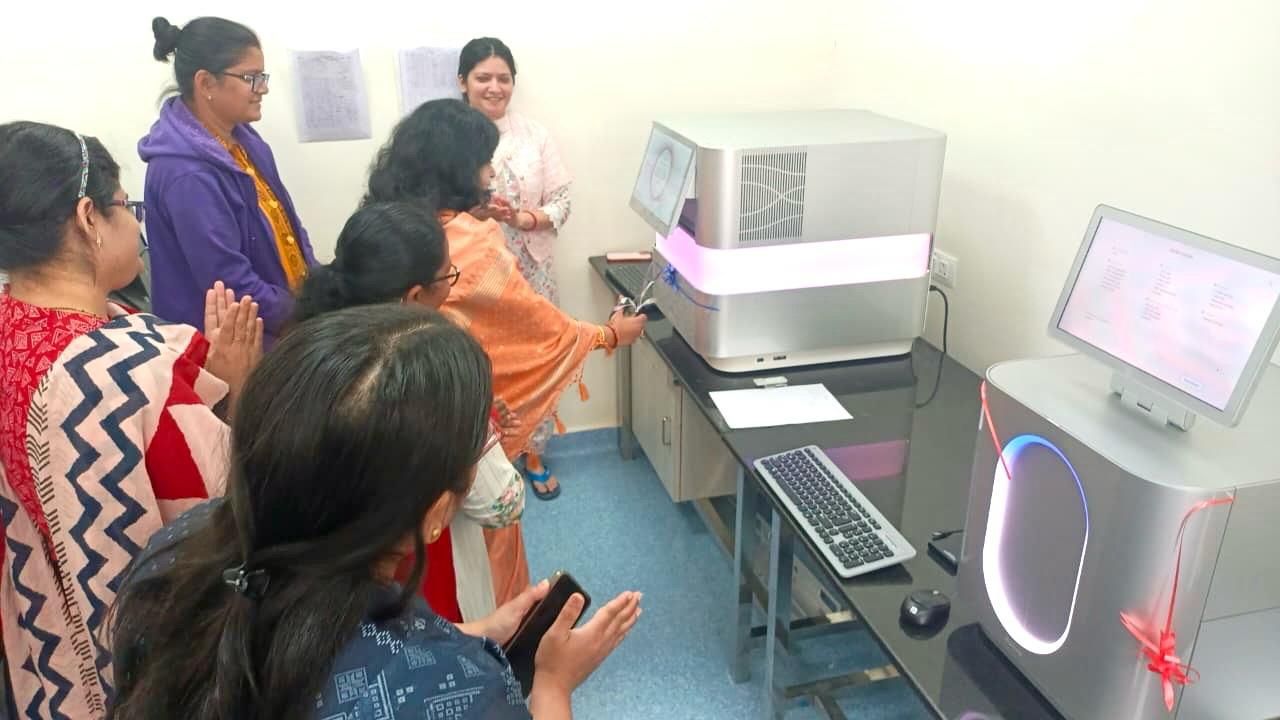
BHUBANESWAR:At a time when genomics is being viewed as the way forward for extending personalized treatment to cancer patients or those with genetic disorders, the Institute of Medical Sciences and SUM Hospital here has emerged as the first hospital in Odisha to have an in-house genomics facility making advanced investigation accessible to patients in their own state.
Equipped with facilities for advanced genomic testing including next generation sequencing (NGS), cytogenetic, fluorescence in situ hybridization (FISH) and other molecular testing, the hospital’s lab supports diagnosis, classification and monitoring of a wide range of cancers, hematological conditions and genetic disorders, Dr. Shivangi Harankhedkar, Head of Department of Molecular Diagnostics and Genomics in the hospital, said.
“Diagnosis for cancer or suspected genetic disorders is no longer dependent only on what can be seen under the microscope as answers are being increasingly sought by decoding the genetic information. We have entered the era of precision medicine,” she said.
Patients in Odisha as also other eastern states presently depend on big cities for advanced genomics testing but the facility is now available at IMS and SUM Hospital, faculty of medicine of the SOA Deemed to be University, Dr. Harankhedkar, trained in hematology at AIIMS New Delhi and in molecular hemato oncology at the most advanced hematopathology and high volume genomics lab at the Advanced Centre for Treatment, Research and Education in Cancer at Tata Memorial Hospital, Mumbai, said.
Presently, IMS and SUM Hospital is the only medical college in Odisha and one of the few in the country to have a functional genomics lab providing the opportunity for education and training of medical students, interns as also post-graduate and super-specialty residents, she said.
“The facilities and expertise of the specialists available in the hospital play a wider role in cancer care. As modern cancer treatment is increasingly guided by the biological and genetic features of a tumour, two patients with cancers arising in the same organ may respond differently to treatment because their tumours carry different molecular alterations,” Dr. Harankhedkar said.
“The genomics lab is supported by sequencing platforms including the Ion GeneStudio S5 Plus, Illumina MiSeq i100 and Illumina NextSeq 2000. Together, these systems allow the facility to undertake smaller targeted assays as well as larger sequencing applications such as whole-exome and transcriptome analysis,” she said adding the supporting infrastructure included nucleic-acid quantification and quality-assessment systems, PCR and real-time PCR instruments, FISH imaging facilities, cytogenetic processing systems and equipment for Sanger sequencing.
The lab performs genomic testing for both blood cancers and solid tumours. In patients with leukemia, lymphoma, myelodysplastic neoplasms and myeloproliferative disorders, molecular findings could help establish the diagnosis, determine the prognosis and identify abnormalities that can be targeted with specific medicines, she said.
Genomic profiling may identify alterations in genes associated with targeted treatment, drug resistance or clinical-trial eligibility. Such testing is relevant in cancers of the lung, breast, ovary, colon, pancreas, brain, thyroid, prostate and other organs, Dr. Harankhedkar said.
The lab undertakes tests to monitor treatment response which has made long-term follow-up more convenient and consistent. It does not view a molecular report as a simple list of mutations. Findings are interpreted in the context of the tumour type, clinical history and available scientific evidence, allowing treating doctors to assess whether a detected alteration is diagnostically, prognostically or therapeutically significant. Regular molecular tumour boards help in management decisions, she said.
As the lab receives samples from patients within Bhubaneswar city and from other parts of Odisha, it reduces the time lost in transporting samples to distant cities. Sample transport and storage conditions are critical aspects in ensuring correct results. The role is particularly relevant in a state where families from remote places may otherwise struggle to access specialized genetic services, Pof. (Dr.) Pusparaj Samantasinghar, Medical Superintendent of the hospital, said.
Beyond patient care, the facility also serves as a center for training and research providing doctors, residents, technologists and researchers the needed exposure to molecular methods, sequencing workflows, quality control, variant interpretation, FISH, cytogenetics and genomic reporting. By bringing PCR, FISH, cytogenetics and next-generation sequencing together under one roof, IMS and SUM Hospital has created a regional ecosystem for genomic medicine in Odisha, he said.