





By Our Correspondent
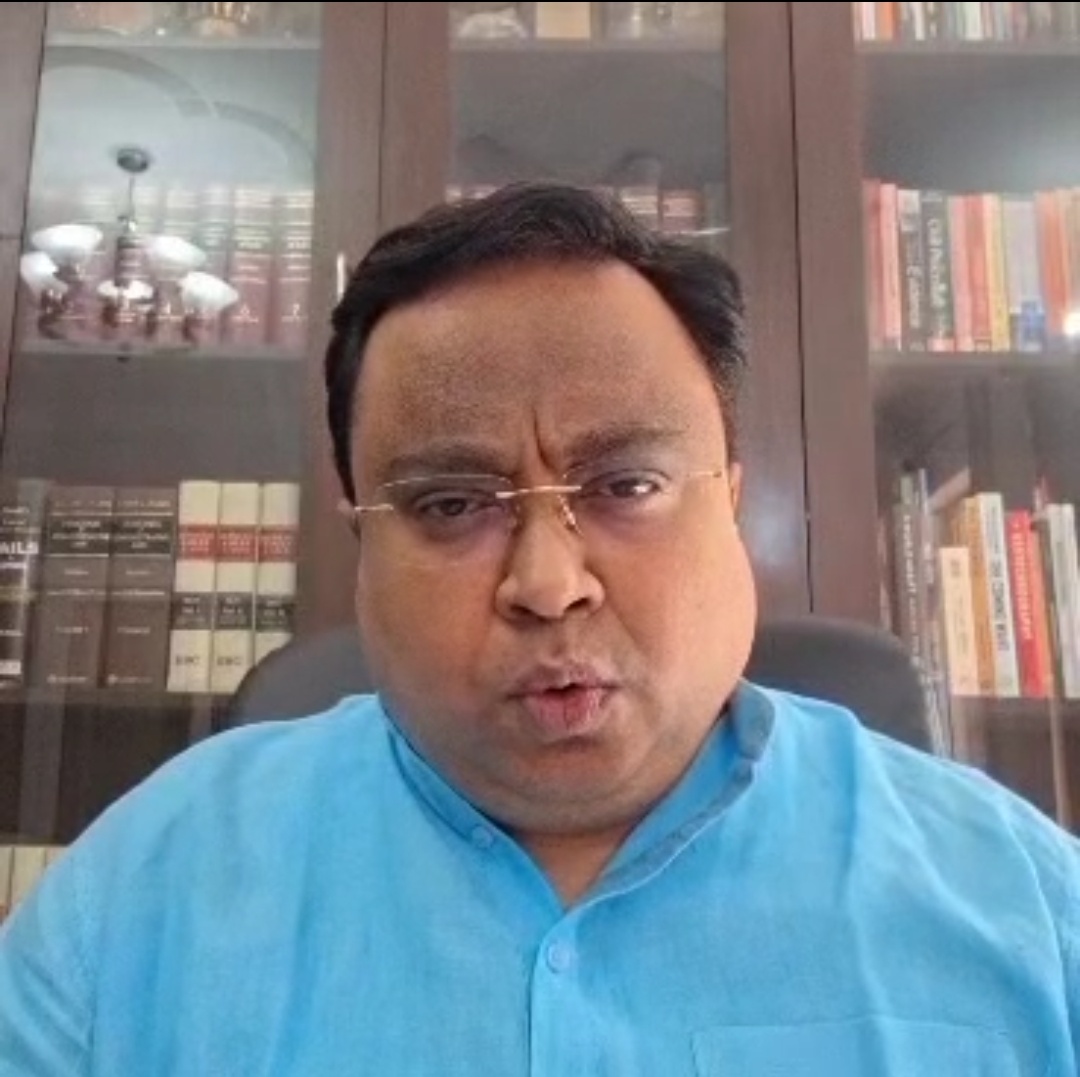
BHUBANESWAR: BJD Rajya Sabha MP Dr. Sasmit Patra has written letters to Union Railway Minister Ashwini Vaishnaw to protect the interests of Odisha being affected due to Waltair Division and the need for a Unified Odisha Railway Zone.
‘I respectfully place on record certain detailed concerns arising from the recent restructuring of the Waltair Division and the consequent reconfiguration of railway jurisdictions. These issues merit careful consideration, as they have significant implications for the administrative coherence, operational continuity, and long-term development of the railway network serving the State of Odisha,” BJD MP said.
‘At a broader level, the restructuring appears to have resulted in a situation where railway lines intrinsically linked to Odisha’s geography, economy, resource flows, and internal connectivity are being segmented and administered in a manner that affects the State’s integrated railway framework and dilutes its functional cohesion. When viewed holistically, the changes associated with the reorganization of the Waltair Division raise important questions regarding how Odisha’s railway interests—and the interests of its people—are being impacted within the evolving zonal structure,” Dr Patra said.
- Representation and Structuring of the KK Line (Koraput–Kirandul Line)
It has been indicated in official communication that the KK Line is part of the RayagadaDivision. However, on closer examination, the operational reality reflects a more complex
arrangement:
The portion of the line falling within Andhra Pradesh is placed under the South Coast Railway. Adverse impact of Waltair Division Restructuring on Odisha’s Railway Network and Need for an Odisha-Centric Railway Zone…
The portion within Odisha is placed under the proposed Rayagada Division. This results in a situation where a historically continuous and operationally unified line is divided across two railway zones along state boundaries.
In this context, the manner in which the KK Line has been represented warrants further clarification, as the present description does not fully capture this bifurcation. Given the
importance of this corridor—particularly in relation to mineral transportation, freight logistics, and regional connectivity within Odisha—the fragmentation of administrative control has direct implications:
Odisha’s mineral-rich hinterland, especially in Koraput and adjoining regions, depends heavily on this line for evacuation of resources.
The division of administrative control introduces complexities in freight prioritization,maintenance planning, and infrastructure augmentation.
Revenue generated from resource movement originating in Odisha is partially accounted for outside Odisha-centric railway administration.
This raises important considerations regarding both operational efficiency and equitable alignment of resource-linked railway administration with the State that generates such freight.
- Administrative Division of the Naupada–Gunupur Railway Line
A similar structural arrangement is observed in the Naupada–Gunupur railway line:
- The segment up to the Odisha border falls under South Coast Railway.
- The segment within Odisha falls under East Coast Railway.
This effectively places a single railway line under two separate administrative jurisdictions.
Such an arrangement raises practical questions regarding:
- Unified operational control,
- Maintenance coordination,
- Service delivery consistency for passengers within Odisha.
Further, this line serves regions that are economically and socially dependent on railway
connectivity.
The division of jurisdiction:
- Weakens integrated planning for regional development,
- Creates administrative discontinuity for a single passenger and freight corridor,
- Results in revenue generated from Odisha-linked usage being split across zones.
When seen in conjunction with other such divisions, this pattern indicates a broader trend of fragmentation of railway assets serving Odisha, affecting both governance and economicalignment.
- Palasa–Ichchapuram Section and Its Implications
The placement of the Palasa–Ichchapuram section under South Coast Railway also merits close and detailed attention. This section, though geographically located at the interface of northern Andhra Pradesh and southern Odisha, is functionally and economically intertwined with Odisha’s railway ecosystem. This stretch includes important stations and operational nodes such as Palasa, Sompeta, Baruva and Ichchapuram, Ichchapuram, in particular, serves as the last station before entry into Odisha on the Howrah–Chennai main line, functioning as a critical gateway for passenger movement and freight flows into southern Odisha. The placement of this entire section under South Coast Railway has multiple implications:
- It results in a critical access corridor to Odisha being administered outside the East
Coast Railway framework, despite its direct bearing on Odisha-bound traffic.
- It introduces an external administrative layer over railway flows intrinsically linked
to Odisha’s districts such as Ganjam and Gajapati. Importantly, this arrangement also has a direct bearing on Odisha’s resources and revenue
alignment:
- Passenger and freight revenue associated with Odisha-bound movement through this
section are accounted for outside Odisha-centric administrative structures.
- Infrastructure planning, station development, and service prioritization for this corridor may not fully reflect Odisha’s requirements.
- The State’s ability to advocate for improvements in a key gateway section becomes structurally limited.
When viewed alongside other changes, this contributes to a pattern wherein railway assets serving Odisha’s economy are being administered outside its primary railway zone, thereby diffusing the State’s operational and economic stake in its own connectivity corridors.
- Linkage Between Khurda Road Division and Proposed Rayagada Division
One of the key structural issues that arises from the present arrangement is the absence of a direct railway linkage between Khurda Road Division (East Coast Railway Headquarters) and the proposed Rayagada Division.
At present, it appears that access between these two divisions may involve traversing through sections under South Coast Railway. This raises important administrative and operational
considerations:
- How will the East Coast Railway Headquarters exercise direct administrative oversight over Rayagada Division?
- In situations requiring immediate coordination—such as operational disruptions, freight prioritization, disaster response, or security concerns—what mechanisms are envisaged to ensure seamless access?
The absence of a direct intra-zonal linkage within the same railway zone introduces a structural inefficiency and creates a scenario where intra-Odisha railway administration is dependent on external zonal jurisdictions.
- Connectivity to Paralakhemundi and Gunupur
It is also observed that there is no direct linkage between East Coast Railway and locations such as Paralakhemundi and Gunupur without passing through South Coast Railway jurisdiction. This creates a situation where certain parts of Odisha’s railway geography are not directly connected within the same administrative zone, thereby:
- Affecting internal accessibility,
- Creating avoidable inter-zonal dependency,
- Limiting cohesive regional planning.
- Alignment with State Boundaries and Administrative Logic
It has been indicated that railway jurisdictions are not necessarily determined by state political boundaries. While this principle is understood, the present restructuring reflects a scenario where:
- Certain railway lines are divided along state boundaries,
- Yet cohesive administrative control within Odisha’s railway network is not maintained.
This raises a broader question regarding whether the current approach sufficiently accounts for:
- Regional coherence,
- Administrative convenience,
- State-specific developmental and economic priorities.
- Integrated Impact on Odisha’s Railway Network in the Context of Waltair Restructuring
When viewed collectively, the above aspects suggest that the restructuring associated with the
erstwhile Waltair Division has resulted in:
- Division of continuous railway lines across jurisdictions,
- Transfer of critical connecting sections outside Odisha-centric administrative control,
- Absence of direct administrative linkage within the same railway zone,
- Dependence on inter-zonal connectivity for intra-state coordination,
- Diffusion of revenue generated from Odisha’s resources and passenger base across
railway divisions headquartered outside the State.
These factors, taken together, indicate that the present arrangement has had an adverse effect on the interests of Odisha and its people, as the State’s railway network is no longer functioning as a fully integrated system under a cohesive administrative structure.
- Points for Clarification
In light of the above, I would be grateful if the Ministry could kindly clarify the following:
- The rationale for not establishing a direct linkage between Khurda Road and Rayagada Divisions within East Coast Railway.
- The operational framework for managing railway lines divided across South Coast Railway and East Coast Railway, such as KK Line and Naupada–Gunupur.
- The considerations underlying the placement of the Palasa–Ichchapuram section.
- The mechanisms to ensure administrative efficiency and seamless coordination where Odisha’s railway segments interface with another zone.
- The approach adopted in balancing state-level coherence and zonal administrative structuring, particularly in the context of Odisha.
- Protecting Odisha’s Interests
In light of the cumulative impact outlined above, it may be appropriate to consider corrective and forward-looking measures to safeguard Odisha’s railway interests.
In this regard, the following options may merit consideration:
- Restoration of railway sections and corridors intrinsically linked to Odisha back under an Odisha-centric railway administrative framework;
OR
- In the alternative, recognition that substantial railway revenue generated from Odisha’s resources, freight movement, and passenger base is presently being accounted for in railway divisions headquartered outside the State, and therefore, the need to ensure that such economic value is appropriately aligned with Odisha.
A structural way forward in this context could be the establishment of a unified Odisha
Railway Zone, designed to ensure that:
- Revenue generated from Odisha remains within Odisha’s railway administrative system,
- Planning and investment are aligned with the State’s priorities,
- Railway governance reflects the State’s geographical and economic realities.
This was the vision and suggestion made by then Hon’ble Chief Minister of Odisha Shri. Naveen Patnaik ji to then Hon’ble Union Railways Minister Shri. Piyush Goyal ji. Such a zone could be supported by the creation of regionally balanced divisions, including: An Eastern/Coastal Division, A Western Division, A Northern Division, A Southern Division
This would enable:
- Greater administrative coherence,
- Stronger operational coordination,
- Improved responsiveness to passenger and freight needs,
- Retention and reinvestment of railway revenue for the benefit of the people of Odisha.
‘The intent of this communication is to present a comprehensive and constructive perspective on the implications arising from the Waltair Division restructuring affecting the interests of the people of Odisha. The issues outlined above indicate that the current arrangement has hadtangible administrative, operational, and economic implications for Odisha, and may benefit from a considered review to ensure that the State’s railway network remains integrated, efficient, and aligned with the interests of its people,’ MP Dr Patra added.