






By Our Correspondent
BHUBANESWAR: You are combining the zone of consideration under 2(A) and 2(B). you can do that,there are two eventualities in which 2(B) kicks in, one is when no eligible officers are available, then naturally you fall back upon 2(B), the other is the exercise of discretion by the Empanelment Committee after considering the 2(A) list and then the 2(B) list, you wanted to avoid delay, that is why you combined them— Justice Joymalya Bagchi to SG Tushar Mehta.
SG Tushar Mehta said the State government accordingly addressed a communication to the CBI seeking the requisite information. Please see page 19.We then received a letter from the CBI. Please see pages 19 to 21, particularly page 20.
The CBI informed us that Shri Sushant Kumar Nath was the Chairman of the Odisha Police Recruitment Board, which was conducting the examination for recruitment of Sub-Inspectors of Police and equivalent ranks scheduled for October 5 and 6, 2025.
SG: The CBI said the entire examination process was under investigation, including the role of the examination-conducting agencies, the Odisha Police Recruitment Board and others.
Permission under Section 17A had been sought in respect of officials concerned and was pending. The CBI said that after receipt of permission and examination of those officials, Shri Sushant Kumar Nath, IPS, “may be required to be examined”.
This is what the CBI told us on August 4, 2026.
SG: The next day, the State’s Home Department informed the General Administration and Public Grievances Department. We quoted the CBI communication verbatim.
We also intimated the UPSC. Please see page 22.The UPSC referred to the State government’s August 5 communication regarding the information received from the CBI concerning Shri Sushant Kumar Nath, whose name had been included in the eligibility list for preparation of the panel for appointment as DGP.
The UPSC noted that while submitting the proposal, the State government had certified the integrity of all eligible officers. It therefore asked whether, in view of the subsequent information, the State had revisited the integrity certificate issued earlier and, if so, to provide the updated status.
SG: What we had sent earlier was in May 2026. We were now in August 2026. We examined the position concerning all 11 officers to see whether any change had occurred which might affect their status so far as the integrity certificate was concerned.
The State government therefore reviewed and reconsidered the integrity certificate and withheld the integrity certificate in respect of Shri Sushant Kumar Nath. A revised proposal containing integrity certificates in respect of only ten officers was thereafter forwarded.
The integrity certificate is issued on the basis of the performance appraisal record or service records. The earlier integrity certificate was based upon the PAR or service record available with the State government.
SG: The integrity certificate forwarded on May 14 reflected the position as on March 31, 2026. It was duly issued at that stage.
The UPSC meeting was scheduled for August 13, 2026. I stand corrected. I earlier said August 10. It was August 13. Nothing turns on that.
As a measure of abundant caution and due diligence, the State reviewed the integrity certificates of all eligible officers. It was not done only for one person. Had something been found concerning another officer, that too would have been suitably intimated.
The State government, having subsequently come to know of this fact, would have been failing in its duty if it did not bring it to the notice of the UPSC. The State is required to maintain complete transparency with the UPSC throughout the process for selection of the Director General of Police.
Now please see the UPSC guidelines. Our understanding of the guidelines is that a State can send more than three names. In fact, it is desirable that more than three names are sent so that the UPSC has a pool from which to select three.
I have filed an affidavit. We started the process 6 months before the earlier DGP was to retire. Please see what was the position in May 2026-Solicitor General Tushar Meheta
SG Mehta appearing for Odisha argued that suppose UPSC does not find any as suitable.. Selection is onlyon merit and is not on seniority. Keeping this in mind and keeping this issue that maybe even 3 are not suitable.. 3 L16 and others L15 was sent. In geographically smaller states in number of sanctioned strength is less.
Justice Joymalya Bagchi: You are combining the zone of consideration under 2(A) and 2(B). you can do that..There are two eventualities in which 2(B) kicks in. One is when no eligible officers are available. Then naturally you fall back upon 2(B)…The other is the exercise of discretion by the Empanelment Committee after considering the 2(A) list and then the 2(B) list. You wanted to avoid delay. That is why you combined them.
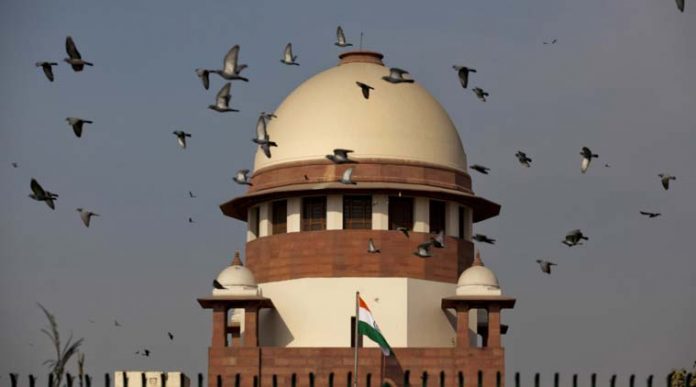
The Supreme Court is continuing hearing the challenge concerning the process adopted for selection of the Odisha DGP, including the exclusion of senior IPS officer Sushant Kumar Nath and creation of temporary ex-cadre DGP posts. The challenge is being heard in the long-running Prakash Singh police reforms proceedings.