





By Our Correspondent
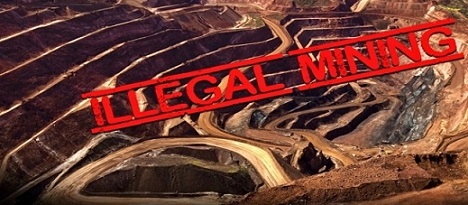
BHUBANESWAR: The Odisha BJP government, led by Chief Minister Mohan Charan Majhi since June 2024, has faced criticism for ongoing delays in recovering fines imposed on illegal mine owners, primarily related to violations of environmental and forest clearances during iron and manganese ore extraction between 2000 and 2011.
The Supreme Court imposed these penalties in 2017, requiring 100% compensation based on the market value of illegally extracted minerals, following recommendations from the Justice M.B. Shah Commission and the Central Empowered Committee. The total initial demand was around ₹19,174 crore from 131 leaseholders, but as of late 2025, significant amounts remain unrecovered, with figures cited between ₹2,700 crore and ₹3,966 crore (including interest) still pending.
Key reasons for the failure to take decisive action and collect these fines, based on court observations, audits, and public allegations, include:
Administrative lapses and lack of coercive measures: The government has been faulted for not effectively pursuing recovery through mechanisms like certificate cases under the Odisha Public Demand Recovery Act, 1962, or attaching immovable properties of defaulters.
A Comptroller and Auditor General (CAG) audit, covering up to January 2023 but tabled in April 2025 under the BJP regime, highlighted that despite Supreme Court directives for stringent actions, the Mines Department failed to enforce these steps, leading to prolonged delays. This inertia has persisted into the BJP tenure, with the Supreme Court in October 2025 expressing displeasure over the slow recovery process, noting that unpaid amounts have nearly doubled due to accrued interest.
Allegations of collusion and shielding mine owners: Opposition parties, environmentalists, and petitioners like the NGO Common Cause have accused the state authorities of colluding with leaseholders to protect their interests, ignoring Shah Commission recommendations for stronger enforcement. These claims suggest political or bureaucratic protectionism, with critics pointing out that both the previous BJD government and the current BJP administration have been lenient toward influential mining entities.
For instance, in November 2025, the opposition BJD alleged that under BJP patronage, illegal sand and minor mineral extraction has continued unchecked, implying a broader pattern of favoritism toward mining interests.
Legal and procedural hurdles: The recovery process involves ongoing litigation, with some leaseholders challenging demands. In response to Supreme Court criticism in October 2025, the Odisha government denied collusion and requested time to consult officials. By December 2025, the state sought and received Supreme Court permission to approach the Orissa High Court for a dedicated bench to expedite mining-related cases, indicating an attempt to address delays through judicial streamlining rather than immediate enforcement actions.
While the bulk of the illegal mining occurred under prior administrations, the BJP government has inherited and continued the recovery shortcomings, with no full resolution as of December 2025.
The state has shown some activity in related areas, such as inspecting illegal coal sites in April 2025 and suspending officials for sand mining lapses in December 2025, but these do not directly address the core Supreme Court-mandated fines. Critics argue this reflects prioritization of mining sector interests over revenue recovery and environmental accountability.