



By Anurjay Dhal
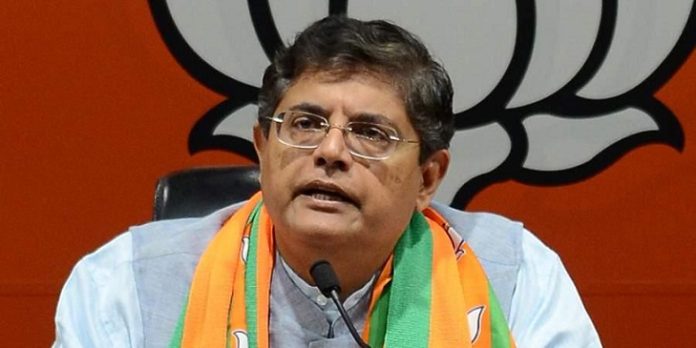
BHUBANESWAR: Baijayant “Jay” Panda, a five-time Member of Parliament and National Vice President of the Bharatiya Janata Party (BJP), was elected as the MP for Kendrapara Lok Sabha constituency in Odisha in the 2024 general elections.
He secured the seat with a significant margin, defeating his nearest rival from the Biju Janata Dal (BJD) Anshuman Mohanty. His term began in June 2024, and over the subsequent 19 months (up to January 2026), Panda has focused on a mix of national-level parliamentary responsibilities and local constituency development.
His activities emphasize monitoring government schemes, infrastructure projects, and legislative reforms, aligning with the BJP’s “double engine” governance model under Prime Minister Narendra Modi. This analysis draws from his public engagements, committee work, and reported initiatives, highlighting both achievements and areas of focus.
Parliamentary Activities: Panda has been notably active in the Lok Sabha, leveraging his experience as a senior parliamentarian. Appointed as Chairperson of the Committee on Public Undertakings (CoPU) in August 2024, he has led multiple oversight and reform efforts.
Under his leadership, the CoPU set a record by tabling 11 reports in a single day during the Winter Session of Parliament in December 2025, covering performance audits of central public sector undertakings (CPSUs) in sectors like energy, defence, and infrastructure. This demonstrates efficient committee management and a push for accountability in public enterprises.
He has chaired several study visits and meetings for CoPU, emphasizing operational efficiency in CPSUs:
In January 2026, during visits to Bhubaneswar, Mumbai, and Goa, he held discussions on inventory management with entities like Container Corporation of India (CONCOR), Bharat Dynamics Limited (BDL), and National Aluminium Company Limited (NALCO); land optimization with Steel Authority of India Limited (SAIL) and NTPC; and indigenous defence capabilities with Mazagon Dock Shipbuilders Limited (MDSL), Cochin Shipyard Limited (CSL), and Goa Shipyard Limited (GSL). These interactions focused on self-reliance in defence, renewable energy, and urban development, aligning with national priorities like Atmanirbhar Bharat.
Panda also chaired two key Select Committees: The Select Committee on the Income-Tax Bill, 2025, which he led from February 2025. The committee, comprising 31 MPs, suggested over 30 amendments for clarity, fairness, and alignment with existing laws. The report was presented in the Lok Sabha in July 2025.
The Select Committee on the Insolvency and Bankruptcy Code (Amendment) Bill, 2025, referred in August 2025. This bipartisan effort involved hearings with experts, including former Chief Justice of India D.Y. Chandrachud, and representatives from ministries like MSME and Corporate Affairs, as well as real estate regulators. The unanimous report, tabled in December 2025, proposed stricter timelines to reduce resolution time by at least 50% and a clearer “clean slate” principle for resolved entities. Panda highlighted this as a rare example of cross-party cooperation in an op-ed, noting its potential to strengthen India’s economic framework.
Additionally, he participated in debates, including the discussion on the Union Budget for 2024-25 and Jammu & Kashmir. While specific data on questions asked or attendance is not publicly detailed in available records up to January 2026 (possibly due to ongoing sessions), his committee leadership indicates high engagement. No major controversies or absences have been reported, suggesting consistent performance in national legislative roles.
Constituency Development in Kendrapara: Panda’s work in Kendrapara has centered on grassroots monitoring of central and state schemes, infrastructure, and cultural preservation, reflecting his commitment to “Viksit Odisha” under the BJP-led government.
Scheme Implementation and Reviews: He has chaired multiple quarterly District Development Coordination and Monitoring Committee (DISHA) meetings in Kendrapara, involving district officials, MLAs, and public representatives.
Key sessions include:
March 2025: Reviewed Sarva Shiksha Abhiyan (including mid-day meals), Pradhan Mantri Fasal Bima Yojana, and post-cyclone relief for farmers.
June 2025: Assessed Pradhan Mantri Awas Yojana (PMAY) for rural housing and schemes for rural employment.
August 2025: Monitored development projects across departments, planned field visits, and addressed water logging issues with the District Collector and local MLAs.These reviews emphasize transparent governance and last-mile delivery, ensuring schemes like PMAY and MGNREGS benefit constituents.
Community Engagement: In April 2025, Panda interacted with beneficiaries of welfare schemes in Rajnagar assembly segment (part of Kendrapara), discussed local issues, visited a Shiva temple, and participated in a road show with party workers.Immediately after his election win in June 2024, he held a victory rally and assured accelerated development for Odisha, crediting voters for supporting “Odia Asmita’.
Infrastructure and Heritage Projects: In November 2025, he reviewed the renovation and beautification of the historic Baladev Jew Temple in Tulasikshetra, Kendrapara, in collaboration with state ministers and officials. The project aims to enhance pilgrim facilities while preserving cultural heritage. This aligns with broader efforts in disaster-prone Kendrapara, such as cyclone relief and agricultural support.
No major criticisms or unaddressed grievances have surfaced in public records, though the focus appears more on oversight than initiating large-scale new projects. His approach prioritizes accountability, with public grievance redressal integrated into meetings.
Overall Assessment and Challenges : Over 19 months, Panda’s performance reflects a balanced dual role: as a national legislator driving economic reforms and as a local MP ensuring scheme efficacy in Kendrapara. Strengths include proactive committee leadership, bipartisan collaboration (for example unanimous reports), and regular constituency oversight, contributing to BJP’s narrative of development. His aviation background (as a helicopter pilot) and media presence (columns and interviews) amplify his visibility.
However, quantitative metrics like exact questions raised or MPLADS fund utilization are not fully detailed in available data, possibly due to the term’s recency. Kendrapara faces challenges like coastal erosion, flooding, and agriculture dependency; while Panda has addressed water logging and crop insurance, long-term outcomes (for example post-cyclone recovery) will define sustained impact. As Odisha’s BJP government stabilizes, his role in bridging state-central initiatives could yield more tangible results.
In summary, Panda’s tenure so far positions him as an effective overseer of development, with a record of diligence in both Parliament and his seat. Continued focus on measurable deliverables will be key moving forward.