

By Our Correspondent
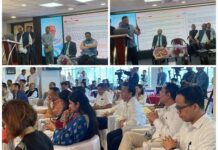
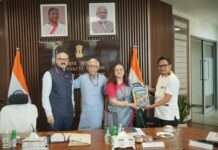
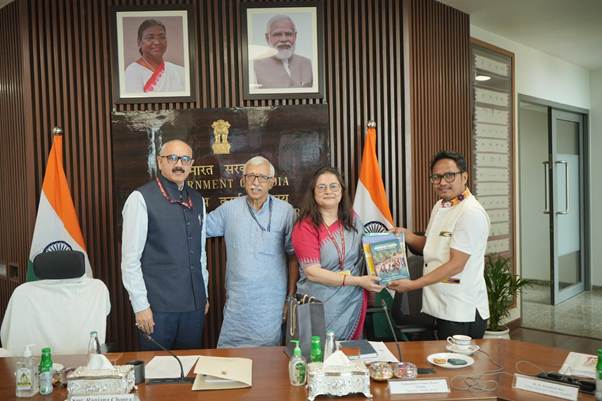
NEW DELHI:The Ministry of Tribal Affairs held the first meeting of the Working Group on Tribal Languages today in a hybrid workshop mode. The meeting was chaired by Smt. Ranjana Chopra, Secretary, Ministry of Tribal Affairs. Eminent linguists, academics, researchers and community language practitioners from across the country, including Padmashree Chamu Krishna Shastry, Chairman, Bhasha Samiti, and Dr. K. Sreenivasa Rao, former Secretary, Sahitya Akademi, participated in the meeting.
The Working Group was constituted by the Ministry with members from leading institutions, including the Central Institute of Indian Languages (CIIL), the Indian Institutes of Technology (IITs) at Delhi, Dharwad and Kanpur, Tezpur University, Manipur University, Assam University, Sikkim University, Living Tongues Institute for Endangered Languages, the Council for Diversity and Innovation (CoDIN) and the Bhasha Samiti, among others. The Working Group will guide efforts towards the documentation, preservation, research and promotion of tribal languages across the country.
Focus on Language Preservation and Community Participation: Speaking at the meeting, Smt. Ranjana Chopra, Secretary, Ministry of Tribal Affairs, highlighted the importance of language in improving the outreach and effective delivery of welfare initiatives among tribal communities. She noted that Adi Vaani, which began as a translation tool for practitioners and administrators, has the potential to evolve into a comprehensive language repository bringing together corpora, primers, dictionaries and community stories. She also emphasised the importance of mother-tongue-based multilingual education in addressing learning gaps during the early years and called for bringing together the work already undertaken by institutions and scholars on a common platform, avoiding duplication of efforts.
Roadmap for Tribal Language Documentation: Presenting the context of the initiative, the Joint Secretary highlighted the rich linguistic diversity of tribal communities and the need to document and preserve their languages. He outlined the proposed framework for the Working Group, covering a national baseline of tribal languages, research and scholarship, digital documentation and language technology, community-led documentation of oral traditions and cultural resources, multilingual education and learning materials, and partnerships among Tribal Research Institutes (TRIs), universities and other institutions.
Adi Vaani: Building a National Tribal Language Repository: The meeting reviewed the progress of Adi Vaani, developed by IIT Delhi in collaboration with the Ministry. The platform offers text-to-text translation in nine tribal languages, along with speech, Optical Character Recognition (OCR) and video subtitling features. It also provides searchable access to more than 300 primers prepared by TRIs. State TRIs have contributed approximately 13.9 lakh text sentences in ten languages and around 300 hours of speech data. The platform has recorded over 48,000 Android downloads and approximately 6,500 monthly users. IIT Delhi sought the Working Group’s support in linguistic validation of datasets, standardisation of spelling and orthography, and development of domain-specific vocabulary for planned pilots.
Seven Pillars for the Development of Indian Languages: Padmashree Chamu Krishna Shastry, Chairman, Bhasha Samiti, outlined seven pillars essential for the development of any Indian language: sustained proficiency among speakers in their mother tongue; the use of language in education, administration, communication and entertainment; contemporary literature and knowledge content; continuous word generation to meet changing needs; adoption of technology; teaching-learning materials and systems, both online and offline; and support from Central and State Governments, corporates and society at large. He emphasised that speakers must remain at the centre of all language development efforts.
Recalling the words of the Hon’ble Prime Minister that all mother tongues of India are national languages, he stressed that no language should be considered small or big. He called for celebrating linguistic diversity in the spirit of Ek Bharat Shreshtha Bharat, where diversity is the beauty and unity is the strength, and encouraged a sense of closeness and mutual respect among speakers of different languages. He also suggested collaboration among the Bhasha Samiti, central and state tribal universities, the Indian Council of Social Science Research (ICSSR) and the IKS Division of the Ministry of Education, which has supported 38 tribal studies projects. He urged the Working Group to identify priority areas for focused action.
Plan for Documentation and Revitalisation: Dr. K. Sreenivasa Rao, former Secretary, Sahitya Akademi, presented a plan for tribal language documentation and revitalisation. The proposals included state-wise and language-wise directories of writers, scholars and resources in a searchable national database; district-level community resource groups with trained tribal youth as researchers; revival of existing tribal language institutions; community digital archives hosted through Adi Vaani; and a two-year action plan with quarterly reviews. He emphasised that tribal communities should actively create and contribute to their own language resources as part of the vision of Viksit Bharat.
Institutional Collaboration and Language Technology: Prof. Basavraj Kudagonti, Director, CIIL, Mysuru, suggested prioritising languages in phases, establishing region-wise teams with coordinators, and developing a common repository to which institutions and individual researchers could contribute. Prof. Shailendra Mohan, former Director, CIIL, highlighted the importance of a three-way partnership among communities, schools and universities, and proposed preparing an atlas of tribal languages and mother tongues across all States.
Dr. Karthick Narayanan, Executive Director, CoDIN, proposed a federated network of digital archives supported by common metadata standards, with Adi Vaani serving as the national gateway. He also offered CoDIN’s speech datasets and community training programmes to support the initiative.
Dr. Amalesh Gope of Tezpur University offered expertise in speech technology for tonal languages, along with dictionaries and speech datasets for languages of the North-East. Dr. Chaitra Puttaswamy of IIT Kanpur highlighted the importance of training community members in language documentation and using engaging, non-verbal prompts to develop parallel corpora. Dr. Monali Longmailai of Assam University shared her work on the community-based Bodo and Dimasa Heritage Digital Archive, while Dr. Samar Sinha of Sikkim University emphasised the need to develop technical vocabulary in tribal languages for school subjects and adopt language-planning approaches suited to smaller languages. Other members also shared their field experiences and offered institutional and technical support.
Integrating Tribal Languages into Education: Representatives of the National Education Society for Tribal Students (NESTS) highlighted the potential of more than 525 Eklavya Model Residential Schools, serving over 1.7 lakh students, to use the platform in classrooms. They also noted that students, teachers and parents could contribute stories, poems and other content to enrich the national repository.
Concluding the meeting, Smt. Ranjana Chopra requested members to share details of the languages they have worked on and the resources available with them, so that these could be integrated into the platform in coordination with IIT Delhi. She stated that the Ministry would circulate the agenda items and prepare a roadmap for taking the work forward. She also emphasised that language resources developed with communities should continue to be owned by the communities.
The meeting marked an important step towards strengthening coordinated efforts for the documentation, digital preservation and promotion of tribal languages, with Adi Vaani envisioned as a national platform connecting linguistic research, technology, educational resources and community-led initiatives.