




By Dr. Bibhuti Bhusan Nayak
BHUBANESWAR:The Mines and Minerals (Development and Regulation) Amendment Bill, 2026, has turned into a major political and fiscal controversy in Odisha, placing the mineral-rich state at the heart of a national debate over who should benefit from India’s natural resources, the Centre, the states or the mining industry. Passed by Parliament in August, the legislation seeks to create a more uniform and predictable taxation framework for the mining sector. The Union government argues that different state level taxes and levies have increased costs, discouraged investment and fragmented the domestic mineral market. Critics, however, fear that the new framework could weaken the ability of mineral producing states to raise additional revenue from their own natural resources.
A Mineral Powerhouse
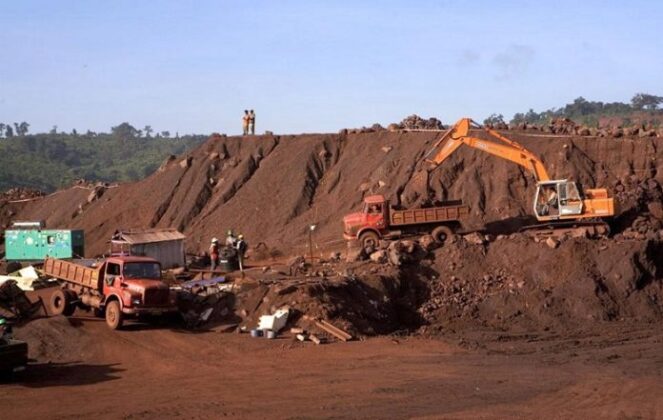
Odisha is India’s leading iron ore producing state and has some of the country’s richest deposits of iron ore, coal, bauxite and chromite. Mining has therefore become a critical pillar of the state economy, supporting government revenue, industrial activity, employment and infrastructure development. The importance of mining to Odisha is also reflected in the scale of the current revenue dispute. Opposition parties and industry estimates have put the potential annual revenue impact of the new law at around Rs-12,000 crore, while outstanding dues potentially affected by the legislation have been estimated at more than Rs-1 lakh crore. These figures are politically contested and should not be treated as settled forecasts, but they illustrate the scale of concern in the state.
The controversy gained momentum after the Supreme Court’s landmark 2024 judgment on mineral taxation. The nine-judge Constitution Bench held that royalty paid by miners is not a tax and affirmed that states possess legislative power to tax mineral rights. It also held that states’ power to tax mineral-bearing land extends to mines and quarries. At the same time, the Court recognised Parliament’s power to place limitations on state taxation of mineral rights. That ruling opened the door for mineral-rich states such as Odisha to pursue additional revenue through taxation and cess.
Why the 2026 Bill Matters
The 2026 amendment changes that landscape. it places restrictions on states’ powers to tax mineral rights and mineral-bearing lands. The Centre’s stated rationale is to prevent multiple and unpredictable taxes, retrospective levies and substantial variations in mineral taxation between states.
The Union government’s case is straightforward: mining companies need certainty before investing billions of rupees in exploration and production. If states can introduce new taxes or cess after mining operations have begun, companies face greater financial uncertainty. A common fiscal framework, the Centre argues, can make Indian minerals more competitive and encourage investment. The legislation also contains measures intended to promote mineral exploration and development, particularly of critical and strategic minerals. It gives greater flexibility to mining lease holders and removes certain restrictions on the sale of minerals from captive mines.
Odisha’s political fault line
The Bill has quickly become a political flashpoint in the state. The Biju Janata Dal and Congress have warned that Odisha could suffer a substantial loss of revenue and have questioned whether the legislation undermines the state’s financial rights over its mineral resources. The BJD has particularly argued that the legislation effectively rolls back the significance of the Supreme Court’s 2024 judgment
The ruling BJP, meanwhile, has rejected the allegation that Odisha will lose revenue. Its state leaders have argued that a more competitive mining regime could increase production and investment, potentially benefiting the state through greater economic activity and existing revenue channels.
The disagreement therefore goes beyond a simple calculation of how much money Odisha may gain or lose. It raises a larger constitutional question: How much fiscal freedom should states have to monetise natural resources located within their territory?
More than a revenue question
Odisha’s position is especially significant because the state has historically carried many of the social and environmental costs associated with mining. Mining districts have faced displacement, pressure on land and forests, environmental degradation and demands for better infrastructure and public services. This makes mineral revenue politically sensitive. For many in Odisha, the argument is that a state that bears the consequences of mining should have sufficient fiscal authority to ensure that local communities also benefit. At the same time, the Centre’s argument about investment cannot be dismissed. Excessive or unpredictable taxation could make Indian mining less competitive, discourage exploration and ultimately reduce production and therefore reduce the very revenue states hope to collect. There is also a broader strategic dimension. India is seeking secure supplies of critical minerals needed for renewable energy, electronics, batteries and advanced manufacturing. The government wants mineral policy to support national industrial and energy-security objectives.
The road ahead
The debate is unlikely to end with Parliament’s passage of the legislation. Opposition-ruled mineral-producing states have raised constitutional concerns, while Odisha’s political parties continue to dispute the potential financial consequences.
The immediate challenge will be to reconcile national uniformity with state fiscal autonomy. A predictable mining regime can help attract investment, but states also need adequate fiscal space to compensate for the costs of resource extraction and finance development.
Odisha has consequently become more than just another stakeholder in the MMDR debate. Its mineral wealth, dependence on mining revenue and experience with the social consequences of extraction make it a test case for India’s federal model of natural-resource governance.
The central question is no longer simply who owns India’s minerals. It is who has the right to tax them, who should benefit from them, and how the wealth beneath Odisha’s soil should be shared between the state, the Centre, industry and the communities living above it.
(The Writer Dr. Bibhuti Bhusan Nayak is an ICSSR Post Doctoral Fellow at the Department of Department of Public Administration, Utkal University, Vani Vihar, Bhubaneswar, Odisha, India can be reach at bibhutibhusanna@gmail.com )