






By Our Correspondent
BHUBANESWAR: Communists and left-wing groups in India (such as CPI(M), CPI, and especially Maoist/Naxalite factions) often strongly oppose or demand strict limits/bans on many mining projects, particularly in forest and tribal (Adivasi) areas.
They do not universally say “no mining anywhere ever,” but their rhetoric and actions frequently frame large-scale or private mining as inherently exploitative, prioritizing opposition over balanced development.
Their stated reasons cluster around a few core themes rooted in Marxist ideology (class struggle, anti-capitalism, anti-imperialism/“corporate loot”) and local grievances:
Exploitation of tribals and displacement: India’s mineral wealth (coal, iron ore, bauxite, etc.) overlaps heavily with Adivasi-inhabited forest regions in states like Jharkhand, Chhattisgarh, Odisha, and Madhya Pradesh. Mining often leads to land acquisition, forced displacement, and loss of traditional livelihoods (forest produce, subsistence farming). Historical data shows Adivasis (about 8-9% of India’s population) have been disproportionately affected by development projects, including mining—sometimes estimated at 40-55% of those displaced since independence. Poor rehabilitation, broken promises on compensation/jobs, and cultural disruption fuel resentment. Maoists position themselves as defenders of Adivasis against the “state-corporate nexus.”
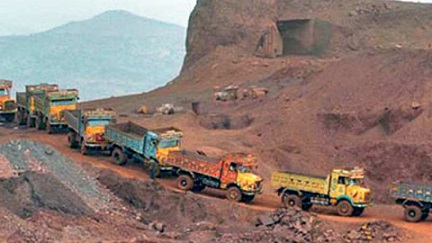
Environmental destruction: Mining causes deforestation, soil erosion, water pollution (acid mine drainage, heavy metals), air pollution from dust and transport, biodiversity loss, and land degradation. Coal mining (India is the 2nd largest producer) has degraded significant native land cover in central belts (like 35% in studied areas of MP/Chhattisgarh), reduced forest cover and water bodies, and contributed to greenhouse gas emissions (methane from mines). Opencast mining is especially destructive. Left groups highlight pollution making farmland and drinking water unusable, plus risks to fisheries from deep-sea or coastal proposals.
Privatization and “corporate plunder”: They argue natural resources belong to “the people” (or should be under public sector control). Opening coal and other minerals to private firms (post-2014 reforms) is seen as handing national assets to capitalists for profit, with minimal benefits trickling down locally. Royalties often go to the center, not states or locals. They demand public sector dominance and oppose FDI or auctions favoring big business.
Ideological framing: In Maoist zones (“Red Corridor”), mining funds both the state and insurgents (via extortion/“levy”). Maoists sometimes attack mines not just for ideology but when owners refuse payments—yet they broadly portray mining as accelerating capitalist exploitation and delaying “revolution.” Mainstream communists (CPI(M)) mobilize protests, yatras, and legal challenges against specific projects (like tungsten in Tamil Nadu, deep-sea mining off Kerala), allying with locals on livelihood and ecology grounds.In practice, this leads to protests, blockades, court cases, and in Maoist areas, violence that has stalled projects, creating a feedback loop of underdevelopment and grievance.
Is it fact? (Balanced reality check)
No, the blanket claim that “there shouldn’t be any mining” is not fact—it’s a selective ideological position. Mining has real, documented costs, but also undeniable benefits. Zero mining is unrealistic for a developing economy like India that needs raw materials for steel, power (coal ~70% of electricity), cement, infrastructure, electronics, and exports. India ranks high globally in coal, iron ore, bauxite, etc., and the sector supports downstream industries.
Real problems (their points have substance):
Environmental: Yes—deforestation, pollution, habitat loss, and groundwater depletion occur, especially with weak enforcement. CAG audits have flagged violations in water/soil quality and inadequate monitoring in many mines. Illegal mining worsens this.
Social: Displacement is poorly handled in many cases; Adivasis often lose more than they gain (lost commons, fragmented communities, health impacts from pollution). Rehabilitation is frequently inadequate, leading to urban slums or worse poverty. Conflicts in mineral-rich “backward” districts are real.
Governance failures: Corruption, cronyism, weak Environmental Impact Assessments (EIAs), and benefit-sharing gaps exist. Tribals in Scheduled Areas have rights under laws like PESA and Forest Rights Act, but implementation lags.
Counterpoints (why “no mining” is overstated or counterproductive):
Economic role: Mining contributes ~2-2.5% directly to GDP (with multipliers to 10%+ in industry), generates royalties/taxes for states, employs hundreds of thousands directly (estimates 0.5-1.25 million+), and supports millions indirectly. It reduces import dependence for critical minerals and funds development. Banning it broadly would hurt energy security, manufacturing, and jobs—ironically harming the poor most.
Not all mining is equal: Underground, sustainable techniques, reclamation (reforestation, waste management), and stricter rules can mitigate damage. Some public sector operations (Coal India) have scale but also issues; private entry brought investment but also scrutiny. India has reformed policies (MMDR amendments) for auctions and exploration, aiming to balance this.
Trade-offs and hypocrisy: Complete opposition ignores that modern life requires minerals (phones, renewables need rare earths/copper; even “green” transition needs mining). Maoist areas remain underdeveloped partly because violence deters investment—creating a poverty trap. Locals sometimes want jobs/infrastructure from mines but oppose poor terms. Protests succeed when genuine (e.g., environmental sensitivity), but blanket ideology stalls progress. Many left-led states or unions have pragmatically engaged mining when in power.
Data nuance: Displacement figures are high historically but vary; many projects include compensation/jobs (though uneven). Environmental degradation is measurable, but so is illegal sand/minor mineral mining by non-corporate actors. Overall resource curse effects appear in some districts (poverty despite riches), but good governance (benefit-sharing, skills, infrastructure) can turn it positive, as seen in models elsewhere.
In short, communists highlight genuine failures in execution—displacement, pollution, inequity—to push an anti-private, anti-growth narrative aligned with their worldview of inevitable class conflict. These issues demand better regulation, genuine consultation with locals (FPIC principles), stricter enforcement, reclamation mandates, and equitable revenue sharing—not a de facto mining ban. India needs responsible mining to grow while minimizing harm; ideological absolutism (“no mining” or “all public only”) risks keeping resources buried while people stay poor. Effective policy weighs facts: costs are real and often borne locally; benefits are national but must be distributed better.
In India’s mining sector, the Centre (Central Government) fixes the royalty rates for major minerals, while States collect and keep almost all the royalty revenue. The Centre does not take a direct percentage share of the royalty itself. Centre takes: <2% and State: 98%.