



By Our Correspondent
BHUBANESWAR:The audiences of Bhubaneswar witnessed yet another engaging evening of classical Art as the 32nd Guru Kelucharan Mohapatra (GKCM) Award Festival, organised by Srjan – Guru Kelucharan Mohapatra Odissi Nrityabasa in collaboration with Sri Sri University (SSU), Cuttack, unfolded its fourth day. Following a historic milestone on the third evening which featured a standing ovation for Odisha’s first-ever performance of Marganatya (Saugandhikaharanam) by Dr. Piyal Bhattacharya’s Chidakash Kalalay – Centre of Art and Divinity, the penultimate evening presented an exquisite blend of classical dance and music.
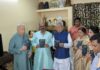
The evening commenced at 7 pm sharp with Dr. Mrutyunjaya Rath, the official compere for the festival welcoming the audience, and requesting the honourable guests and dignitaries Dr. Snehaprava Samantray, Renowned Odissi Guru; Guru Sachidananda Das, Celebrated Mardala Exponent; and Shri Parameswar Funkwal, General Manager, East Coast Railway to join Guru Ratikant Mohapatra, Director, Srjan, and Dean, Faculty of Arts, Communication and Indic Studies, SSU to formally inaugurate the proceedings with the auspicious lighting of the lamp.
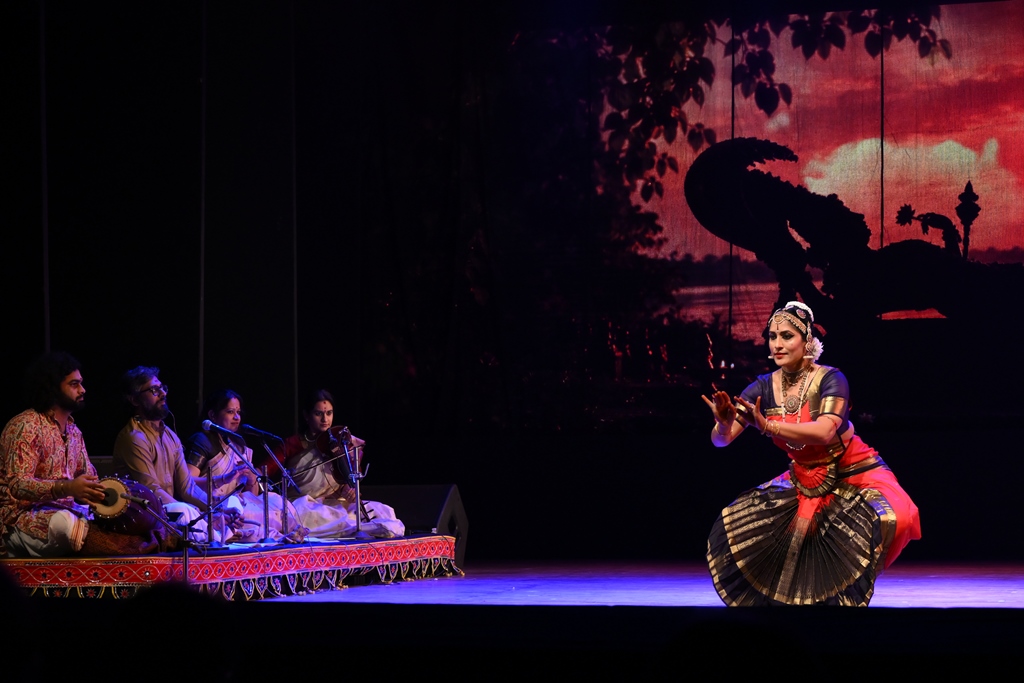
In an elegant commencement to the programme, acclaimed Bharatanatyam exponent Dr. Janaki Rangarajan mesmerized the audience with her distinct individuality, precise movements, and refined abhinaya. A disciple of Smt. Madhavi Chandrasekhar and Dr. Padma Subrahmanyam, Dr. Rangarajan performed Maharaja Swati Tirunal’s famous and unique Pada Varnam “Sami Ninne” in Ragam Yadukulakambhoji set to Adi Talam. Portraying a viraha utkanthita nayika longing for Lord Padmanabha, the emotive depth in her depiction of separation (Vipralambha Shringara). She brought both subtle and intense expressions to her portrayal of the longing heroine, while exploring various emotional shades of the nayika’s psyche. Thus, the artiste does not bind herself to the pathos of a heroine in separation but allows for emotive freedom by delving into different facets of a complex heroine’s spiritual essence, bridging poetic devotion with artistic clarity. She was supported by the able and harmonious Carnatic music ensemble comprising Smt. Shilpa Gopalakrishnan on Vocals, Smt. TV Sukanya on the Violin, Shri K Sarvesh on the Mridangam, and Shri S Vijay Kumar on the Nattuvangam. Her performance was further aided by the befitting and creative light design of Shri Debiprasad Mishra.
The second half shifted to a captivating Flute Jugalbandi (duet) featuring two of Odisha’s finest flautists, Shri Abhiram Nanda and Shri Srinibas Satapathy. Shri Nanda, a disciple of Pt. Hariprasad Chaurasia and Odisha Sangeet Natak Akademi Awardee, brought his characteristic tonal warmth and rhythmic poise to the stage, while Shri Satapathy, an Ustad Bismillah Khan Yuva Puraskar recipient effortlessly showcased his melodic subtlety and vitality.
They commenced their duet with a composition in Raag Madhuvanti, set to Rupak Taal in seven beats. They then moved on to some beautiful presentations in Madhyalaya Teen Taal and Dhrut Teen Taal. Their playing styles brought out the enigmatic charm of the melody, balancing deep meditative expression with technical prowess. This was followed by renditions in Pahadi Dhun in Dadra and Keherwa Taal, beginning with a tranquil, lilting sentiment and subsequently elevating the energy to a lively, rhythmic climax. They played in tandem, blending warm, majestic resonance with delicate, expressive notes in acoustic harmony. Their jugalbandi was complemented by the dynamic percussion play of young Tabla prodigy Shri Yashwant Vaishnav as he matched the flautists’ intricate melodies with crisp rhythmic vitality.
The proceedings for the evening were conducted seamlessly by Dr. Mrutyunjaya Rath. The festival achieves technical brilliance through the expertise of the Chief Sound Engineer of the festival Shri C. Anand Krishna, while Shri Bharath Krishna manages sound engineering alongside graphic design. The creative light design and operation are executed with precision by Shri Debiprasad Mishra and Shri D. Dhilip Kumar.
The final evening of this celebration of the Arts on September 9 will begin with the prestigious Award Ceremony. The GKCM Awards 2026 will be conferred upon Guru Sharon Lowen (Dance), Guru Keshab Chandra Rout (Music), Shri Dhirendranath Mallick (Theatre), and Smt. Mahasweta Ray (Cinema). The GKCM Kala Samman 2026 will be awarded to Shri Agnimitra Behera (Violin) and Dr. Nazia Alam (Vocal), while the GKCM Yuva Pratibha Samman will honour Sushree Vrinda Chadha (Odissi Dance), Sushree Aishwariya Singhdev (Odissi Dance), Dr. Nikita Banawalikar (Kathak), and Shri Soumya Ranjan Nayak (Odissi Music—Mardala).
The festival will conclude with the Srjan ensemble much-awaited grand finale, Maati, choreographed by Guru Ratikant Mohapatra to the music of Guru Lakshmikant Palit and script adaptation by the late Shri Jaydev Das. Inspired by iconic Odia poet Sri Radha Mohan Gadanayak’s work, Maati celebrates Mother Earth’s silent forbearance over ethereal elements, depicting her ultimate triumph of resilience as she is proclaimed the exalted empress of the universe.
Designed under the vision and meticulous direction and administration of Guru Ratikant Mohapatra, with flawless programme execution every year by Shri Debiprasad Mishra. The 32nd GKCM Award Festival 2026 is supported by the Ministry of Culture, Government of India, and Department of OLLC, Government of Odisha.