




By Our Correspondent
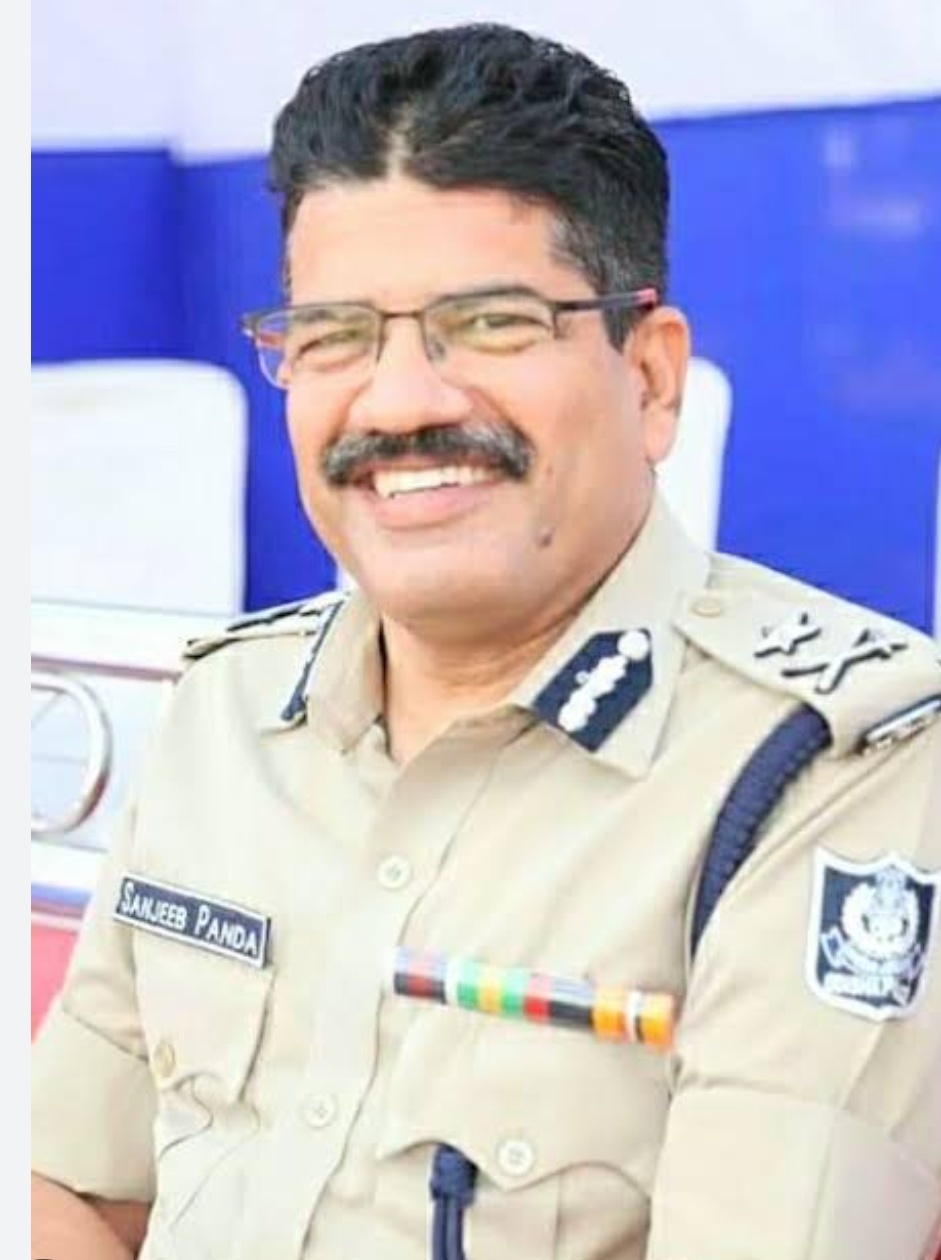
BHUBANESWAR:With the process of selecting Odisha’s next Director General of Police and Head of Police Force gathering importance, questions are being raised over the suitability of senior IPS officer Sanjeeb Panda for the State’s highest police post.
Panda, a 1994-batch IPS officer, was appointed ADG, Anti-Naxal Operations in July 2025, with responsibility for Anti-Naxal Operations and the Special Intelligence Wing. His appointment came at a critical stage of the Centre’s campaign to eliminate Left-Wing Extremism by March 2026. Since then, Odisha has witnessed substantial Maoist surrenders and successful operations, including the surrender of 15 Maoists before Panda in Rayagada in February 2026, besides further surrenders in Kandhamal and Kalahandi.
But does this establish that Panda personally “ended Naxalism” in Odisha? The record suggests otherwise.
A long campaign cannot be credited to one officer
Panda assumed charge only in July 2025. The decline of Maoist activity was the result of years of sustained counter-insurgency operations, intelligence work, SOG, DVF, CRPF and BSF deployment, security camps, development initiatives and surrender and rehabilitation policies.
When Panda took charge, the Government said only about 100-120 Maoists remained in Odisha. Between 2015 and January 2025, security forces had already neutralised 118 Maoists, arrested 315 and facilitated 238 surrenders. Only ten districts remained LWE-affected, with Koraput, Rayagada and Nabarangpur reporting no Maoist incident for three years.
Thus, attributing the end of Naxalism to an officer who assumed charge only in July 2025 is misleading. Indeed, accounts of recent successes credit SOG, DVF, CRPF and BSF, while Panda himself attributed the February 2026 surrender to coordinated operations and the Government’s rehabilitation measures.
Panda was never an SP of any naxal affected district. He was range DyIG of naxal affected range. During his tenure more security personnel were killed compared to any other DyIG.
Surrenders require context
Surrenders increased after Odisha introduced its revised rehabilitation policy in November 2025, subsequently revised in February 2026. Almost all the surrendered cadres were from Chhattisgarh. They do not even speak Odia. Two cadres surrendering in Kandhamal in November 2025 were from Sukma, while most of 22 cadres surrendering in December were reportedly from Chhattisgarh.
Therefore, the legitimate question is: how much of the surrender phenomenon resulted from the rehabilitation package, intensified operations, the broader collapse of the Maoist organisation, and how much specifically from Panda’s leadership?
The decline in Odisha had begun years before his appointment.
Questions have also been raised about whether the anti-Naxal assignment and generous surrender package were used to project Panda as an effective officer at a crucial national juncture. Such claims require documentary verification. His god-father Prakash Mishra advisor to CM was behind making him ADG (ANO) so that he could be projected as an efficient officer before Amit Shah whose dream was to eradicate naxalism. Prakash Mishra also devised attractive naxal surrender policy for getting more surrenders. Thus, he used public money of Odisha to brighten the image of Panda.
Questions beyond Naxalism
If Panda’s suitability is being judged on Naxalism, other aspects of his record also deserve examination. When he was Commissioner of Police, Bhubaneswar-Cuttack, why did the Tequila Bar and Grill near NIT Square allegedly remain open beyond permissible hours, and what, if any, business connection did he have with the establishment? Similarly, questions have been raised about the investment in Soubhagya Farms, Dhenkanal, and the extent and location of his immovable properties?
The Bharatpur episode remains an important part of the record
More serious questions arise from Panda’s tenure as Commissioner of Police, Bhubaneswar-Cuttack.
Panda assumed charge as Commissioner on 29 January 2024.
On 15 September 2024, a serious incident occurred at Bharatpur Police Station involving an Army officer and his fiancée. The incident generated widespread public controversy and prompted a Crime Branch investigation.
Within days, the Odisha Government undertook a major reshuffle. On 29 September 2024, Panda was removed as Commissioner and posted as ADG (Training) and Director of the Biju Patnaik State Police Academy, after only about nine months as Commissioner. Contemporary reporting explicitly connected the reshuffle with the controversy surrounding the Bharatpur police station incident.
The significance of the episode is not merely the transfer itself. The Commissioner of Police is ultimately responsible for supervision, discipline and public confidence in the Commissionerate. The episode therefore warrants examination when assessing an officer for the highest police command in the State. It is unfortunate that the Commissionerate Police persons resorted to resist Army, in an unusual manner and he could not control this.