





By Mr Arun Kumar Upadhyay, IPS (R)
BHUBANESWAR:
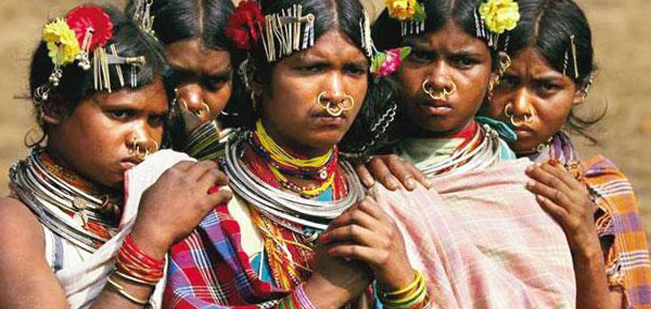
- Introduction-Orissa census report, 2001 tells-Out of sixty two (62) STs, Khond is the most populous tribe with a population of 1,395,643 constituting 17.1 percent of the total ST population. Gond is the second largest tribe, having a number of 782,104. having 9.6 per cent share in the total ST population. Six other tribes namely, Santal, Kolha, Munda, Saora, Shabar and Bhottada along with Khond and Gond constitute 64.2 per cent of the total ST population of the State. Bhumij, Bhuiya, Oraon, Paroja and Kisan having a population ranging from 248,144 to 321,592. Together, they form 18.1 per cent. Five STs, namely, Bhumia, Binjhal, Koya etc. having population in the range of 103,537 to 196,846 constitute 9 per cent of total ST population. Remaining forty four (44) tribes along with the generic tribes constitute the residual 8.8 per cent of total ST population of the State. Five tribes namely Chenchu, Mankidi, Desua Bhumij, Ghara, Tharua are very small groups having less than 500 population.
2.Tribes of adjacent Jharkhanda-Main area of tribes is Jharkhanda which has been called Karka-khanda in Mahabharata (3/255/7), while describing conquests of Karna, king of Anga with capital at Mudga-giri (modern Munger in east Bihar). Another variant of the text calls it Arka-khanda. Both mean the same thing-karka-rekha (tropic of cancer) passes through it, which is the northernmost place of sun on surface of earth, then sun (Arka) is in Karka (Cancer) sign of zodiac. Similarly, a place on this line in west India (now Pakistan) is called Karachi. As a county, it has been called Pundra. Dr. D.S. Triveda opines (Pran-Maurya Bihar, pages 27-28) that Pundra-vardhana is extension of Pundra where people of central Pundra went later on. Muslim historians have called it Jharkhanda or Kokaraa (Ain-e-Akabari, edited by Blackman in 1983 part 1, pages 401,473, Tujak-e-jahangiri, page 154). There is a Kokrajhar in Asam also where survivors of Khokhar tribe of west Pakistan went after they were wiped out by Turk invaders after 712 AD in about 200 years with more than 15 lakh persons killed. This has Jhar trees mostly, which has given the name Jharkhand. In Orissa also, there is Jharsuguda and Jhadeshvari temple at Puri.
Main tribes here are-Munda, Santhal, Oram Ho, Kharia, Bhumij, Kor, Asur. Kol tribes are divided in 12 clans as Hansda, Soren, Kisku, Marandi, Tudu, Chaunde, Hembrom, Baske, Besera, Chunair, Murmu and Kisnov. Asur tribe is divided into three sub-tribal divisions, namely Bir (Kol) Asur, Birjia Asur and Agaria Asur.
Ho, are concentrated in the Kolhan i.e. present Singhbhum district. According to their tradition, they are of the same family as Munda and they came in Kolhan from Chotanagpur, The Oraon claim that they were driven in the Kolhan by their invasion. When the Ho came to settle in the Kolhan area, the area was occupied by the Bhuinyas and the Jains. They were driven away by the Ho and the entire Kolhan was inhabited by them. They belong to proto-australoid racial stock. They speak Ho language of Mundari family.
Baiga has several meaning. Apart from using for an ethnic adivasi groups, it is also used to signify a medicine man Guni or Ojha, like Rajgond, the Binjhwar Baiga are Zamindars.
Kharia claim that they are the descendants of the elder brother of the Munda, the Nagvanshi Raja. They do not enter in the house of Nagvanshi Raja following the avoidance rule of kinship usage. The Kharia are divided in the three sections namely Hill Kharia, Dudh Kharia and Dhelki Kharia.
- Ancient origin-Most of the tribes in Jharkhanda and Orissa have separate physical features and language, so they are not part of the remaining majority in India. Many are from India itself and some have come from Africa or Australia. Tribal languages are grouped into 2 classes-Austric-asian group is Munda, and Dravida group is Oraon and Malto. Sir George Grierson in ‘Lingustic survey of India’ tells that Munda and Dravida languages have possibly the same origin. Anthropologist Sharat Chandra Rai feels that Munda has close links with Sanskrit-both have long joint words (samaasa). Sanskrit and Mundari-both have dvi-vachana (plural for 2) in noun, pronoun, and verb and grammar is very similar with many common words. Sri T.S. Narayana Shastri in “Age of Shankara’ tells that the 5 Dravidian languages-Tamil, Telugu, Malayalam, Tullu-have intimate links with Sanskrit. Tullu word is common in Oriya also. For manual work on long distance ships, boys were taken who were called Tullu. This word was common in shipping circles up to Africa coast and has become tahal (to serve, work) in Arabic and ‘toil’ in English.
- Common traders-Due to trade beyond seas, many tribes were settled in different parts of world. Naaga-vithi is a lane between equator and tropic of cancer. Thu, all the persons engaged in international trade were called Naaga. In India, there are many places related to them-Nagpur, Nagerkoil and Nagapattanam in Tamilnadu, Nagavali river in Orissa. Many kings of Orissa are Naga-vanshi as it was major center of marine trade. Arjun had married Nag girl Ulupi and Kush, elder son of Ram married Nag girl Kumudvati. Outside India also, Nag were found till Mexico called Astika (of Patal) in India, or Aztecs in Mexico. That zone is also on nag-vithi. Sheshnag was ruling in Rasatala (south America, full of water in Amazon valley). Another sign of common link is Khuntia title in diverse parts of world. Any ship coming to coast is fixed with pillar (Khunta) with a rope. So the persons receiving ship, unloading material and storing it were called Khuntia in Orissa, Khunte in Maharashtra and Kunte in Nigeria, Ghana etc on west coast of Africa. Vedas have described frequent wars by Indra to punish the pirates called Panis (Rigveda 8/64, 10/108 etc). Panis have been equated with similar tribe Phoenisians. Two extracts are quoted here-an article of 1902 and debate in constituent assembly-
(1) The Rig Veda–A History Showing how the Phoenicians had their earliest home in India, A Bengali Essay on the Subject by Rajeswar Gupta, 1902-1.The expression Revatá Paniná (4/25/7) shows that the Panis were rich. 2. The expression Paner maneeshán (3/58/2) shows that the Panis were wise. 3. Abasam Panim (6/61/I) would show that the Panis were given to introspection. 4. The Rik (7/6/3) tells us that the Panis did not perform any Yajnas or sacrifices; were garrulous, arrogant or haughty; had no respect for Yajanas and were Dasyus i.e., idlers or robbers. According to Sáyana they were usurers also. 5. In (1/33/3) the word Pani is used for traders. Mr. Dutt, evidently following the European scholars, adopts the meaning of the term as traders in this Rik. It is therefore clear that the Panis were a trading people and sold things for their value. 6. The Rik (6/51/14) represents the Panis as gluttons. For their voracious eating they were regarded as monsters. The word is also explained to mean illiterate traders. A nation of traders of those ancient days recalls the Phoenicians of old, for they were the only trading people then. In those days the Phoenicians were known as the Panis. The Aryans spoke of them as the Panih and the Romans as the Punic.
(2) Debates of Constituent Assembly-Monday, the 5th September, 1949 -Shri Lakshminarayan Sahu (Orissa: General) : *[Mr. President, I have worked among the aboriginals and as such I would like to make some observations regarding the provisions that are going to be included in the Draft Constitution in respect of the Adibasis… Some problems may arise in future in regard to the Scheduled tribes….In Orissa there are two tribes named ‘Dambi‘ and ‘Pani‘ who are politically quite advanced… We should exclude them from the scheduled tribes.
Pani means trade, currency. Apani = market place. Pani were traders, among them some were robbers or pirates. They will be found only where there is center of marine trade. Moreover, Indra was lord of east, so Panis are found only in Orissa. Similar Panis were on west coast of Asia, north Europe, and in Nebraska (USA). They were stealing ‘Go’ which can mean cow, ray of light, organs, place of creation or yajna including earth. In context of trade, Go means highest denomination of currencies. Donation by kings was always in terms of ‘Go’. But 10 lakh cows cannot be given to a person, it can be 10 lakh rupees. Dhenu was smaller currency. Later on, common terms were Pani and Nishka. The metal for Nishka was called nickel; Nikki means small in Punjabi. Within trade circles there were Brahmanas also, called Pani and Panigrahi.
- Mining–Shabar or Saura tribe is related to mining activities. They are originally from India. Oldest commentary on Mimansa-sutras is by Shabar muni. Shabar mantras are given by Shiva which give result without any meaning of letters or words. Saura is derived from word Shukar (Suar in hindi) meaning boar which digs the earth with its mouth. Thus, the persons digging earth are called Shukar or Shabar. It appears to be universal name as Shabar word has similar meaning in Hebrew as used at several laces in Old testament (Online dictionary)-
- shabar (shaw-bar’) A primitive root; to burst (literally or figuratively) — break (down, off, in pieces, up), broken((-hearted)), bring to the birth, crush, destroy, hurt, quench, X quite, tear, view (by mistake for sabar).
Another word has been used for Sabara, which is Vaikhanasa. Vishnu has been called Vaikhanasa as he dug into the scriptures for learning on Suddha-sattva-987th name in Vishnu sahasranama, Shankara commentary. This is an important branch of Pancharatra-agama and there is Vaikhanasa Shrauta sutra also.
- Co-operation with Asuras–After Vamana Vishnu freed the 3 lokas (Russia, China, India) from Bali, many Asuras were dissatisfied that they could have defeated Devas in direct war. To stop scattered wars and enmity, Kurma (=who does work) suggested that war is only for getting share of riches. Unless wealth is produced, there will be nothing to loot or share. After persuasion, Asuras agreed to co-operate with devas in extracting mineral wealth. This has been called churning of ocean. Main mineral center in India is plateau from Bilaspur to Singhbhumi. A branch of hill has gone north wards called Mandar hill going near Bhagalpur. There is a holy place Vasukinath (Nag) there. Mandar hill was used for churning ocean and Vasuki Nag was the organizer-called rope for churners. Asuras were near his mouth, which was hot. In mining context, mouth is pit of the mine which is hotter. It appears that Asuras were better in mining, so they did this job. Devas were better in extracting minute amount of gold and silver in minerals. The gold refining by Devas was in Zimbabwe called Jambunada-gold in Puranas. It has been stated to be south of Ketumal (Pillar of Hercules in Morocco). Silver was refined in Mexico, so silver is still called makshika in Sanskrit. Most of the tribal titles are based on metallurgy-
(1) Munda– Iron ore was called Mura (murrum used for building roads). Narakasur was called Mura as there was iron fencing around his town. At the center of iron ore are of India was Mura town on banks of Mahanadi which was submerged in Hirakud reservoir in 1956 and shifted to Burla. Derivative of Mura is Maurya-kshatriyas of that area. It has become Morcha in Hindi having two meanings-rusting of iron and battle-front. Jung word in Persian has the same two meanings. Persons engaged in mining of iron ore are Mundas. The branch of Atharva-veda in this region was Mundaka whose Upanishad still remains. The Brahmans of that branch have Munda title. Like Pani, Mundas also are tribal and Brahman both.
(2) Hansada-Hansa-pada means powder of mercury or sindur-a compound of mercury. Persons engaged in refining mercury are Hansada.(3) Khalko-Xalco in Greek means copper. Ore of copper is still called chalco-pyrite. (4) Oram-Aurum means gold in Greek. (5) Kerketta-Karkata means compass in geometry and astronomy. This is used to demarcate position on map, where mining pit can be dug. (6) Kisku– This is used as a measure of mass in Artha-shastra of Kautilya. In Vaimanika rahasya, of Bharadvaja, Kisku is a measure of heat and blast furnace also is called Kisku. In modern physics also, units of mass and heat are related. Thus persons maintaining blast furnace are called Kisku.
The co-operation of Asuras did not last long. Kurma also was in time of Bali. His later generals were defeated by Karttikeya whose time has been indicated in Mahabharata. At the time of Karttikeya, pole had shifted from Abhijit star which started in 16400 BC (Mahabharata, Vana parva, 230/8-10). Till the supremacy of Asuras, year started with southward motion of sun-called day of Asuras in all texts of astronomy. At the time of K¢rttikeya, year start was from Dhanishtha instead of Abhijit. Then, Dhanishtha was start of south motion of sun-in about 16000 BC. As year was starting with varsha (rains), it was called varsha.
- Attackers–Durga-saptashati, chapter 1 tells that kingdom of Surath of Chaitya-vamsha in time of second Manu Svarochisha was destroyed by Kolas. That was in about 17500 BC. In about 17000 BC, Prithu was the king whose period is marked by extensive mining. His father was Vena, who was killed by Rishis. From his right hand were born Nishad and left hand produced Kola and Bhila (Bhagavata purana 4/14). Thus, Kola might have been from India only, from eastern part (left hand, if one sleeps on map of India with head to north). Kola means bear, more specifically strong embrace of the bear. In that sense, ‘kolap’ means lock in Oriya. Most valued treasure is kept in lock, so place of Lakshmi is called Kolapur. Ancient gold mine was called Kolar in Karnataka. Kolar has become gold in English. Kola tribe might have been protector of treasures. Russia is called land of bears as it is south of north pole like saptarshi in sky. Riksha means sage and bear both. East part of Siberia is Kola peninsula. In Australia also, Kola is a type of bear. In USA also, famous drink was favourite of Kola (bears), so it was called Coca-cola. Thus, Kolas were spread all around pacific ocean. They might have been of different tribes, but called Kola due to same function. Similarly, Vanara or Bandar means port town and they were controlling ports everywhere. Capital of Borneo is Bandar-sri-Bhagavan. Bandar means port and monkey both in Persian. Kolas also appear to be their associates, protectors of hinterland. That was the reason as to why Rama had to take help of Vanara and Bears (Riksha) for attacking after crossing ocean. Main region of Kolas was Riksha mountain on west part of Orissa. Kolabira is name of police stations in Jharsuguda and Simdega (Jharkhanda) districts. Kolab (Colaba) and Kolabira are in Orissa and Mumbai-a port town.
- Old rulers–Kandha were rulers of east coast-mainly the hilly area. Kandha or prastha mean shoulder, hill-top towns are called ‘put’ in this region (e.g. Koraput). Land of Kandhas was Kishkindha in Ramayana period (about 4400 BC). North part in present Orissa appears to be against Ravana, so it helped Rama. South part was dominated by Bali who was ally of Ravana, so he had to be eliminated by Rama. Till today, Ravana name is popular in Orissa-Andhra border regions.
Gonda or Gondawana is the central hilly region of Vindhya mountains. Even in eastern UP, there is a district named Gonda, but that is variant of Gonarda, birth-place of Patanjali. The rulers of this land were Gonds. The last Indian empire to resist Moghals was queen Durgavati whose husband Virasingh was from Lanjigarh in Kalahandi of Orissa (Rani Durgavati-a hindi novel by Vrindavanlal Varma). As they did not compromise, they became backward as tribals. Ruler class among them are called Raj-Gond. Her priest and cook who spied on her on behalf of Akbar were made kings of Kashi and Mithila and they claim higher caste.
(The Mr Arun Kumar Upadhyay, IPS (R) and former IGP of Odisha, Views Expressed are personal)