





By Our Correspondent
BHUBANESWAR:While cyclones forming in the Bay of Bengal are a regular natural hazard for Odisha, the state is not completely safe from the effects of earthquakes either. Since Odisha is a moderately seismically active region, an earthquake in densely populated and weakly built urban areas can cause extensive damage, said Dr. G. Suresh, Director, National Centre for Seismology (NCS).
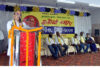
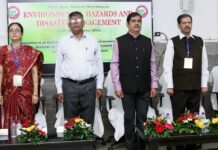
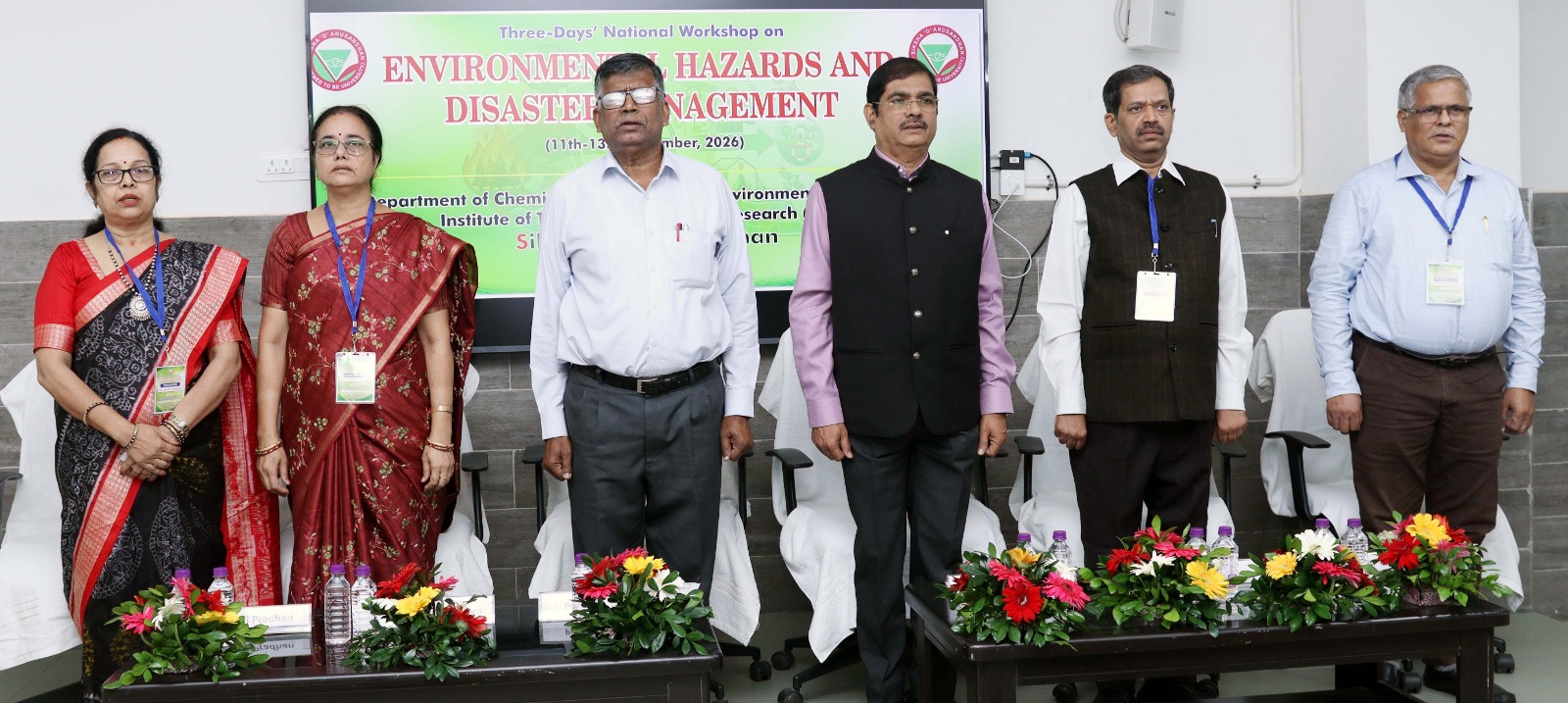
He said this while inaugurating the three-day national workshop on ‘Environmental Hazards and Disaster Management’ organized by the Education and Research (EOR) on Wednesday as the chief guest.
According to the National Earthquake Zoning Map of the Bureau of Indian Standards (BIS), Odisha falls in Zone-2 and Zone-3. The Mahanadi valley, starting from Jharsuguda and Sambalpur to Angul, Cuttack, Bhubaneswar, Paradip and Puri, falls in Zone-3, which is a moderate earthquake hazard area. Most other parts of the state fall in Zone-2 and are considered to be low-hazard areas.
Noting that earthquakes have been experienced in Odisha before, Dr. Suresh said that in May 2014, an earthquake of magnitude 6 in the Bay of Bengal was felt in coastal Odisha. Similarly, in 1963, an earthquake of magnitude 5.2 was felt in Sambalpur, in 1995, an earthquake of magnitude 4.6 was felt in Bonaigarh and Deogarh, and in 2001, an earthquake of magnitude 4.7 was felt in Sundargarh.
NCS is monitoring earthquakes 24 hours a day through 180 earthquake monitoring stations across the country. Out of these, three stations are located in Bhubaneswar, Jharsuguda and Rayagada. These stations can detect earthquakes of magnitude 3 or above. NCS is working towards developing an early warning system for the earthquake-prone Himalayan region, Dr. Suresh informed.
To assess the seismic hazard of Bhubaneswar city, NCS has conducted a seismic microzonation study of the city. This divides areas with similar seismic hazard into smaller zones. The study has assessed the geophysical, geomechanical, geomorphological and seismic data.
“In July 2025, we conducted a study in an area of 420 square kilometers under the Bhubaneswar Development Plan. During this study, natural ground vibrations were measured at 1,650 locations. In addition, boreholes were dug up to a depth of 30 meters and various tests were conducted up to a depth of 100 meters. In addition, more than 1,200 soil samples were tested in the laboratory,” said Dr. Suresh.
The study took into account six parameters. Among them, the shear wave velocity of the soil up to 30 meters below the surface was found to be between 360 and 760 meters per second in most areas of the city. This indicates a firm ground, suitable for construction work. However, in the eastern part of the city, this velocity decreased to 184 to 360 meters per second, indicating that the soil there was relatively soft.
Similarly, in the western and central parts of the city, the depth of the engineering rock layer is only between 2 and 20 meters, while in the eastern part it is up to 86 meters. In this area, there is a thick layer of clay on top of the hard rock layer.
The peak frequency of ground vibrations varies from less than 1 Hz to more than 10 Hz in different parts of the city. It is more than 10 Hz in the hard ground of the central part of the city, while it is less than 4 Hz in the soft and thick soil of the eastern part. Tall buildings usually vibrate at a lower frequency. If the vibration frequency of the ground and the building is the same, then the intensity of the vibration increases many times, said Dr. Suresh.
Regarding the peak ground acceleration, Dr. Suresh said that while it is only 0.05 G (where G means acceleration due to gravity) in the rock layer beneath the city of Bhubaneswar, it increases from 0.08 to 0.17 G at the surface.
The maximum frequency (peak frequency) of seismic vibrations varies over short distances in the Jagmara area of the city. It is mainly between 1 and 6 Hz, but in this area the increased vibration intensity is 2 to 5 times. This means that a 10-story building shakes at about 1 Hz frequency, a 5-story building at 2 Hz, and a 2-story building at 5 Hz frequency.
Dr. Suresh said that Bhubaneswar is located in the third zone (Zone 3) of the seismic hazard index. For this zone, the National Building Code (NBC) prescribes building design based on a seismic intensity of 0.08 G. However, according to the seismic microzonation map, the seismic intensity in this area is between 0.14 and 0.17 G, which is almost double the level prescribed by the National Building Code.
“While the National Building Code has taken 0.16 G as the base for very rare and highest intensity earthquakes, the study map shows it between 0.20 and 0.27 G. The same situation is observed in Chakeisiani, Pahal, Old Bhubaneswar and Uttara Angal,” he said.
According to the hazard index prepared after this study, the seismic hazard level in most areas of Bhubaneswar is low. However, in the eastern part of the city, along the Kuakhai and Daya rivers, it is found to be at a moderate to high level, said Dr. Suresh.
However, this fact is not a reason to panic, but a warning for proper engineering planning and construction. It is very important to know the nature of the soil at the site before starting any construction work. Especially in the eastern part of the city, more care and caution is needed while constructing tall buildings, bridges and other large infrastructure, said Dr. Suresh.
SOA Vice Chancellor Professor Pradeep Kumar Nanda presided over the event while Professor Pradeep Kumar Sahu, Dean of the SOA-run Institute of Technical Education and Research (ITER), also delivered a speech.
The workshop is being organized in collaboration with the Centre for Environment and Climate (CEC) of SoA and the Department of Chemistry, ITER. The convener of the workshop, Dr. Avanti Pradhan, gave an overview of the programme and its objectives, while Associate Professor Dr. Bibhu Prasad Panda proposed the vote of thanks. Professor Sarat Chandra Sahu, Director, CEC, and Professor Sujata Mishra, Head, Department of Chemistry, ITER also addressed the workshop.