




By Our Correspondent
BHUBANESWAR: The Supreme Court cause list for 13 August 2026 shows the related applications (I.A. Nos. 236884/2026 & 236908/2026) listed under the main Prakash Singh & Ors. v. Union of India matter (W.P.(C) No. 310/1996). Petitioner’s counsel is Prashant Bhushan.
Earlier mentions had senior advocate P. Chidambaram raising the matter for urgent listing (initially expected around 12 August). The listing was deferred, and it is now set for hearing before the CJI’s bench on 13 August which is “today” .
The PIL challenges the Odisha government’s handling of the DGP succession process ahead of Y.B. Khurania’s retirement on 16 August 2026.
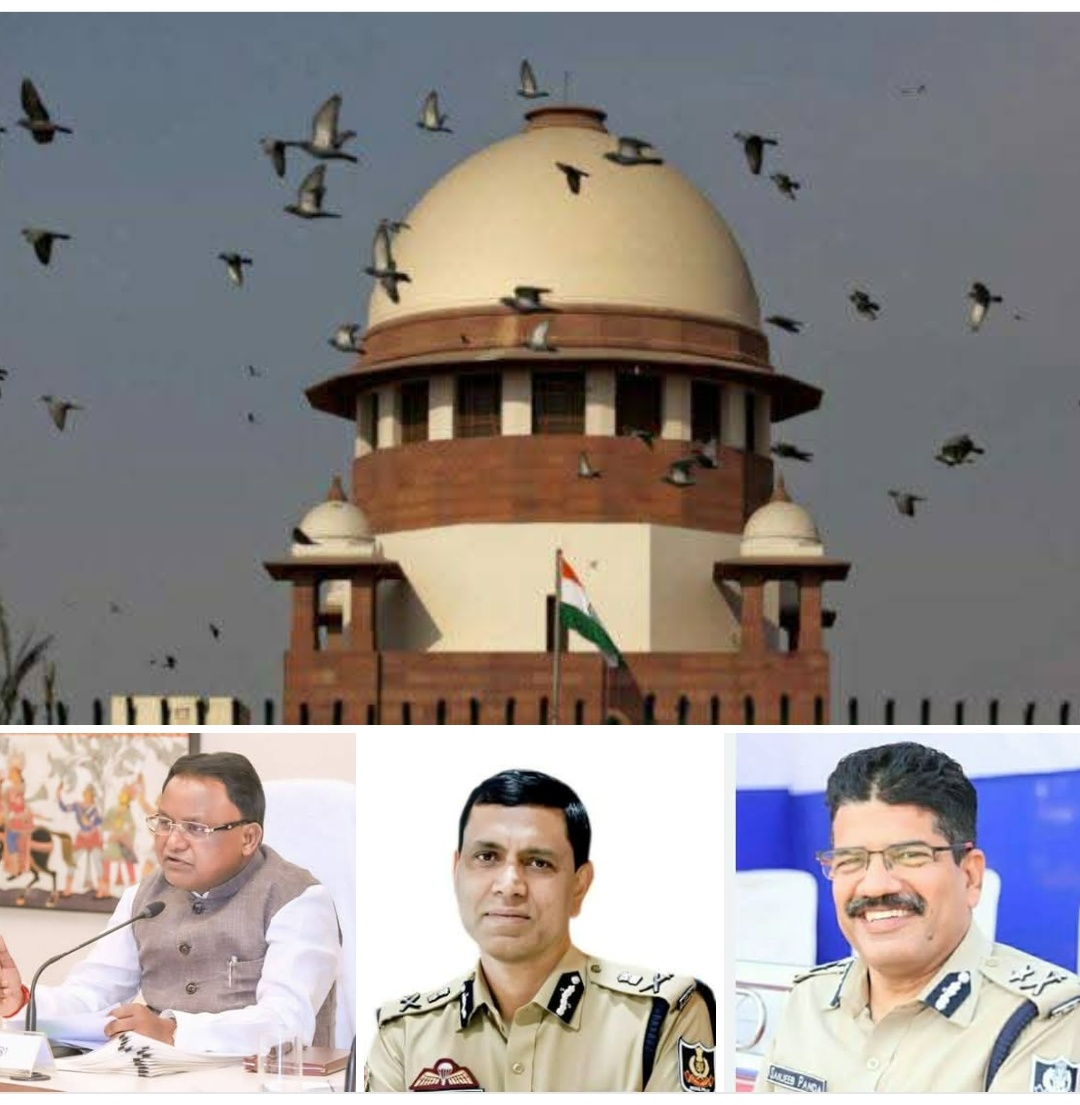
Meanwhile, Dr. Sudhanshu Sarangi is a highly distinguished 1990-batch IPS officer, He is currently the senior-most eligible candidate still in the running for the state’s top police post. He was officially empanelled by the Government of India for DG-level central posts, reinforcing his merit and clean record, His name is prominently featured on the revised list submitted by the state government to UPSC. While Dr. Sarangi leads heavily on seniority, merit, and experience, the race has intensified with legal, procedural changes monitored by SC.
Key allegations include:
Withdrawal of an earlier panel sent to the UPSC.Last-minute promotions of ADG-rank officers (including Sanjeeb Panda) to DG rank to bring them into the zone of consideration.
Potential non-compliance with Prakash Singh guidelines on eligibility (preference for senior officers already in DG rank / Level 16, residual service, etc.).The Court has previously indicated it expects the UPSC to adhere to its directions on eligibility. No final orders blocking any specific officer have been issued yet. The outcome of today’s (13 August) hearing could influence whether the UPSC proceeds with the revised panel or faces interim restrictions.
What the Court has already indicated:From the earlier mentioning of the matter (when P. Chidambaram raised it):CJI Surya Kant stated that the UPSC is well aware of the eligibility criteria and the Court’s rulings in Prakash Singh.He said: “We expect the UPSC to adhere to our judgment.” If an ineligible panel is submitted, the Commission must act in accordance with earlier directions.The Court has previously authorised the UPSC to act when States commit breaches of the guidelines.
These remarks suggest the Court is likely to reinforce the existing framework rather than invent entirely new rules on the spot.
Likely focus and possible directions:Based on the Prakash Singh judgment (2006), subsequent clarifications, the February 2026 orders in related Telangana/Tamil Nadu matters, and the specific allegations here (panel withdrawal + last-minute ADG-to-DG promotions of officers including Sanjeeb Panda):
The Court is expected to emphasise that the UPSC should primarily consider officers already in the DG rank (Level 16 of the pay matrix) who meet the residual service requirement (generally at least six months) and have the requisite experience and clean record. Last-minute promotions solely to expand the panel may be viewed with caution if they appear designed to circumvent seniority or the “senior-most eligible officers” principle.
Role of the UPSC: Strong direction to the UPSC to strictly scrutinise the revised panel and not include officers who do not satisfy the Court’s criteria at the relevant time. The Court may tell the UPSC to proceed only with clearly eligible names.
Possible interim measures: Ask for the current status of the UPSC process and any revised list submitted by Odisha.Direct that no final appointment be made until the Court examines compliance (given the tight 16 August retirement deadline of the incumbent).Or simply record that the UPSC must follow the guidelines and list the matter again after a short time for a status report.
The most probable outcome is a clear, firm reminder to both the Odisha government and the UPSC to strictly follow the Prakash Singh framework and the Court’s recent 2026 clarifications on eligibility. The Court is likely to put the onus on the UPSC to filter out any ineligible names rather than itself deciding who should or should not be on the panel at this stage.
The actual order will depend on the arguments made by Prashant Bhushan, the State’s response, and any documents placed before the bench. Once the hearing concludes, the official order or oral observations will be the authoritative statement.
Yes — Sanjeeb Panda’s chances currently hang in the balance:Here’s why, based on the situation as of early 13 August 2026:Factors that keep him in the race. He has been promoted to DG rank (Level 16) on 10 August. The state government appears to favour including him in the revised panel being sent to the UPSC.
The Supreme Court PIL (now being argued by Prashant Bhushan) specifically challenges the timing and purpose of the last-minute promotions of ADGs (including Panda) to bring them into the DGP consideration zone.
The Court has already signalled that the UPSC must strictly follow the Prakash Singh guidelines and only consider eligible officers. If the Court or the UPSC takes the view that officers promoted just days before the panel is finalised (to alter the seniority/eligibility list) should not be treated as fully eligible at this stage, Panda’s name could be excluded or given lower priority. There are still senior officers (Sudhanshu Sarangi and R.P. Koche) already holding DG rank who remain in contention. The tight deadline (Khurania retires on 16 August) increases the pressure for a clean, guideline-compliant process.
Until the Supreme Court hearing concludes and the UPSC finalises its shortlist of three names, Panda’s inclusion is not assured. His promotion has made him formally eligible on paper, but the legal challenge has cast a cloud over whether that eligibility will be accepted for this particular selection process.
Bthe outcome of today’s hearing and the UPSC’s response to the Court’s directions will decide whether his name stays in the final shortlist or drops out. The balance can tilt either way depending on what the Court says.
It may be noted here that, Government of Odisha had adopted the same technique last time while making Khurania HoPF. Sidhartha Narvane was allowed to retire although he was excluded during the selection process. Nothing may happen to Sushant Nath, but presently all efforts are underway to exclude him.