When Even Skeletons Must Walk for Justice: Keonjhar, Home turf of Odisha Chief Minister Mohan Charan Majhi and Neighbouring district of President Droupadi Murmu
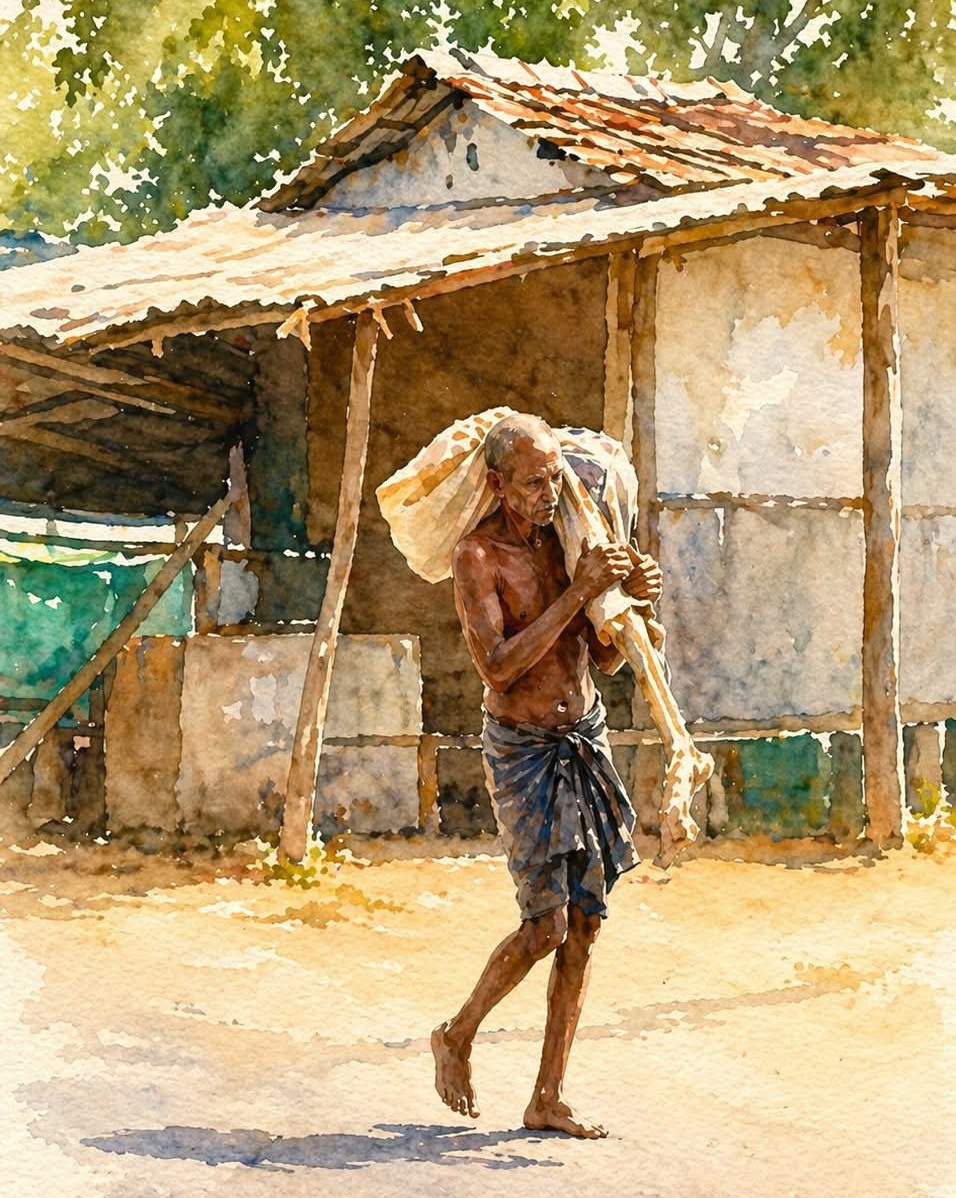
Jitu Munda in Patna block in Keonjhar, home turf of Odisha Chief Minister President and Neighbouring district of President Droupadi Murmu
By Dr Padma Lochan Dash
BHUBANESWAR:The disturbing episode of Jitu Munda in Patna block in Keonjhar, home turf of Odisha Chief Minister President and Neighbouring district of President Droupadi Murmu, where a man was compelled to carry skeletal remains to a bank merely to establish a fact as basic as death, compresses within it three stark truths that cannot be softened or rationalised; first, when the matter finally reached attention and the administrative machinery chose to act, the grievance that had lingered for days, perhaps weeks, was resolved almost immediately, which makes it evident that the delay was never procedural necessity but sheer negligence, a failure of will rather than a failure of system, a neglect that only corrected itself when public scrutiny made indifference inconvenient;
Second, the episode exposes a deeper and far more troubling condition, a pattern of medico-bureaucratic apathy within the state where the elementary duty mandated under the Registration of Births and Deaths Act, 1969, to record death with dignity and promptness, collapses in practice, especially in remote and tribal regions, leaving citizens to navigate a maze they neither designed nor understand, where health functionaries do not reach, registrars do not record, and responsibility does not settle on any identifiable shoulder, creating a silent but persistent erosion of trust between the state and its people;
And third, the contrast becomes impossible to ignore, almost jarring, when placed alongside the ease with which large financial entities negotiate, restructure, or in many cases escape accountability in matters involving crores, where institutional flexibility, discretion, and accommodation appear abundant, yet when an ordinary citizen seeks access to a modest sum that is rightfully theirs, the same system hardens, retreats into rigid compliance, and demands proof in forms that it itself has failed to generate, revealing a duality that offends both fairness and national conscience, for a nation that aspires to strength and self-respect cannot permit a governance culture where the powerful find pathways and the vulnerable encounter walls, where dignity becomes conditional upon visibility, and where justice arrives not as a right but as a reaction.
It now falls squarely upon governments, both at the Centre and within the state, to restore balance and discipline within institutions that are ultimately sustained by the trust and resources of ordinary Indians, including banks that cannot be allowed to operate with one posture for the influential and another for the common citizen; regulatory firmness must ensure that procedures serve people, not the other way around, and that sensitivity becomes an enforceable expectation rather than an optional virtue.
At the same time, the state government must treat the Keonjhar episode not as an embarrassment to be contained but as an opportunity to act with seriousness and clarity, undertaking a holistic review that binds together medical administration, civil registration, local governance, and financial access into a single responsive framework, and then placing before the public a clear set of reforms it intends to implement, with timelines, accountability, and measurable outcomes, so that confidence is not sought through assurances alone but rebuilt through visible, structural correction.