




By Our Correspondent
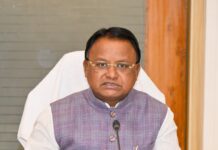
BHUBANESWAR: Odisha CM Mohan Charan Majhi and other BJP leaders from Odisha have actively campaigned in the 2026 West Bengal Assembly elections, with a clear focus on consolidating support among Odia-speaking voters and migrants in the state. This is part of BJP’s broader strategy to challenge the incumbent Trinamool Congress (TMC) government led by Mamata Banerjee. Polling occurred in two phases on April 23 and April 29, 2026, with results expected on May 4.
Scale and Strategy of the Campaign: The Odisha BJP unit deployed nearly 50 state leaders, including CM Mohan Majhi (who planned 8–10 visits), eight ministers, over 40 MLAs, MPs, and senior figures like Union Minister Dharmendra Pradhan and state BJP president Manmohan Samal. They targeted constituencies with a sizeable Odia-speaking population, especially in urban/semi-urban areas of Kolkata, Howrah, southern districts like Medinipur (West Midnapore, Jhargram), and parts of Birbhum and Presidency division.
Majhi participated in nomination filings and rallies like Rampurhat, Hansan, Murarai, Nalhati in Birbhum on April 2, roadshows like, in Bagdah), and public meetings. He highlighted the “Odisha model” of governance under BJP, contrasting it with alleged corruption and lack of development in Bengal under TMC.
He framed the narrative as “After Anga (Bihar) and Kalinga (Odisha), it’s Banga’s (Bengal) turn” for change, emphasizing good governance, anti-corruption, and PM Modi’s leadership. His tribal (Santhal) background was noted in areas with tribal presence, though the primary target remained Odia migrants.
Campaigning intensified in the final days, with Majhi leading efforts in the second phase (urban pockets) alongside figures like Yogi Adityanath.
The strategy leverages cultural and linguistic affinity — thousands of Odia migrants and their families live and work in these areas (many in informal sectors, trade, or as laborers). BJP aims to convert this demographic into a swing or consolidating vote bank in closely contested seats by evoking pride in Odisha’s recent BJP-led shift (from long BJD rule) and promising similar “transformation” in Bengal.
Impact on West Bengal Polls:
The direct electoral impact is likely limited but targeted and symbolic:
Niche consolidation: In seats with concentrated Odia voters (not a statewide majority), it could help BJP by improving turnout and margins among this group. Odia migrants are seen as an “influential voter base” in Kolkata/Howrah/Medinipur pockets. Cultural outreach (language, shared eastern identity, “Odisha model”) seeks to counter TMC’s local dominance.
Broader messaging: It signals BJP’s organizational push across eastern states and reinforces the narrative of a “rising East” under BJP (Bihar, Odisha, now Bengal). Majhi’s presence adds credibility when talking about governance shifts.
Limitations: West Bengal polls are heavily driven by local factors — TMC’s minority consolidation, anti-incumbency on issues like law & order/infiltration, Hindu vote polarization, and welfare schemes. National leaders (Modi, Shah) and state dynamics dominate. Odia voters form a minority overall; their swing potential exists in specific urban/semi-urban segments but isn’t decisive statewide. No major independent analyses (as of late April 2026) quantify vote shifts attributable to Majhi’s campaign.
BJP has projected confidence (like Amit Shah’s claims on seats in Phase 1), and the Odisha team’s deployment shows investment in ground-level outreach where linguistic ties matter.
Does It Convince Odia Voters? Analysis
It has moderate potential to convince or mobilize Odia voters, but success depends on several factors:
Positive elements:
Emotional & cultural connect: Odia pride (“Asmita”) is strong. Highlighting Odisha’s BJP government achievements (even if early-stage) and Majhi’s rise as a “son of the soil” (modest background, tribal roots) can resonate with migrants feeling disconnected from Bengal politics. Framing it as extending successful eastern models taps into aspirations for development, jobs, and reduced “corruption.”
High-visibility efforts: Multiple visits, roadshows, and interactions with Odia communities in Kolkata show seriousness. This can boost morale among migrant networks and encourage voting for BJP as a “pro-Odia” choice.
Timing: Late-campaign pushes (including final day efforts) aim to consolidate undecided or soft voters before April 29 polling.
Challenges and limitations:
Migrant realities: Many Odia workers prioritize local issues like wages, safety, TMC schemes, or anti-BJP sentiments on national policies over distant Odisha governance. Linguistic affinity helps but doesn’t override class, economic, or communal voting patterns in Bengal.
Limited scale: Odia population is influential in pockets but not a bloc voter base like some other communities. Turnout among migrants can be lower due to work or registration issues.
Counter-narratives: TMC may frame it as “outsider” interference. Broader polarization (Hindu vs. minority consolidation) could dilute the Odia-specific pitch.
Early days of Odisha model: BJP has governed Odisha only since 2024; tangible results may not yet fully convince skeptical migrants compared to entrenched local loyalties.
Overall assessment: The campaign is a smart, low-cost micro-strategy for BJP to nibble at margins in targeted seats rather than a game-changer. It likely strengthens loyalty among pro-BJP Odia voters and may sway some fence-sitters through cultural resonance and governance pitch. However, its statewide impact on Bengal results will be marginal — success will be measured by whether BJP gains in Odia-heavy pockets rather than a broad shift. Post-poll data (after May 4) on booth-level performance would give clearer evidence.
This fits BJP’s pattern of deploying regional leaders for linguistic/cultural outreach in neighboring states. Whether it “convinces” enough depends on ground execution and how well local BJP candidates amplify the message.