




By Our Correspondent
BHUBANESWAR: People voted for BJP in Odisha primarily for change after 24 years of BJD rule, driven by anti-incumbency, the “Odia Asmita” narrative against VK Pandian’s outsized influence, governance fatigue, and Modi’s campaign—not solely (or even mainly) as a mandate for immediate high-profile corruption prosecutions of Naveen Patnaik or Pandian.
BJD had ruled continuously since 2000. Voters showed fatigue over local corruption perceptions, unemployment, farmer issues, crime against women, migrant labour problems, and a sense that governance had become distant.
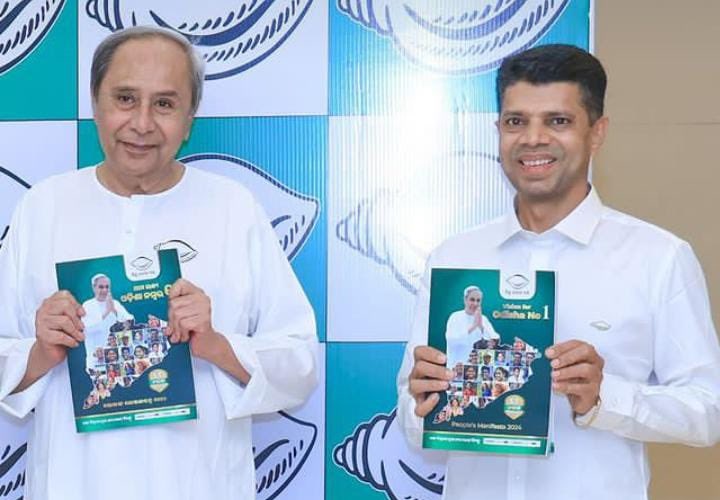
BJP successfully framed the Tamil-origin former IAS officer VK Pandian (who took VRS, joined BJD, held cabinet rank as 5T chairman, and was seen as running the administration and influencing tickets) as an “outsider” overshadowing Odia leaders and Naveen himself. The “Odia Asmita/Swabhiman” campaign resonated strongly. Pandian quit active politics shortly after the defeat.
Strong national leadership, booth-level work, promises (e.g., higher paddy MSP, women’s schemes like Subhadra), and highlighting temple-related controversies (Ratna Bhandar, Jagannath Temple) helped. BJP took 78/147 Assembly seats and 20/21 Lok Sabha seats; vote shares were close (BJP ~40%, BJD ~40%), showing it was a tight but decisive shift rather than a total collapse of BJD support.
Naveen retained a relatively clean personal image for many, even as the system around him faced criticism.Action (or lack of high-profile action) against BJD leaders.
There have been no major criminal cases, arrests, or convictions targeting Naveen Patnaik or VK Pandian personally on corruption charges by the BJP government (in power since June 2024 under CM Mohan Charan Majhi).Private complaints have failed: A case alleging ~Rs 500 crore spent on ~300 helicopter trips by Naveen and Pandian (supposedly without proper sanction and funded by private parties) was dismissed by the SDJM and upheld by the sessions court in 2026 for lack of prima facie material.
Foreign trips (e.g., claims of Rs 1.60 crore Singapore special aircraft, expensive hotels), helipads, and other expenditures have been questioned via RTI/activists. BJP leaders regularly cite CAG reports on irregularities under the previous regime—especially District Mineral Foundation (DMF) funds (alleged diversion/misuse of hundreds to ~Rs 2,880 crore in mining-affected areas), land allotments (thousands of acres below market or unused), and mining-related issues. They use these for political counter-attacks when BJD criticises the current government.
Economic Offences Wing (EOW) has arrested certain BJD-linked individuals on fraud/mineral transportation cases, and the government has transferred many officers associated with the previous setup and cancelled some irregular land allotments. Early on (100 days mark), ministers said investigations would follow evidence and “law will take its course,” but high-profile political targeting of the top two has not materialised.
Possible reasons for limited action against the top leaders, Building solid, court-sustainable cases takes time; political rhetoric ≠ evidence that survives scrutiny.
Naveen has long projected a “clean” image with no pending criminal cases declared in affidavits.Governments often prioritise governance, welfare delivery, and bureaucratic resets over immediate vendetta-style prosecutions (which can backfire politically or legally).
BJP is also facing its own criticism from BJD on current issues (mismanagement claims, mining policy, etc.).
In short, voters delivered a change-of-guard verdict after a quarter-century of one-party rule, heavily influenced by identity/pride narratives and accumulated grievances. Expectation of swift, high-visibility action against Naveen/Pandian was part of the campaign rhetoric for some supporters, but institutional, evidentiary, and political realities have so far kept the top two largely untouched while lower-level probes, CAG-based criticism, and administrative changes proceed. Whether stronger cases emerge later remains open.
It can send a mixed or disappointing message to a section of voters, but the reality is more nuanced than a simple “wrong signal.”
A large part of the anti-BJD vote in 2024 was driven by fatigue with perceived corruption, high-handedness, and the Pandian-centric system. When the new government does not pursue high-profile cases against the top faces (Naveen Patnaik and VK Pandian), it creates a sense among some supporters that “nothing really changes” and that powerful people remain protected regardless of which party is in power.
In Indian politics, voters often expect the incoming party to act decisively against the previous regime’s alleged scams. Visible inaction or slow progress on the biggest names can breed cynicism: “They criticised everything before elections, but after coming to power they are soft.”
It risks demotivating the cadre and the section of the public that prioritised accountability over welfare continuity.
Strong, court-sustainable criminal cases take time. Private complaints (like the helicopter expenditure one) have already been dismissed for lack of prima facie evidence. Governments that rush politically motivated cases often lose them and look worse.
Aggressive targeting of a still-popular figure like Naveen can backfire and create a sympathy wave. Many Indian state governments (across parties) prefer using CAG reports, departmental inquiries, land cancellations, and lower-level probes rather than immediately arresting the former CM.
The BJP government has emphasised bureaucratic reshuffles, cancelling some irregular allotments, and highlighting CAG findings on DMF funds and land issues. This is a quieter form of accountability that does not generate dramatic headlines but still puts pressure on the previous system.
Similar patterns have been seen in other states after regime changes — high-decibel campaign rhetoric rarely translates into immediate high-profile prosecutions of the top opposition leaders.
For voters who specifically wanted visible action against Naveen and Pandian, the current approach does send a disappointing signal of continuity and caution. For others who primarily wanted a change in governance style, end of the “outsider” dominance, and delivery on welfare/development promises, the lack of high-drama cases may not matter as much.In competitive Indian democracy, the real test is usually whether the new government improves administration and avoids repeating the same alleged excesses — not only whether it locks up the previous rulers. If solid evidence eventually surfaces and still no action is taken, the “wrong message” charge will become much stronger. As of now, it remains an open political debate rather than a settled failure.