


By Our Correspondent
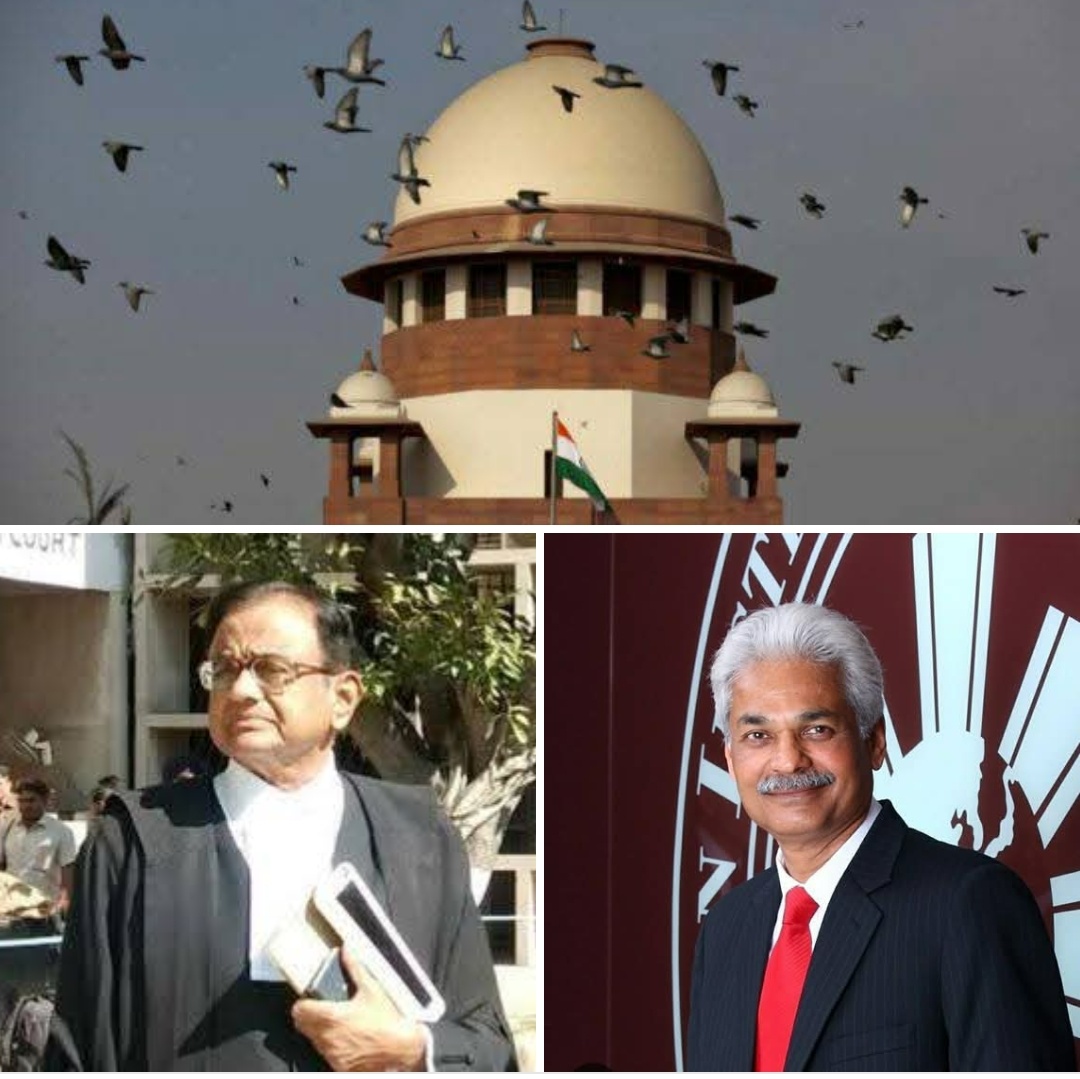
BHUBANESWAR: P. Chidambaram as Senior Advocate for the petitioner has alleged that the Odisha government is attempting to “smuggle”/include recently promoted ADGP-rank IPS officers into the DGP selection panel for the State’s next Director General of Police, in alleged breach of the Supreme Court’s Prakash Singh guidelines.
This is not a criminal “smuggling” case but a challenge via PIL to the process for appointing Odisha’s DGP. The core allegation is that the State withdrew or altered panels of eligible officers sent to the UPSC, promoted ADGPs notably Sanjeeb Panda and Yeshwant Kumar Jethwa of the 1994 batch to DG rank around mid-August 2026, and sought to include them so they could be considered—contrary to the requirement that only officers already at the appropriate (Level 16/DGP) rank and meeting seniority/merit criteria from the prescribed panel should be considered.
Under the 2006 Prakash Singh directions (and subsequent clarifications), States send a panel of eligible senior officers to the UPSC; the UPSC prepares a shortlist typically of three, and the State appoints from it, with a minimum two-year tenure.
Odisha initially sent three DG-rank names (Sudhansu Sarangi 1990-batch, Susanta Nath and R.P. Koche 1993-batch). It later expanded the list to include ADGPs and/or withdrew panels around a scheduled UPSC meeting around 7 August 2026. Promotions of the two ADGPs to DG rank followed shortly after the matter was first mentioned in the Supreme Court.
Senior Advocate P. Chidambaram mentioned the matter urgently before a CJI Surya Kant-led bench with Justices Joymalya Bagchi and V. Mohana in mid-August 2026. The Court took note, obtained UPSC’s assurance that it would not finalise recommendations pending hearing, and recorded concerns about possible “backdoor entry.” Amicus curiae Senior Advocate Raju Ramachandran, assisting in the broader Prakash Singh matters has also flagged process issues.
Incumbent DGP Y.B. Khurania retired around 16 August 2026; an interim arrangement (Vinaytosh Mishra holding additional charge) is in place. UPSC has been restrained from finalising the panel.
Odisha has filed its counter-affidavit defending the promotions as normal administrative steps and asserting it can send a fresh compliant panel of eligible (now DG-rank) officers. UPSC has also filed a response.
The amicus has submitted a report. A rejoinder from the petitioner side is reported as filed (consistent with the sequence of pleadings).
The matter was listed around 2 September 2026 (including on an application regarding the interim order) and deferred to 7 September 2026, with the interim directions (restraining UPSC finalisation) continuing.
Tomorrow (7 September 2026, relative to the current date of 6 September) is the next scheduled hearing before the same CJI-led bench.
How this impacts the SC hearing and what next
The allegations and Chidambaram’s submissions put the process under close scrutiny for compliance with Prakash Singh. The Court has already signalled that backdoor inclusion of ineligible or newly elevated officers is unacceptable and has kept UPSC on hold. The amicus report, State counter, and rejoinder will be key material.
Former Special Director of the Intelligence Bureau (and retired 1976-batch IPS officer) Yashovardhan Jha Azad has sought intervention in the Odisha DGP appointment matter pending before the Supreme Court.
He has publicly described the State’s actions as a clear violation of the Supreme Court’s Prakash Singh directives. In his view, the original panel of three eligible officers (sent around May 2026) should have stood; instead, the State withdrew it (citing issues with an integrity certificate for one name), later expanded the list, and promoted two ADG-rank officers so that a favoured candidate could be considered. He has stated that this undermines police reforms and that he approached the Court precisely to ensure scrupulous compliance.
How this impacts the case:
Adds weight and credibility: Azad is a highly experienced former top intelligence and security official (Special Director, IB; Secretary (Security), Government of India; former Central Information Commissioner). His intervention brings an independent, senior police/intelligence perspective focused on institutional integrity and the broader Prakash Singh police-reforms framework, rather than any personal stake in the Odisha cadre. This strengthens the arguments that the process must strictly follow the Court’s guidelines on empanelment, seniority, rank, and avoidance of last-minute alterations or promotions aimed at expanding the pool.
Supports the main PIL: It aligns closely with the petition being argued by Senior Advocate P. Chidambaram (alleging attempts to “smuggle” recently promoted officers into the panel). Both emphasise that only officers already meeting the prescribed criteria from a proper panel should be considered, and that withdrawals/expansions/promotions timed around UPSC meetings or Court mentions raise concerns of circumvention.
Procedural status: Reports indicate he has sought intervention (or filed related proceedings) raising compliance concerns. As of the latest available information (around the 2 September 2026 listing), no detailed judicial finding or formal order specifically on his intervention application has been recorded publicly. It is being considered alongside the main matter, the State’s counter-affidavit, UPSC’s response, the petitioner’s rejoinder, and the amicus curiae’s report.
Effect on tomorrow’s hearing (7 September 2026): His involvement reinforces the Court’s existing caution (the interim restraint on UPSC finalising the panel continues). It may prompt the bench (CJI Surya Kant, Justices Joymalya Bagchi and V. Mohana) to examine the process even more carefully for fidelity to Prakash Singh, including whether the original panel should be restored or a strictly eligible fresh panel insisted upon. It does not automatically change the outcome, but it adds another independent voice against any perception of “backdoor” entry and in favour of transparent, rule-bound selection. The Court can hear all intervenors/parties together.
Overall, Azad’s petition/intervention elevates the matter beyond a single State-specific dispute into a clearer test of adherence to the long-standing police-reforms judgment. It increases pressure for a process that is seen as fair and compliant, while the interim arrangement (acting/in-charge DGP) continues until the Court decides. The exact impact will depend on how the bench treats the intervention materials and arguments at the 7 September hearing.
Likely next steps at/after the hearing:
Court may examine the amicus report, the State’s justification for the promotions and revised panel, and the petitioner’s rejoinder.
Possible outcomes include: continuing or modifying the interim restraint; directing UPSC to consider only the original compliant panel (or a strictly eligible fresh one); seeking further clarification/affidavits; or (if satisfied on process) allowing the selection to proceed under monitored conditions. Maintainability of the PIL (as no affected serving officer has approached the Court directly) has been flagged but has not blocked consideration so far.
Substantive orders on the panel/eligibility or further interim directions are possible; full final disposal may take more time if issues remain contested. Appointment of a regular DGP remains on hold pending the Court’s decision. The case remains part of the broader Prakash Singh police-reforms oversight. Developments depend on arguments and the material placed on record at the 7 September hearing.