




By Our Correspondent
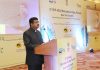
NEW DELHI/BHUBANESWAR:The National Shipping Board (NSB) held its first ‘Sagar Samvad’ on here today, using the day-long dialogue to press for a five-point roadmap including to add 100 vessels to India’s foreign-dependent merchant fleet over the next five years, as expressed by the Union Minister of Ports, Shipping & Waterways (MoPSW), Sarbananda Sonowal during his speech.
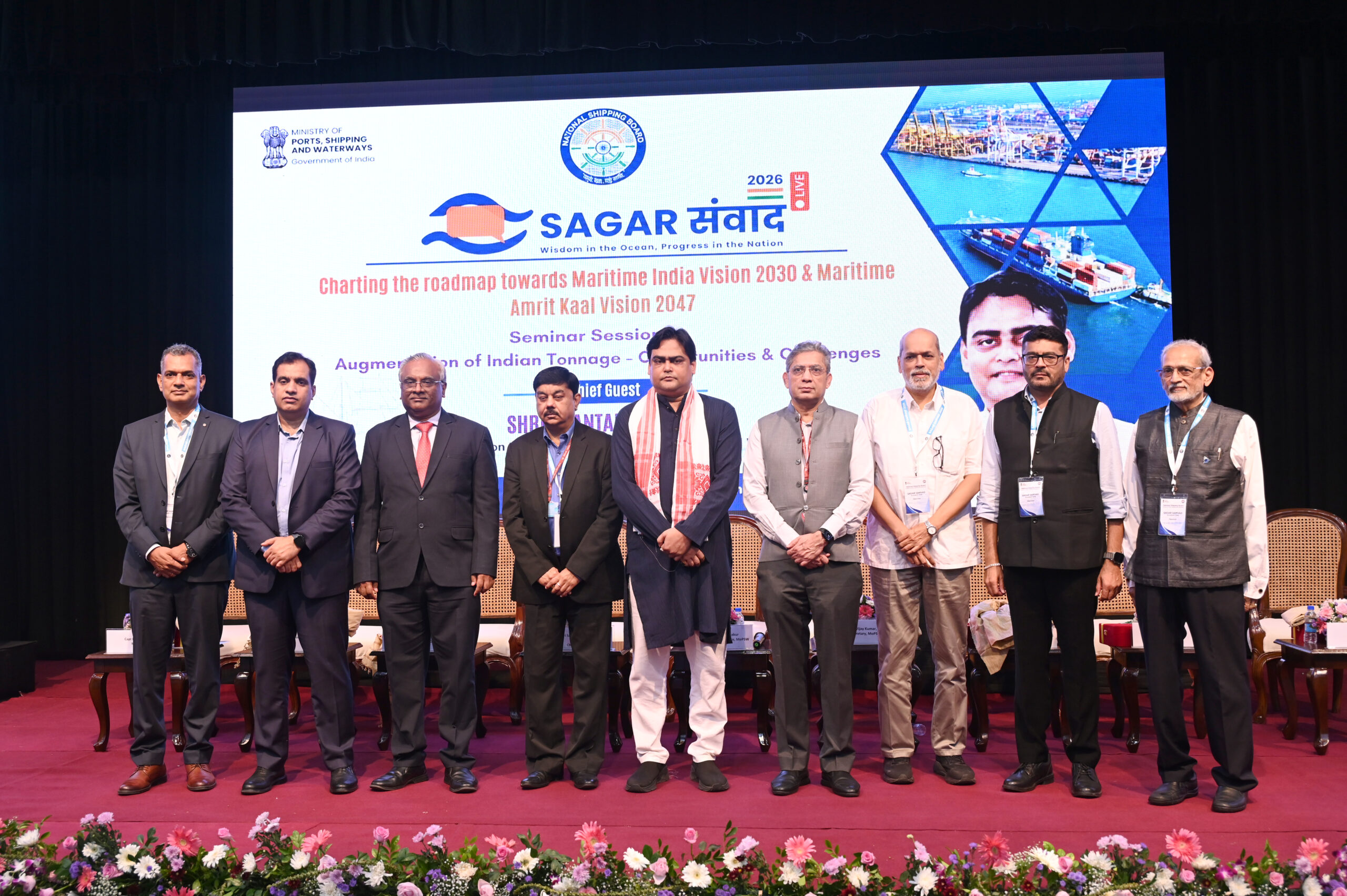
The event, themed “Charting the Roadmap Towards Maritime India Vision 2030 and Maritime Amrit Kaal Vision 2047,” was held at the Civil Services Officers Institute on Vinay Marg and drew senior officials, shipowners, financiers and young cadets from India’s maritime training institutes. Sagar Samvad, which means “ocean dialogue,” carries the board’s motto as its theme line: “Wisdom in the Ocean, Progress in the Nation.”
The inaugural edition of Sagar Samvad was chaired by Union Minister Sarbananda Sonowal, who launched the board’s first official website. NSB Chairperson Sameer Kumar Khare used the session to submit the board’s annual report for 2025-26, subcommittee reports containing the policy advice for the government to Sonowal, outlining the board’s work since its reconstitution in May 2025.
“The National Shipping Board (NSB) is older than the ministry it advises, a statutory body constituted in 1958 with one job: make sure India’s shipping policy is written only after listening to the people who sail it, own it and pay for it,” Sarbananda Sonowal said. “Under the dynamic leadership of Prime Minister Narendra Modi, under the re-enacted Merchant Shipping Act, 2025, and the new National Shipping Board Rules, the mandate has been renewed and strengthened. That is exactly why a platform like ‘Sagar Samvad’ matters, bringing policymakers, industry captains, technocrats and civil society into one room to argue, test ideas and build intellectual consensus in the open as per the highest tradition of a thriving democracy like India. That consensus, and nothing else, is what will carry us to an Atmanirbhar Shipping Bharat by 2047.”
Also in attendance was Vijay Kumar, Secretary of the Ministry of Ports, Shipping and Waterways. Sonowal held a special interaction with trainee officers from maritime training institutes, taking questions from what organisers called the sector’s “Yuva Shakti,” or youth power. Sonowal also acknowledged the success of the Container Manufacturing Assistance Scheme, worth ₹10,000 crore, with global shipping major Maersk now ordering containers built on Indian soil.
“I welcome the National Shipping Board’s five-point roadmap, fiscal reform, assured cargo support, access to competitive financing, regulatory streamlining and a genuine ease of doing business,” Sarbananda Sonowal said. “Taken together, these are not five separate tasks; they are the architecture of a nation choosing, at last, to own its own trade. Under the visionary leadership of Prime Minister Narendra Modi, we are quadrupling our port capacity to 10,000 million tonnes a year by 2047. NSB’s task is to ensure Indian shipowners stand inside that growth, not watching it sail past on someone else’s deck.”
Later in the day, a session on “Maritime Labour Force: Opportunities and Challenges” was chaired by Union Minister of Labour & Employment and Youth Affairs & Sports, Mansukh Mandaviya. The session took up the state of India’s seafaring workforce, among the largest in the world, against the board’s own findings on wage taxation, pension gaps and welfare provisions facing Indian seafarers, tying the government’s youth and labour policy directly to the country’s maritime ambitions.
Speaking at the session, Union Minister Mansukh Mandaviya said, “India’s maritime sector has the potential to become a major engine of employment for our young workforce and position India as the world’s leading supplier of skilled seafarers. Under the leadership of our dynamic Prime Minister Narendra Modi, we are expanding quality training capacity, with steps taken to strengthen industry-led skilling, create wider employment pathways, address gender disparity and equip our workforce with skills for emerging segments such as cruise shipping and advanced shipbuilding. A skilled and future-ready maritime workforce will be central to achieving our Maritime India Vision 2030 and building India’s shipbuilding capabilities under Maritime Amrit Kaal Vision 2047.”
Union Minister Mansukh Mandaviya emphasised that India must leverage the expanding global demand for skilled maritime professionals to create high-quality employment opportunities for its growing youth population. He called for coordinated efforts among the government, maritime industry, trade bodies and training institutions to expand training capacity, strengthen market outreach for Indian seafarers and build future-ready skills. He also emphasised the need to address gender disparity in maritime employment, develop specialised talent for emerging segments such as cruise shipping and create a skilled workforce capable of supporting India’s ambition to become one of the world’s leading shipbuilding nations.
The Union Minister of State for Ports, Shipping and Waterways, Shantanu Thakur presided over a panel discussion titled “Augmentation of Indian Tonnage: Opportunities and Challenges.”
“India pays close to $75 billion every year in freight to foreign shipping lines, to move cargo as critical as our crude oil, our gas, our coal and our urea,” Shantanu Thakur said. “That is not a performance problem for Indian shipowners, it is a competitiveness and demand-partnership problem. For India to become a Viksit Bharat by 2047, we cannot depend on the goodwill of others to secure our own trade routes. We must command our own waterline.”
The session also featured addresses by Capt. M.P. Basin and C.V. Subbarao. The valedictory panel on tonnage augmentation saw Atul Jadhav, Vice-President of the Indian Maritime Foundation; Anil Devli, Chief Executive Officer of the Indian National Shipowners’ Association and an NSB member; Capt. S.I.A.K. Azad, Nautical Adviser at the DGMA; Ashutosh Sharma, Chief General Manager at the International Financial Services Centres Authority in Gandhinagar; Rahul Modi, President of the Container Shipping Lines Association and an NSB member; and Capt. Pankaj Kumar, Managing Director of Diamond Blue Shipping Solutions.
Panelists said flying the Indian flag remains 16% to 20% costlier than operating under a foreign one, a gap they attributed to India’s tax on ship imports and maintenance services, tax deducted at seafarers’ wages, tax on freight and higher domestic capital costs, expenses foreign competitors do not carry. Yet under the sector’s Right of First Refusal mechanism, Indian owners are still expected to match foreign freight rates to win cargo, the panel said.
The panel proposed a five-pillar roadmap: fiscal reform, assured cargo support, access to competitive financing, regulatory streamlining and improved ease of doing business (EODB). The measures, if adopted, could help India add 100 ships to its fleet within five years, a step toward the Maritime Amrit Kaal Vision, or MAKV, 2047 target of ranking among the world’s top five ship owning nations, the panel argued.
In his welcome speech, NSB Chairperson, Sameer Kumar Khare said, “This entire effort draws inspiration from the vision of our Prime Minister, who has placed the Blue Economy at the centre of Viksit Bharat under the Maritime Amrit Kaal Vision 2047. Under the decisive leadership of Shri Sarbananda Sonowal, that vision has translated into high-impact infrastructure, port modernisation, and green shipping reforms on the ground.”
The National Shipping Board (NSB) is a statutory advisory body under the Merchant Shipping Act, 2025, that counsels the government on shipping policy, tonnage, seafarer welfare and port-linked maritime development.
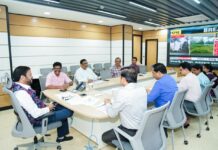
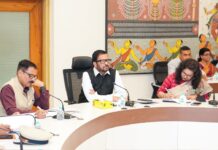
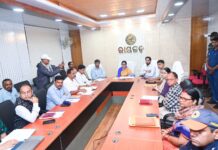
The inaugural edition of ‘Sagar Samvad’ programme of NSB brought together maritime stakeholders, industry representatives and experts across three sessions, with discussions centred on the roadmap for Maritime India Vision 2030 and Maritime Amrit Kaal Vision 2047. One of the sessions focused on “Maritime Labour Force: Opportunities & Challenges”, covering employment generation, seafarer skills, workforce development and emerging opportunities in the sector. Another session, “Augmentation of Indian Tonnage: Opportunities & Challenges”, examined the need to expand India’s shipping fleet and strengthen the country’s maritime capacity. The deliberations provided a platform for industry and stakeholders to share perspectives on building a stronger, more competitive and future-ready Indian maritime sector.