




By Our Correspondent
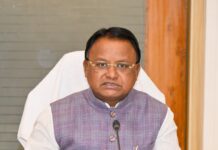
BHUBANESWAR: The Chief Minister Mohan Charan Majhi has now ordered a Crime Branch investigation into the incident of the missing files of the Investigation Commission Report. It has been stated that the record of receiving the files on Swami Laxmananda Saraswati murder case in CMO is also not available.
This is true. after leaving power, on the orders of Naveen Patnaik, VK Pandian, DS Kutey and a group of officers have either burned or taken away all the important documents in the Chief Minister’s office and deleted them from the computer hard drive.
RTI activist Pradip Pradhan had requested the Chief Minister’s Office under the Right to Information Act for many details related to Naveen and Pandian’s activities. But no details were given to him. The first appeal hearing was held in the next stage. During the appeal hearing, the first appellate authority found that all these documents were missing from the Chief Minister’s Office. Therefore, the PIO expressed his inability to provide the details. I had stated that they were on the computer. But the PIO and the first appellate authority said that the computer hard drive was also empty and that the data could not be retrieved.
This shows how deadly Naveen and Pandya are. How did they take all the files? Many important files are missing.
Among many facts, our important information was the documents related to the appointment of VK Pandya as the 5T and my Odisha president. The Public Administration Department said that we do not have these documents. It is not even in the ChiefMinister’s office. So how he was appointed is the main issue. The BJP government has also released this.But BJP leaders are providing protection to Pandian by taking a lot of money, which has been proven in the last two years. Therefore, the police notice is not a concern for Pandian.
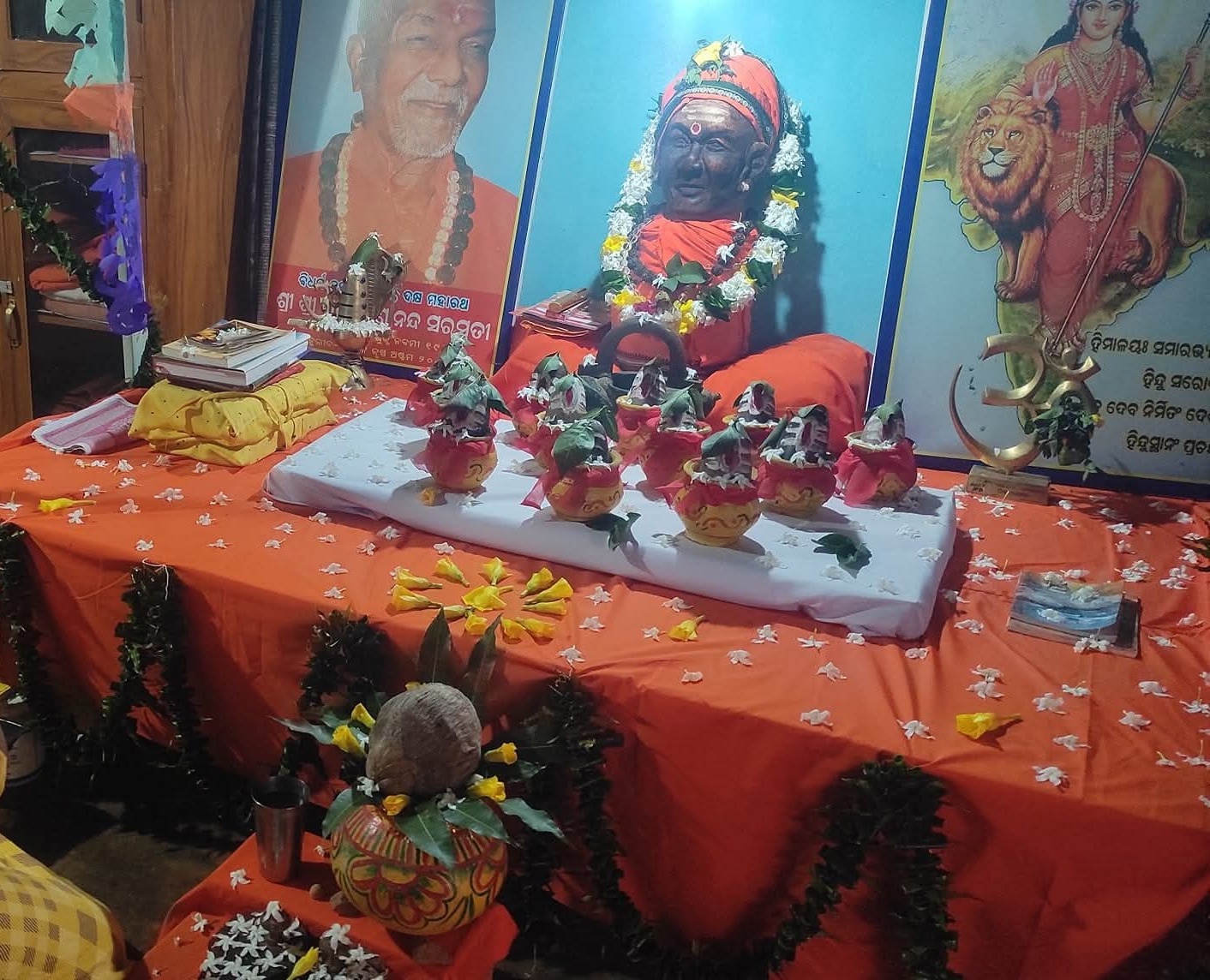
Swami Laxmanananda Saraswati was born in 1926 in Gurjang village near Talcher, in an atheist Brahmin family. He was married at a very young age, in 1943, at the age of seventeen, as per the customs of that time, but being deeply spiritual and a believer in God, he left home with the consent of his family and took up sannyasa to explore religion. After doing penance for a few years in the Himalayas, while visiting the Kumbh Mela in 1966, he came in contact with Shri Bhupen Basu, a Pracharak of the Rashtriya Swayamsevak Sangh, in Prayagraj. He requested Swamiji to return to Odisha to protect Hinduism. Swamiji returned to Odisha, joined Acharya Vinoba Bhave’s “Goraksha” movement and became associated with the Vishwa Hindu Parishad. At that time, he noticed that in Phulbani, Gajapati, Rayagada, Koraput and the entire southern region, through Christiana Missionaries, religious conversions were being carried out on a large scale. Especially, taking advantage of the simplicity of the Dalit and tribal communities, they were being converted by offering them education and employment. While this was happening under the watchful eyes of the government, a Dalit community was taking full advantage of it and grabbing all the facilities of land, land, jobs and government protection of the tribal community.
At such a critical time, on the day of Vyas Purnima in 1968, Swamiji started a Sanskrit toll and ashram near the historic Virupaksha temple located in Chakapad village near Tikabali. The worshipped goddess of Phulbani district is Mata Baral Devi and the worshipped god is Prabhu Virupaksha. There are only two curved Shiva temples in the whole of Odisha, one at Huma near Sambalpur and the other near Tikabali. Chakapada Virupaksha Shiva Temple. Only the temple remains on one side in Huma, but at Chakapada, along with the temple, big trees are still leaning towards the south.
It is said that when the Shiva devotee Ravana was carrying the Lord on his head and carrying Lanka, he had to stop somewhere on the way. When it came to Chakapada, due to slight doubts, he put the Lord down there, after doubting, he cleaned himself and when he went to put the Lord on his head, the Lord did not get up from there. While trying to lift the Lord with all his strength, all the forest plants there bent down and twisted towards the south, but did not move. Finally, Lord Shiva remained there, being enshrined in the name of Virupaksha, Ravana returned to Lanka in peace. In that most holy place, Swamiji built his ashram for the protection of religion, united the Kandha society, with the protection of their religion and tradition, Girls were educated in education, prayers, worship methods, and Sanskrit. Gradually, the Kandha community organized itself and understood the conspiracy behind religious conversion.
The Kandha community strongly opposed the pressure that the Dalit Christian community was putting on the government to include itself in the tribal community instead of the Dalit community under the pretext of “Phulbani Kui Bhasha Samiti”. In addition, the simple faith of the tribal (Kandha community) people was taken advantage of, their land, deposits, professions, political rights, and jobs were snatched away by issuing fake tribal certificates.
Due to various reasons, the Kandha community strongly reacted against the Dalit Christian (Pan Samaj), and in 1993-94, caste riots broke out over a simple temple entry incident, in which about forty people were officially reported to have lost their lives, while according to private information, many more lives were lost. About that terrifying atmosphere at that time, there was a job vacancy Every government employee who did this must have witnessed it. At that time, Shri Biju Patnaik was the Chief Minister of Odisha. On January 1-1-1994, during that riot, Baud district was separated from Phulbani and Phulbani was renamed and given official recognition as “Kandhamal District”.
After the caste riots, it became almost impossible to convert. Swamiji continued to spread his cow protection and Hindu Vedic religion. He started a Rath Yatra at Tumulibandh, arranged for education for three hundred tribal girls in a Kanyashram at Jaleshpeta. He promoted Rath Yatra in Baliguda, Brahmani Gaon, Gajapati, Mohana Anchal, and in 1987, he installed a statue of Lord Parshuram on the Mahendragiri hill. Not only did he protect religion, Swamiji made the tribal community self-reliant in organic turmeric cultivation, fruit cultivation, cow husbandry and livestock farming.
The delicious Phiringia and Raikia beans that we eat today are also Swamiji’s contribution. It is worth mentioning that due to his work, Swamiji had become a very beloved Guruji of the Kandha society, but the Dalit community became bloodthirsty when he obstructed his selfish interests.