

By Our Correspondent
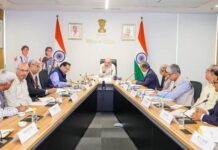
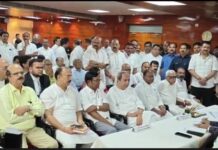
BHUBANESWAR: Recently Chief Minister Mohan Charan Majhi was having a meeting in the Berhampur parliamentary field but local MP Pradeep Panigrihi had not been called.
Bargarh Parliament seat MP Pradeep Purohit was roaring on the stage and saying’ I am MP I am MP, why my photo is not there,’. Jagatsinghpur legislator Amarendra Das left the meeting angrily waiting for MP Bibhu Tarai.
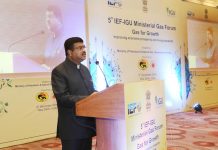
Union Education Minister Dharmendra Pradhan conducted a meeting in Dhamnagar in Bhadrak, home turf of State BJP President Manmohan Samal , while the Party President was not called for it.
Deputy Chief Minister Kanak Vardhan Singhdeo was seen getting angry on officers and pulling ribbon on his hands.
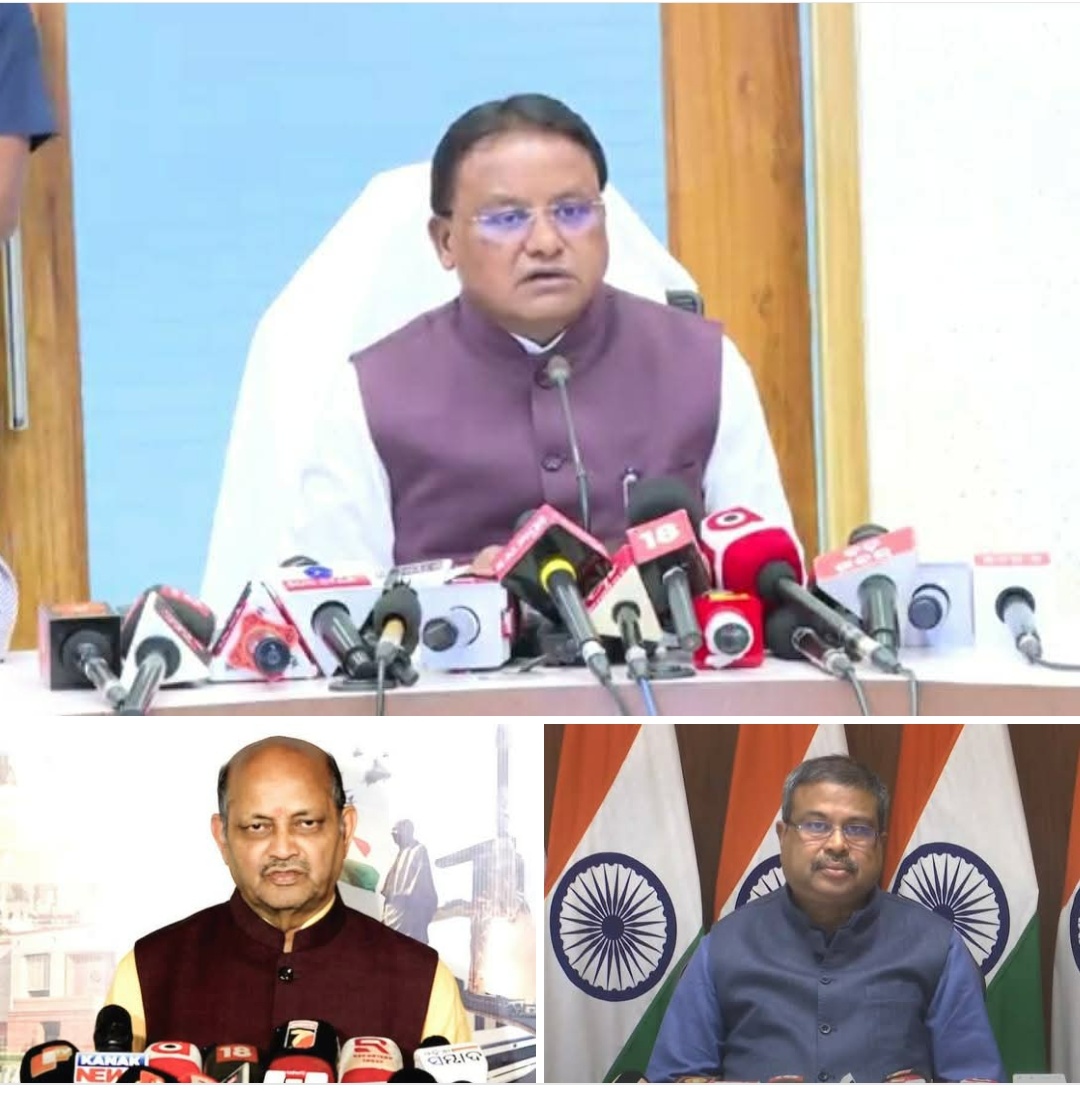
Apart from this, there have been reports of internal tensions and factionalism within the Odisha BJP involving Chief Minister Mohan Charan Majhi, state party president Manmohan Samal, and Union Minister Dharmendra Pradhan, often described in media as a “power struggle” or “rift.”
These dynamics stem from competing influences following the BJP’s 2024 election victory, where Majhi (a tribal leader) was unexpectedly chosen as CM by the central leadership, sidelining other prominent figures. Pradhan, once seen as a key architect of the party’s rise in Odisha and a potential CM candidate, has reportedly faced a diminished role, with speculation that he initially backed Majhi as a “rubber stamp” but now contends with growing distance from him. Samal, whose term as state president expired in late 2024, has been part of factional jockeying for control, including hopes for reappointment amid his own electoral setbacks.
Key Aspects of the Reported Rift:
Origins and Factions: The tensions arose post the BJP’s formation of its first government in Odisha, with multiple leaders—including Pradhan, Samal, Bhubaneswar MP Aparajita Sarangi, and Kendrapara MP Baijayant Jay Panda—vying for dominance. Political Analysts note an “invisible internecine tug of war,” where Pradhan’s national stature clashes with Majhi’s state-level authority and Samal’s organizational role. For instance, Majhi’s frequent Delhi visits for guidance from PM Narendra Modi have reportedly irked state leaders, while Pradhan’s influence has waned, evidenced by the absence of joint public appearances with Majhi in recent months.Central interventions, such as removing posters of Pradhan and others ahead of events like Pravasi Bharatiya Divas in January 2025, highlight efforts to prevent any overshadowing of Majhi or Modi.
Public Manifestations: Reports describe deepening rifts through events like massive rallies challenging the authority of Majhi and Samal, with Pradhan positioned as an opposing force. Social media and news discussions point to Pradhan maintaining visibility through activities like chairing railway review meetings in Sambalpur (his constituency) and pushing projects, while critiquing state issues indirectly.Conversely, positive interactions exist, such as Majhi praising Samal’s leadership in July 2025 as forming a “formidable force,” and joint discussions with Pradhan on education reforms in August 2025.
Regional and Organizational Layers: Broader schisms include geographic imbalances, with Western Odisha leaders (like Jaynarayan Mishra) alleging Coastal dominance, nearly escalating to physical confrontations in the Assembly. This ties into demands for separate statehood for “Koshal” and adds to the factionalism involving the key trio.
Impacts on Government Functioning: These internal conflicts have reportedly led to a “messy” state of affairs, distracting from unified governance and contributing to inefficiencies in the “double-engine” BJP administration. While the government has advanced initiatives like defense manufacturing ecosystems (following Majhi’s visit to Bharat Dynamics Limited) and rail projects, the rifts have amplified challenges:
Leadership Vacuums and Delays: The delay in electing a new state BJP president (Samal’s term ended over two months before March 2025) and filling 36 district corporation head posts has hampered party coordination and administrative oversight. This vacuum fosters poor unity, with analysts warning of “chronic disparity” if unresolved. Union Home Minister Amit Shah’s visit in late March 2025 was aimed at addressing this organizational disarray.
Policy and Administrative Inefficiencies: Pradhan publicly urged Majhi in December 2025 to reconstitute the Odisha State Commission for Backward Classes (non-functional since January 2024), highlighting delays in grievance redressal and policy for over 216 SEBC communities. Reports suggest the power struggle has left Majhi “powerless” or “helpless,” with his Delhi trips yielding limited results, contributing to perceived slowdowns in decision-making.
Public Controversies and Law/Order Perceptions: The rift has coincided with criticisms of governance, including a sharp hike in legislators’ salaries (up 211% in late 2025), sparking outrage and forcing Majhi to consider resolutions amid cross-party discomfort. Public discourse on declining law and order, such as a high-profile rape-murder case in Bhadrak leading to protests and roadblocks, with accusations that criminals operate without fear under Majhi’s watch. Other complaints include hiked electricity security deposits and unchecked infiltrators, eroding public connect. While not all directly attributable to the rift, the internal distractions have amplified these issues, with some viewing Majhi as ineffective due to factional pressures.
On the positive side, collaborative efforts persist, such as Majhi and Pradhan’s joint focus on education and infrastructure, suggesting the tensions have not fully paralyzed operations. However, central oversight (e.g., Shah’s intervention) indicates ongoing risks to stability if the factionalism isn’t resolved.