





By Our Correspondent
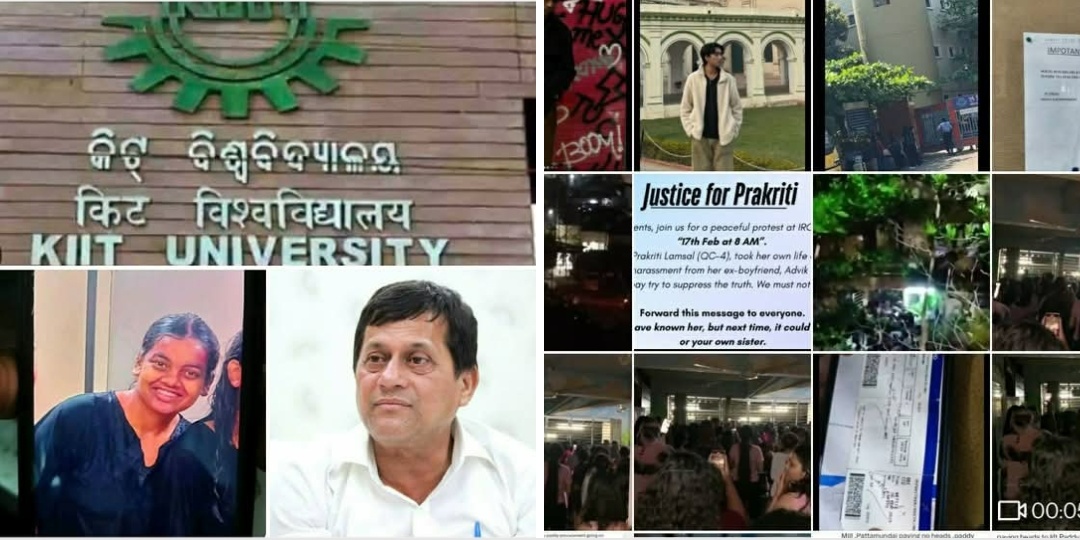
BHUBANESWAR: On Feb 16, 2025 Prakriti Lamsal, a third-year BTech student from Nepal, was found dead in her hostel room inside KIIT Deemed University in Bhubaneswar in Odisha. On May 2 this year, another Nepalese undergraduate student Prisha Shah was found dead in her hostel room at KIIT University Campus. KIIT Deemed University, its affiliated organisations, KISS and KIMS are being run by former BJD MP Dr Achyuta Samanta.
“Had KIIT University taken action to decide the reported harassment case as per law in the first case, the tragedy could have been avoided,” University Grant Commission (UGC) Fact Finding committee report said. The report also called for departmental action against ICC members who acted in violation of rules.
The report said members of the internal complaints committee (ICC) and senior administrative personnel of the university “are liable for criminal punishment as per law”,
As per media reports, Committee constituted by UGC has held KIIT Deemed to be University, Bhubaneswar, responsible for the suicide of two students earlier this year, stating that “illegal and unlawful activity by the University” led to one of the deaths and that the administration’s actions “amount to criminal liability’.
The KIIT University, UGC Fact Finding Committee report said, prioritised its “Reputation of University over regulations, law of land and International Relations of the Country.”
The Committee has issued a set of strong recommendations, based on which the commission is contemplating a freeze on the university’s expansion and departmental action against erring officials, among others. The UGC committee, chaired by Professor Nageshwar Rao, submitted its report on May 20, 2025, after campus visits, stakeholder interactions, and detailed analysis, a Times of India Report said.
The report cited the university’s failure to act lawfully on sexual harassment complaints, inadequate hostel facilities, excessive student intake, and use of brute force on students as key failings contributing to the incidents.
The committee’s observations and findings include serious lapses in infrastructure and governance. It found that hostel facilities were “substandard” with “three students put in a small room” and female international students accommodated without cultural considerations.
It also noted that complaints of sexual harassment were ignored or illegally compromised, that the administration forcibly removed Nepalese students without support, and that security personnel used physical aggression against students.
University’s internal complaints committee (ICC) failed to take lawful action in reported sexual harassment cases. There was no transparency that protocols for investigation were followed. The girl had made complaints to the administration twice much before this tragic incident. In both the complaints, they decided to go for illegal compromise. The university has the power to punish the boy even when the first complaint was lodged. Instead of punishment, they favoured the boy by pushing forced illegal compromise with the girl. Later on, this has led to suicide. This suicide case could have been averted.”
In May this year, the Foreign Affairs Minister of Nepal, Arzu Rana Deuba, Ambassador of Nepal to India, Dr Shankar P Sharma, had taken up matter with the Ministry of External Affairs, the Odisha Government, police, and the university authorities for a thorough investigation into the case. Government of India, the Government of Odisha, and the Nepali Embassy in Delhi closely monitored the case.