









By Dr. Padmalochan Dash
BHUBANESWAR: In the modern theatre of war, the most effective weapon is no longer forged in steel or powered by jet fuel—it is deceptively small, emotionally familiar, and often hidden in plain sight. An emoji. A smiling face. A three-second reel that bypasses logic and disarms the viewer through warmth. Espionage has evolved into something less visible but far more invasive.
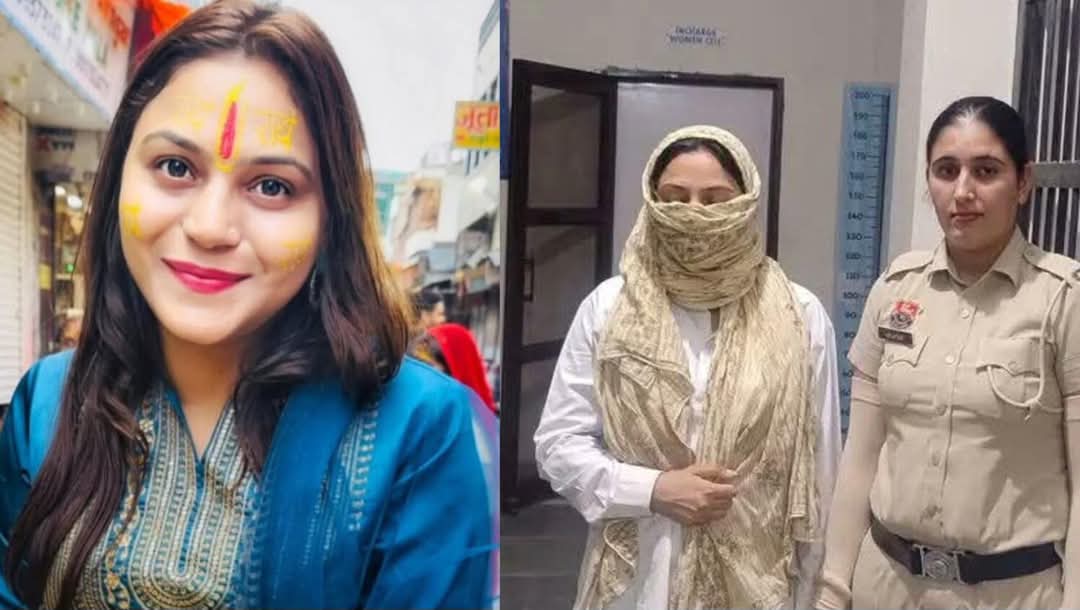
The story of Jyoti Malhotra—a seemingly ordinary travel content creator who transitioned into a covert civilian intelligence asset—reveals how this shift is already well underway.
The frontline, once defined by geopolitical coordinates, is now fluid—transfused into our messages, timelines, and emotional relationships. And the tactics of Pakistan’s ISI have adapted accordingly: not breaching physical borders, but embedding themselves through digital proximity and romanticised propaganda.
The world no longer associates espionage with trench coats and intercepted communiqués. In a climate where soft power flows through screens and algorithms, the spy does not hide in the shadows—they shine on social media. Malhotra’s online persona, known to her followers as “Travel With Jo,” exemplified harmless cultural enthusiasm. Her content appeared to celebrate diversity, cuisine, and shared history—but closer scrutiny exposed something far more orchestrated. Each phrase, each frame, each caption worked subtly to reshape sentiment. Her posts didn’t simply depict experience—they filtered truth. At a time when Pakistani aggression was climbing at the Line of Control, her channels instead projected harmony and affection, omitting context, eroding vigilance, and replacing facts with atmospheric fiction. It wasn’t innocent—it was engineered.
The turning point—the first tangible proof—was captured on camera. At the Pakistan High Commission’s Iftar event in 2023, Malhotra appeared energetic and emotionally engaged, greeting officials with visible warmth, laughing with ease, and making repeated requests for a visa to Pakistan. Among the attendees was Ehsan-ur-Rahim, also known as Danish, later identified by Indian counterintelligence as a key ISI handler operating under diplomatic cover.
Malhotra’s demeanour didn’t suggest formality—it suggested familiarity. Her interactions were not chance—they were rehearsed. This wasn’t social etiquette; it was soft declaration. The footage is now viewed not as casual vlog content but as visual evidence of onboarding—her own self-recorded pledge of psychological allegiance. The charm, the comfort, and the cultural enthusiasm were all calibrated, not casual.
Her transition from sympathiser to operative followed a precise and familiar trajectory. After the Iftar, Malhotra’s network widened. She was introduced to Pakistani intelligence assets including Ali Ehwan, Shakir, and Rana Shahbaz. Their contact was not merely superficial. One operative, Shahbaz, was saved in her phone under the alias “Jatt Randhawa,” an alias carefully chosen to evade digital scrutiny.
Simultaneously, her mode of communication shifted to encrypted apps—Telegram, WhatsApp—with disappearing messages and metadata masking. These were not the privacy tools of a tech-savvy civilian—they were procedural protocols, mapped directly to ISI’s established field doctrine. Her behavioural evolution revealed a deep internal shift. There was no visible resistance to the tradecraft. She adjusted quickly and decisively. Her transformation was not coerced. It was accepted.
Her YouTube content, particularly those related to Pakistan, began reflecting a sharper form of information manipulation. During periods of heightened bilateral tension, she continued posting polished videos romanticising Lahore’s Anarkali Bazaar, religious harmony at Katas Raj Temple, and the culinary intimacy of street food culture. Each visual sequence was imbued with deliberate emotion—an aesthetic of peace and nostalgia that actively contradicted reality.
There were no mentions of ceasefire violations, infiltration attempts, or terror-backed incidents. Her channel didn’t just distract—it recoded reality. Over 377,000 subscribers consumed this content—most unaware that it wasn’t personal storytelling, but cognitive conditioning, structured to erode resistance and inject ambiguity into a national security narrative.
Her next phase came disguised as leisure but functioned as strategic calibration. The Bali trip, publicly framed as a personal escape, was in fact a carefully curated loyalty test. Removed from India’s operational reach, placed in controlled intimacy with a Pakistani handler, Malhotra crossed a line that intelligence doctrine classifies as irreversible. Emotional dependency was strengthened. Control mechanisms were validated. Operational reliability was measured not through ideology—but through affection. Her digital posture post-Bali shifted significantly: communications tightened, exposure dropped, and metadata was deliberately scrambled. At this point, she was no longer being drawn in—she was already owned.
After Bali, her conduct displayed textbook operational awareness. Her contact list was sanitised. Personal identifiers were buried under code names. Telegram became the default, auto-delete the norm. This wasn’t a coincidence—it was evidence. Digital behaviour that once appeared exploratory had become procedural. The innocence of anonymity gave way to structured concealment. Intelligence assessments concluded that Malhotra had moved beyond casual collaboration. Her practices indicated active participation. Encryption was not her shield—it was her signal.
No spy network exists in isolation. Behind Malhotra stood a support structure, local and functional. Arman, from Nuh, handled logistics. He sourced untraceable SIM cards, managed UPI-based fund flows, and gained access to Defence Expo 2025—India’s flagship military innovation exhibition—under civilian pretext. This infiltration was low-profile but high-stakes, offering visibility into defence assets that state adversaries covet. Another figure, Devinder Singh, a young man from Kaithal, was recruited during a pilgrimage to Pakistan. Upon return, he was found filming sensitive zones near Patiala cantonment. His religious cover provided perfect camouflage. Their roles, though seemingly minor, were essential nodes in a horizontally distributed ring of civilian-led intelligence gathering.
But it wasn’t just students and travellers. The emotional heart of this ring lay in its targeting of widows—particularly vulnerable, digitally active women. Guzala, a 32-year-old widow, was groomed by Danish via sustained romantic contact, reinforced through encrypted chats and micro-payments amounting to ₹30,000. What followed was a psychological handover. She not only complied—she recruited. Another widow, Nasreena, was brought into the ring. This wasn’t a transaction—it was a replication protocol. ISI’s doctrine has long studied grief as a soft entry point, and this case reflects the terrifying success of that model. These women weren’t coerced into service. They were persuaded into loyalty.
The attack in Pahalgam, on April 27, 2025, in which 26 Hindus were brutally murdered, marked more than a terror incident—it was a signal. As India buried its dead, the machinery of retaliation began rolling. Within 48 hours, Operation Sindoor was launched: a combination of precision drone strikes, Akash missile deployments, and simultaneous domestic action. Intelligence agencies moved quickly.
In Hisar, Nuh, Kaithal, and Malerkotla, arrests were made based on pre-established behavioural indicators and digital flags. The Malhotra ring was not idle—it was ready. The encrypted trails, the Expo footage, the phone records—all pointed to heightened activation readiness. Sindoor wasn’t just military retribution. It was proof of doctrinal evolution: that India’s response must span both geographic borders and digital frontlines simultaneously.
The network was built on five distinct yet interoperable layers—each a vector in the wider hybrid war. The first was perception manipulation: cultural messaging disguised as travel vlogs. The second was emotional grooming: romantic engagement turned into strategic binding. The third vector involved soft reconnaissance: civilian infiltrators recording and mapping defence and pilgrimage zones. The fourth was logistical support—unmonitored fund transfers, SIM provisioning, and visa routing. The final and most insidious vector was the use of human vulnerability: targeting those already in emotional pain to transform them into willing participants. When linked together, these five channels don’t just create intelligence—they create a war apparatus with no uniforms, no passwords, and no warning signs.
And so, India must respond not only with strength, but with structural intelligence. This means building a national counter-infiltration ecosystem tailored to modern warfare.
First, a National Civilian Defence Orientation (NCDO) must be institutionalised, training influencers, students, and outbound travellers in basic narrative defence, digital threat recognition, and cognitive hygiene. Second, a Counter-Narrative Warfare Command (CNWC) must be built—armed with AI and cultural intelligence—to dismantle foreign propaganda before it becomes resonance. Third, a Hybrid Intelligence Fusion Grid (HIFG) should unify telecom, UPI, and behavioural data across agencies. Fourth, a Citizen Vetting Protocol (CVP) must be applied to those in contact with high-risk nations and missions. Finally, a Digital Cold Start Doctrine (DCSD) must be developed: a pre-emptive strike mechanism that acts not after, but before influence operations escalate.
The war that looms won’t begin with a siren or a missile alert. It will begin with a smile. A wave. A poem captioned under a shrine photo. A three-second reel of “peaceful vibes.” Agent Jyoti Malhotra was not an exception—she was a prototype. Her journey was not accidental—it was predictive. She was not just posting content. She was conducting operations. Her camera wasn’t recording a trip—it was writing a script for psychological warfare. In her hands, the device was no longer a phone—it was a weapon.
Agent Jyoti’s case is one among many that shows how India’s greatest threat no longer crouches across a trench—it whispers from a feed. The new agents of infiltration do not arrive in camouflage—they arrive veiled, but trending. Not to invade, but to subvert.
(The writer, Dr Dash, holds an M.Phil. and Ph.D. in Internal Security. He is actively engaged in research on India’s internal security challenges, with a focus on institutional preparedness, strategic infrastructure, and policy coordination. His work offers a research-driven perspective on critical national concerns).