







By Anurjay Dhal
BHUBANESWAR: At least three major Steel companies with Mining operations in Odisha have faced demand notices from the state government for alleged shortfalls in mineral production or dispatch under Rule 12A of the Minerals (Other than Atomic and Hydrocarbon Energy Minerals) Concession Rules, 2016 (MCR 2016).
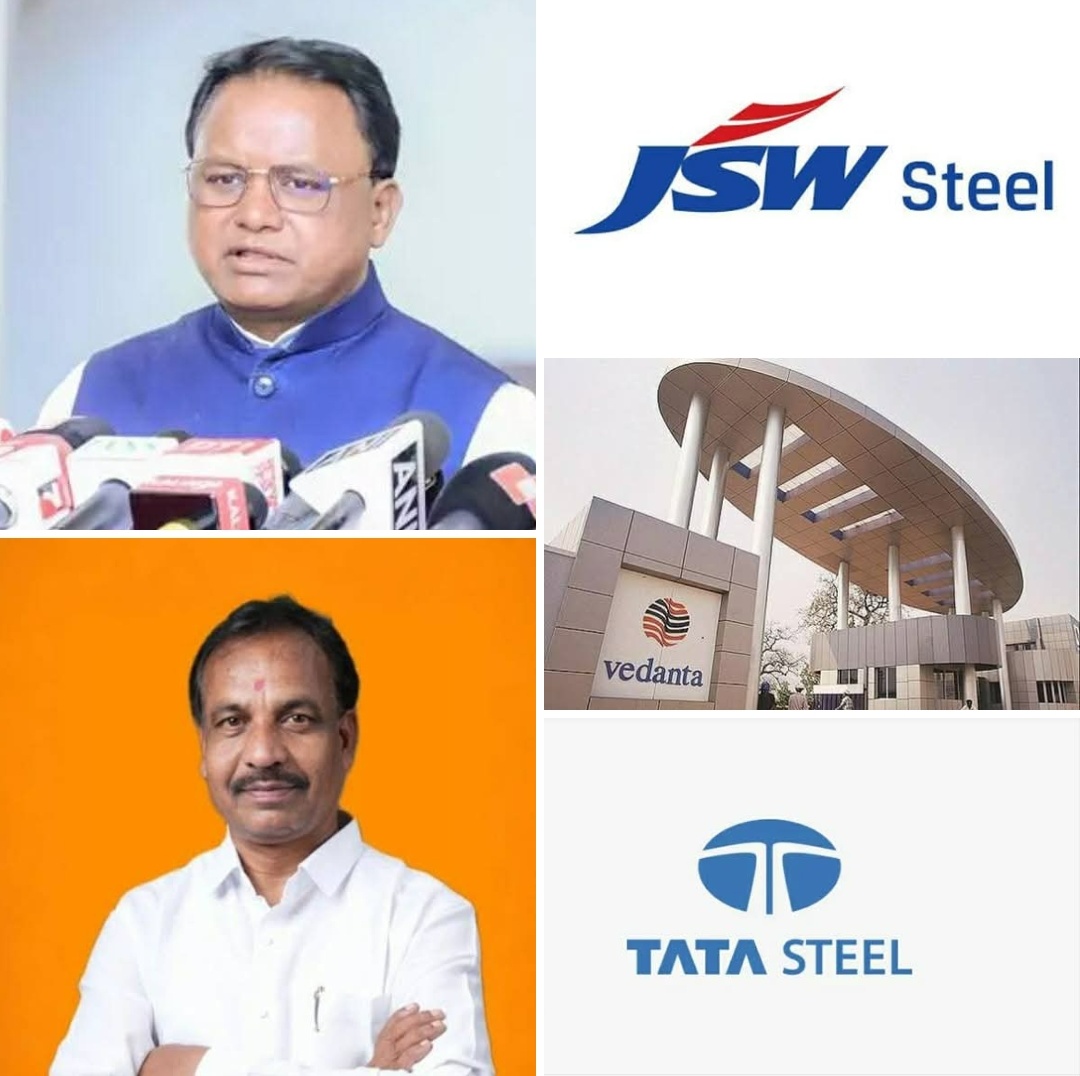
These notices stem from failures to meet Minimum Production and Dispatch Targets (MDPA Targets) outlined in their respective Mine Development and Production Agreements (MDPA). The companies involved are Tata Steel, JSW Steel, and ESL Steel (a subsidiary of Vedanta Limited). These cases highlight ongoing regulatory scrutiny in Odisha’s mining sector, which is India’s largest producer of iron ore, chromite, and bauxite, contributing significantly to the state’s revenue through royalties and penalties.
Number of Companies and Mines Affected
Companies: 3 (Tata Steel, JSW Steel, ESL Steel/Vedanta).
Mines Involved: At least 4 distinct mines across these companies, with demands tied to specific operational years (typically the 4th or 5th year post-lease execution).
Tata Steel: 1 mine (Sukinda Chromite Block).
JSW Steel: 1 mine (Jajang Iron Ore Block).
ESL Steel: 2 mines (BICO and Feegrade Mines).
No comprehensive official list from the Odisha government or courts indicates additional companies facing similar notices in 2025-2026, but these high-profile cases suggest the state is enforcing MDPA clauses more stringently to maximize resource utilization and revenue. Smaller miners or other lessees may also be affected but have not been publicly reported.
Detailed Analysis of Each Case: These demands are calculated based on the difference between committed production/dispatch levels in the MDPA and actual output, often leading to appropriation of performance security and additional penalties. Companies argue that external factors like regulatory delays, environmental clearances, market demand fluctuations, or operational challenges (like weather, logistics) justify shortfalls, deeming the demands unjustified. All have sought legal recourse, primarily through writ petitions in the Orissa High Court (Odisha High Court), obtaining interim protections against coercive recovery actions.
Tata Steel (Sukinda Chromite Block, Jajpur Circle):
Demands Issued:
July 3, 2025: Rs 1,902.72 crore for the 4th operational year (July 23, 2023–July 22, 2024), citing shortfall in mineral dispatch.
October 3, 2025: Rs 2,410.89 crore for the 5th operational year (July 23, 2024–July 22, 2025), citing shortfall in chrome ore dispatch.
Total: ₹4,313.61 crore.
Context: The Sukinda block is a key chromite source for Tata Steel’s ferrochrome production. The company claims the demands lack merit due to valid operational reasons and has challenged them as violations of natural justice.
Legal Status: Filed writ petitions on August 8, 2025 (No. 22431/2025) and October 29, 2025 (No. 31035/2025). Initial interim stays granted in August and November 2025, extended multiple times (for example to December 2025, then January 2026).
Impact: Temporary relief eases cash flow pressure, but prolonged litigation could affect investor sentiment. Tata Steel’s stock has shown volatility amid these updates.
JSW Steel (Jajang Iron Ore Block):
Demand Issued: August 21, 2025: Rs 1,472.69 crore for shortfall in dispatch during 2024-25 (aligned with the operational year post-lease).
Context: The Jajang block supports JSW’s steel production needs. Operations reportedly ceased in December 2024 due to exhaustion or other issues, but the demand covers the full year. JSW argues the claim is unsustainable and plans to contest it legally.
Legal Status: No specific court updates reported yet, but the company has indicated pursuit of remedies, likely including a writ petition similar to others.
Impact: As India’s largest steel producer, this adds to JSW’s regulatory burdens in Odisha, where it holds multiple leases. It could influence expansion plans if unresolved.
ESL Steel (Vedanta Subsidiary; BICO and Feegrade Mines, Koira Circle):
Demand Issued: January 16, 2026 (received January 17): Aggregate Rs 1,255.38 crore for the 4th operational year under the MDPA dated November 15, 2021, covering alleged shortfalls in production and dispatch from both mines.
Context: These iron ore mines feed ESL’s steel plant. Vedanta attributes potential shortfalls to market or operational factors and believes the demands are not meritorious.
Legal Status: ESL is evaluating the notices and plans to file for a stay and quashing in court, potentially the Orissa High Court.
Impact: Adds to Vedanta’s broader challenges in India, including environmental and regulatory scrutiny. As a recent notice, it may lead to fresh litigation.
Broader Analysis
Regulatory Framework: Under MCR 2016 Rule 12A, lessees must achieve 80-100% of MDPA targets annually, with penalties for shortfalls equivalent to royalty on the unmet volume plus interest. Odisha, facing resource depletion concerns (like BJD warnings of exhaustion in 5 years), is ramping up enforcement to boost revenue (mining contributes ~20% to state GDP).
Trends and Implications:
Increasing Scrutiny: These cases follow a pattern since 2023-24, with Odisha issuing similar notices to enforce production amid global commodity volatility. Total demands across these companies exceed Rs 7,000 crore, signaling potential for more if targets remain unmet.
Company Responses: All firms are leveraging judicial stays to delay payments, buying time for negotiations or operational ramp-ups. Success rates in such challenges vary; courts often grant interim relief but may uphold demands if shortfalls are proven willful.
Economic Impact: For Odisha, recoveries could fund infrastructure; for companies, payments strain margins (steel sector faces high input costs). Litigation delays resolution, but unresolved cases risk lease cancellations.
Market Reaction: Stocks of affected companies (like Tata Steel, JSW, Vedanta) have dipped on notice announcements but rebounded on stay extensions, reflecting investor confidence in legal outcomes.
Potential Outcomes: If courts rule in favor of companies, demands could be quashed or reduced. Conversely, upholding them might set precedents, prompting industry-wide compliance improvements or amendments to MDPA terms
January 29, 2026, Ruling of Odisha High Court: Orissa high court on Thursday directed the state to invoke Rule 12(1)(ee) of the Odisha Minor Mineral Concession Rules, 2016, to ensure optimum extraction of minerals and prevent further loss to the public exchequer.
Disposing of a public interest litigation (PIL) filed by Bhubaneswar-based NGO Citizen’s Action Forum, a division bench of Chief Justice Harish Tandon and Justice M S Raman observed that despite approved mining plans and environmental clearances, several iron ore blocks have failed to achieve even minimum production levels for years.
The Orissa High Court heard Tata Steel’s two writ petitions (Nos. 22431/2025 and 31035/2025) on January 29, 2026. The ruling extended interim protection against coercive actions (like recovery or performance security appropriation) by the Deputy Director of Mines, Jajpur, until February 2, 2026.
The next hearing was scheduled for February 2, 2026. This indicates the court’s ongoing caution in allowing state enforcement while reviewing merits, providing Tata Steel continued operational stability without immediate financial outflow. It does not resolve the core dispute but underscores judicial preference for status quo during pendency, potentially influencing similar cases like those of JSW and ESL.