

By Our Correspondent
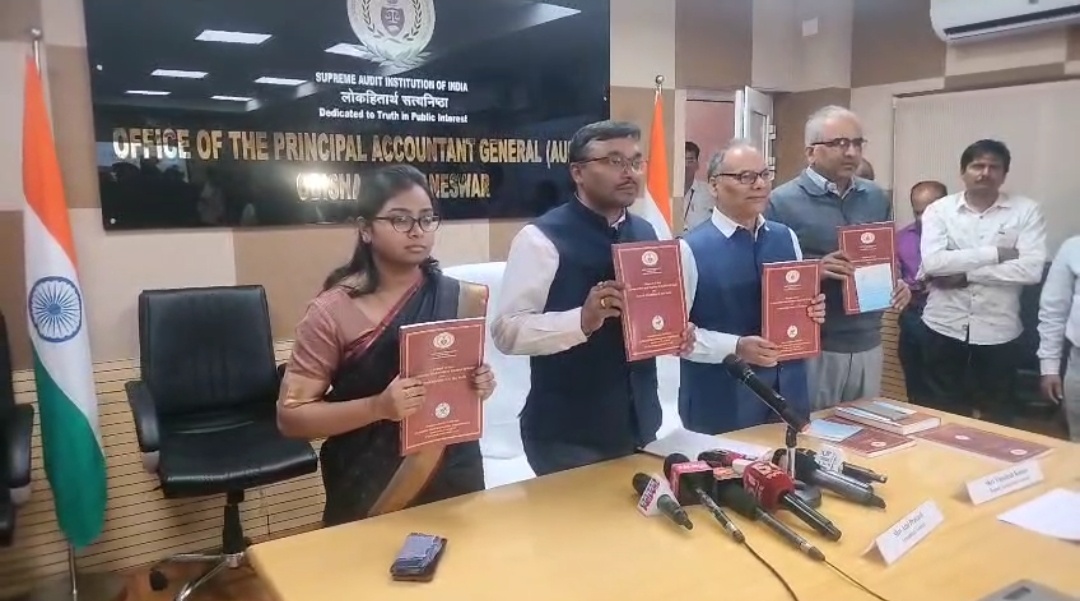
BHUBANESWAR:This Report of the Comptroller and Auditor General of India is a compilation of thematters arising out of the Performance Audit on “School Education in Odisha”,pertaining to School and Mass Education Department, covering the years 2018-19 to2022-23.
The Performance Audit on School Education in the State was conducted with the broad
objectives of analysing plan and interventions along with the measures towards
ensuring universal access to quality education, evaluating learning environment
including institutional infrastructure and effectiveness of the monitoring and evaluation
by the School & Mass Education Department.
The audit observations are based on the scrutiny of records of six sampled districts, 12
sampled Block Education Offices and 108 sampled schools, pertaining to the period
2018-23.
Important findings in this Report are summarised below:
• Samagra Shiksha Implementation Framework (SSIF) stipulates participatory
and bottom-up planning to reflect the local specificity, educational needs and
aspirations of the people. However, planning was not participatory and bottomsup. The district level planning team had not been constituted in any of the
sampled districts and none of the sampled blocks had constituted block level
planning team.
• The budget provisions and expenditure made by the School and Mass Education
(SME) Department showed persistent savings and surrender of funds, ranging
from 5 per cent (2022-23) to 18 per cent (2021-22) with overall savings/
surrender of 12 per cent during 2018-23. The utilisation of funds ranged
between 44 and 50 per cent under Samagra Shiksha Scheme.
• Gross Enrolment Ratio in Secondary and Higher Secondary levels declined in
the State compared to increase at the National level during 2022-23 over 2018-
19. Net Enrolment Rate also registered fall compared to the National level. The
Transition rate from Secondary to Higher Secondary level declined compared
to rise at National level during 2018-19 to 2022-23.
• From the data furnished by the Districts Project Coordinators (DPCs) of six testchecked districts, Audit noticed that 16,410 CwSN were eligible for Transport
and Escort Allowances during 2018-23. However, 380 (2.3 per cent) eligible
CwSNs in three sampled districts were deprived of this benefit, as the DPCs had
transferred the allowances to dormant/ wrong bank accounts of CwSN/ parents.
• 10 sampled Block Education Officers had identified 1,458 CwSN through
Medical assessment camps during 2018-23, who required assistive aids and
appliances. However, 311 (21 per cent) identified CwSNs were not provided
with such devices during 2018-23.
• In 13 to 26 per cent schools, ramp facilities did not exist while 31 to 44 per cent
schools lacked CwSN friendly toilet facilities during 2018-23.
• The State had made provision for imparting self-defence trainings to girls of
22,237 to 21,956 schools, during 2018-23. However, only 3,363 to 21,943
schools were provided with funds for conducting these self-defence classes,
resulting in shortfall in provision of funds in 13 to 19,260 schools.
• The Department could not ensure availability of prescribed infrastructure in
Government and Government aided schools. Large number of schools were
functioning without conforming to infrastructure norms, as on March 2023.
• Adverse Student-Classroom Ratio (SCR) was noticed in 5,443 (12 per cent),
5,603 (24 per cent), 3,725 (42 per cent) and 681 (57 per cent) schools for
Primary, Upper Primary, Secondary and Higher Secondary classes, respectively
in the State. In 18 (23 per cent) test-checked schools, single classroom was used
for multiple classes, whereas in 41 (43 per cent) test-checked schools, the
students were found sitting on the floor due to absence of furniture.
• During 2018-23, 21,958 (48 per cent), 10,022 (43 per cent), 896 (10 per cent)
and 527 (89 per cent) schools of the State had adverse Pupil Teacher Ratio
(PTR) in Primary, Upper Primary, Secondary and Higher Secondary classes,
respectively.
• Vocational Education (VE) was introduced in a limited manner. Against the
target to cover 877 Secondary and Higher Secondary schools for VE during
2018-23, the Department introduced VE in 646 schools. Besides, 113 Secondary
and Higher Secondary schools running vocational education, did not have
functional laboratory facilities.
• The State supplied free uniforms to 214.98 lakh (98 per cent) students out of
218.49 lakh eligible students, during 2018-23 and the remaining 3.51 lakh
students were deprived of the benefit.
• 1.73 lakh (six per cent) students were deprived of bicycle incentives in the State.
In test-check of 42 schools, 1,671 students (11 per cent) were deprived of the
benefit during 2018-23.
• There was shortfall in review of the progress of the implementation of Samagra
Shiksha Scheme by the Executive Committee, during 2018-23. The EC had met
only four times during 2018-23, against the requirement of 20 meetings.
• In 14 out of 77 sampled schools, the School Management Committees were
functioning with members ranging from 10 to 18, against the requirement of 19
members.
• The State had not constituted the Research Approval Committee for approving
research and evaluation studies for assessment of the impact of the Scheme.