



By Our Correspondent
CUTTACK/BHUBANESWAR: This is the same Dr Datteswar Hota, whom the High Court ordered to be removed from the Urology department in 2018 and to be removed from responsibility of conducting exams.
He was pressuring to send patients to private hospitals, that’s why the case reached High Court. Still, Naveen Patnaik government appointed him as the first chancellor of Odisha Health University in 2023.
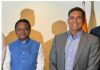
Naveen Patnaik, as president of the Biju Janata Dal (BJD) and Leader of Opposition in the Odisha Assembly, announced two candidates for the upcoming Rajya Sabha elections from Odisha on February 28, 2026. The first is senior BJD leader Dr. Santrupt Misra for the third seat, while the second is Dr. Datteswar Hota, positioned as a “common candidate” for the fourth seat to seek cross-party support, including from Congress, amid concerns over potential BJP horse-trading. Hota, a renowned urologist, has been highlighted as controversial in recent discussions due to past allegations from his time at SCB Medical College and Hospital in Cuttack.
Professional Background at SCB: Dr. Datteswar Hota served as Head of the Urology Department at SCB Medical College and Hospital. He later became Dean and Principal of the institution, and was appointed as the first Vice Chancellor of the Odisha University of Health Sciences (formerly Odisha Health University). His career also includes roles such as a member of the Medical Council of India (now National Medical Commission) and contributions to nephrology and urology research.
Students’ Agitation: In February 2018, around 450 junior doctors, including postgraduate students, senior residents, and house surgeons at SCB, launched an indefinite cease-work agitation against Hota, accusing him of harassment, atrocities, and misuse of power.The protest lasted nine days, disrupting hospital services (except emergencies), and escalated to a relay hunger strike.Students alleged he threatened them with poor marks in practical exams or other repercussions if they refused to follow his directives, creating an environment of fear and anarchy. Senior residents joined the strike in solidarity. The agitation ended after the Odisha government transferred Hota to MKCG Medical College and Hospital in Berhampur on February 27, 2018, with doctors resuming duties the next day.
High Court Case: Following the agitation, 12 urology department students, including Amiya Shankar Bal, filed a petition in the Orissa High Court seeking Hota’s removal. On February 28, 2018, the court directed the Health and Family Welfare Secretary to remove him from his post as Head of Urology with immediate effect.Hota informed the court of his willingness to be relieved from the position.The case stemmed from the same allegations of harassment and coercion raised during the protests.
Private Practice Allegations: The core of the complaints involved Hota allegedly forcing junior doctors and postgraduate students to work at his private clinic in Cuttack, including treating and caring for patients there. Students claimed refusal led to threats of failing exams or other punitive actions, with these practices reportedly ongoing for several years.An in-house enquiry committee at SCB investigated these claims during the agitation.No further details on outcomes of the enquiry or additional cases were found in available records, but the transfer and court directive addressed the immediate demands.
This nomination has sparked renewed discussion on social media and in political circles about Hota’s 2018 controversy, contrasting with his portrayed image as a distinguished medical professional.
Dr. Datteswar Hota’s 2018 controversy has resurfaced on social media following his nomination, with some users highlighting the student agitation, High Court directive, and private practice allegations as potential red flags in Odisha’s political discourse. This could theoretically create minor hurdles by fueling public criticism or internal party debates, especially given the nomination’s timing amid Odisha’s competitive political landscape.
However, Rajya Sabha elections are indirect, determined by votes from the 147-member Odisha Legislative Assembly rather than public opinion. Current strength: BJP holds 82 seats, BJD 48, Congress 14, and others rest. For the four seats up for election in April 2026 (expiring terms from 2020), the quota per seat under the single transferable vote system is approximately 31 votes.
BJP can secure two seats outright with its 82 MLAs.
BJD, with 48, can claim one (e.g., for Dr. Santrupt Misra).
The fourth seat is contested, but BJD’s strategy positions Hota as a “common candidate” backed by Congress’s 14 MLAs, potentially pooling 65 votes—enough to win the remaining seat and counter any BJP cross-voting attempts.
Odisha Congress President Bhakta Charan Das has publicly confirmed support for Hota to prevent “horse-trading,” indicating unified opposition backing despite the old allegations.While some commentary suggests possible infighting or MLAs voting their conscience, no major defections or withdrawals have been reported as of March 1, 2026. Political analysts note that such past issues often have limited sway in assembly-voted contests, where party discipline and alliances prevail over historical controversies—especially one from eight years ago that didn’t result in criminal charges.
Overall, the background introduces some noise but is unlikely to significantly derail his chances, as the math favors him with cross-party support. If BJP exploits it for lobbying, it could tighten the race, but current indicators point to a probable win for Hota.