



By Our Correspondent
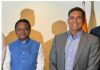
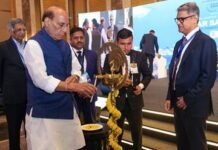
BHUBANESWAR: Union Ministers Dharmendra Pradhan, Ashwini Vaishnaw, and BJP National Vice President and Kendrapara Lok Sabha MP Baijayant Jay Panda are prominent leaders within the Bharatiya Janata Party (BJP), all with strong ties to Odisha. Their political equations are shaped by the state’s shift from long-term Biju Janata Dal (BJD) rule under Naveen Patnaik to BJP’s victory in the 2024 assembly elections, marking the formation of the first BJP-led government in Odisha. This transition has highlighted internal dynamics, including influence over state affairs, national roles, and potential power shifts.
Dharmendra Pradhan: A grassroots politician from Odisha, Pradhan has been instrumental in rebuilding the BJP’s presence in the state over the past decade. He served as the party’s chief election strategist for Odisha in 2024, contesting and winning the Sambalpur Lok Sabha seat. As Union Minister for Education, he holds significant central influence. However, post-2024, his role in state-level decision-making appears to have diminished.
Ashwini Vaishnaw: A former IAS officer from the Odisha cadre, Vaishnaw is a technocrat-turned-politician with close proximity to Prime Minister Narendra Modi and Home Minister Amit Shah. Elected to the Rajya Sabha from Odisha, he oversees critical portfolios as Union Minister for Railways, Electronics and Information Technology, and Information and Broadcasting. His bureaucratic background and central connections have positioned him as an emerging force in Odisha’s BJP ecosystem.
Baijayant Panda: A former BJD MP who defected to BJP in 2018, Panda brings industrialist credentials and media savvy to the party. As BJP National Vice President and MP from Kendrapara, he has been key in anti-incumbency campaigns against the BJD. Panda’s national assignments, such as overseeing party affairs in states like Delhi, Assam and Tamil Nadu, underscore his strategic importance beyond Odisha.
Key Political Dynamics and Equations: The trio’s relationships are collaborative on the surface, united under BJP’s “double-engine” governance model (central and state alignment) post-2024. However, underlying tensions revolve around influence in Odisha’s administration, especially under Chief Minister Mohan Charan Majhi—a surprise pick who is a tribal leader with limited prior statewide prominence. Majhi’s selection sidestepped expectations that Pradhan or Panda might assume the CM role, suggesting central leadership’s preference for a low-profile figure to avoid factionalism.
Dharmendra Pradhan-Ashwini Vaishnaw Equation: Shifting Power Centers: A notable dynamic is the perceived rivalry or power shift between Pradhan and Vaishnaw. As of April 2025, as the Majhi government neared its one-year mark, speculation arose about Pradhan’s waning clout in Odisha affairs. His network, including allies like Samir Mohanty and Golak Mohapatra, reportedly lost ground, while Vaishnaw emerged as the dominant influence. Vaishnaw’s control over key central ministries has enabled him to drive state initiatives, such as mining auctions, leveraging his ties to Modi and Shah. This ascendancy is attributed to Pradhan’s reduced involvement, possibly due to his focus on national duties or internal party adjustments.
Pre-2024 analyses noted both leaders’ central backing but highlighted their limited pan-Odisha appeal compared to Patnaik’s charisma.Factionalism under Pradhan’s earlier leadership contributed to defections (for example Rajkishore Das to BJD), indicating internal strains that may have favored Vaishnaw’s more centralized, bureaucratic style. Despite this, there is no evidence of open conflict; their equation appears more as a natural evolution of influence, with Vaishnaw benefiting from proximity to the party’s top brass.
Dharmendra Pradhan- Baijayant Panda Equation: Collaborative with Shared Roots: Pradhan and Panda share a history of grassroots efforts to strengthen BJP in Odisha. Pradhan’s decade-long toil in party-building, including delivering key Lok Sabha seats in 2024, aligns with Panda’s role in amplifying anti-BJD narratives. Both have been entrusted with national responsibilities: In September 2025, Pradhan was assigned to oversee Bihar elections, while Panda handled Assam and Tamil Nadu, reflecting high trust from the BJP leadership. This suggests a synergistic relationship, with no reported rivalries. Panda’s defection from BJD and his focus on Odisha’s development post-BJP win (for example emphasizing manifesto promises) complement Pradhan’s organizational strengths.
Ashwini Vaishnaw- Baijayant Panda Equation: Complementary Roles: Vaishnaw and Panda’s interactions are less documented but appear supportive. Panda’s national vice-presidency and Vaishnaw’s ministerial heft create a balanced dynamic, with Panda handling party outreach (e.g., tributes and campaigns) and Vaishnaw focusing on policy execution.Both benefit from Modi’s endorsement, and Panda’s assignments in other states (like Delhi, Assam and Tamil Nadu) indicate alignment with central figures like Vaishnaw. No conflicts are evident; their equation supports BJP’s broader strategy in Odisha.
Overall Triangular Dynamics: The three form a tripod of influence: Pradhan (grassroots organization), Vaishnaw (central policy leverage), and Panda (strategic communication and national expansion). However, post-2024, the balance has tilted toward Vaishnaw due to his rising stature, amid questions of a “leadership vacuum” under Chief Minister Mohan Charan Majhi. Internal BJP challenges, such as over-reliance on Modi and factional tensions, persist but do not directly pit the trio against each other. Instead, they collaborate on Odisha’s development, with the Majhi government focusing on manifesto fulfilment like poverty alleviation and infrastructure.
Criticism from opposition ( BJD and Congress) has targeted them collectively for issues like paper leaks and law-and-order, but this has not fractured their unity. As of early 2026, their equation remains stable, driven by BJP’s national priorities, though Vaishnaw’s ascendancy could reshape future state dynamics if Pradhan’s influence continues to ebb.
Potential Future Implications: With BJP consolidating in Odisha, the trio’s roles may evolve. Pradhan’s experience could refocus on national campaigns, Vaishnaw on economic reforms (like railways and IT), and Panda on expanding BJP’s footprint. Any overt rivalry seems unlikely, given the party’s emphasis on unity, but shifts in central assignments or state performance could alter equations. This analysis draws from developments up to late 2025, reflecting a collaborative yet hierarchical structure favouring central-aligned leaders like Vaishnaw.