





By Our Correspondent
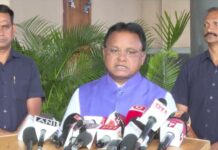
BHUBANESWAR: Details Analysis on Controversial Decisions of Odisha CM Mohan Charan Majhi Government in last 19 months in Office.
Introduction: Mohan Charan Majhi assumed office as the Chief Minister of Odisha on June 12, 2024, marking the first BJP-led government in the state after ending the 24-year rule of the Biju Janata Dal (BJD). As of January 2026, his administration has been in power for approximately 19 months. While the government has focused on initiatives like anti-corruption drives, industrial development, and welfare schemes such as Subhadra Yojana, it has faced significant criticism for several decisions and incidents perceived as mishandled or controversial. These include issues related to communal harmony, law and order (especially crimes against women), administrative appointments, financial policies, and cultural legacies.
Below is a detailed analysis of key controversies, drawing on reported incidents, political reactions, and government responses.
Rath Yatra Stampede and Event Management Failures: During the 2025 Rath Yatra in Puri, a stampede resulted in three deaths and hundreds injured, attributed to poor crowd control and VIP privileges. CM Majhi apologized to devotees, but opposition blamed administrative negligence.
Analysis: As a culturally significant event, the mishandling drew widespread condemnation, amplifying perceptions of incompetence in the government’s first major public event post-2024.Critics linked it to broader law-and-order breakdowns. The apology mitigated some backlash, but it fueled demands for accountability, with no independent probe reported. This incident underscores logistical challenges for the new administration, potentially affecting tourism and public sentiment toward religious governance.
211% Hike in MLAs’ Salaries and Allowances: In December 2025, the Odisha Assembly unanimously passed bills tripling MLAs’ minimum package from Rs 1.10 lakh to Rs 3.45 lakh monthly, including hikes for the CM, ministers, and speaker. Amid economic concerns, this sparked public outrage, with even BJP MLAs urging CM Majhi to reconsider.
Analysis: The decision was seen as tone-deaf, especially given criticisms of increasing state debt and unfulfilled promises like job creation. Opposition highlighted the irony of hiking legislator perks while public grievances linger. The backlash crossed party lines, denting the government’s “pro-poor” image. As of late 2025, the bills await Governor’s assent, and the controversy may lead to a rollback for political damage control. This reflects broader fiscal policy tensions, potentially eroding voter support.
Importance to Non-Odia IAS-IPS in Top Position of Administration:The appointments of Anu Garg (from Assam) as Chief Secretary, Deoranjan Kumar Singh (from Bihar) as Development Commissioner, and Hemant Sharma (from Uttar Pradesh) as Additional Chief Secretary (Home) by Odisha Chief Minister Mohan Majhi represent a continuation of placing non-Odia IAS officers in top administrative roles. This pattern, which began with Manoj Ahuja’s appointment as Chief Secretary in mid-2024, has drawn scrutiny in the context of the BJP’s “Odia Asmita” (Odia Pride) campaign slogan, which was central to their 2024 election victory over the BJD.
Analysis:Critics argue it signals that no qualified Odias are deemed capable of leading the state’s bureaucracy, echoing past complaints under Majhi’s tenure where both the DGP YB Khurania and Chief Secretary Anu Garg were non-Odias. This could erode trust among Odia nationalists who supported BJP on identity grounds, potentially fuelling opposition narratives from BJD and Congress about the party prioritizing central control over local empowerment.
Re-engagement of Retired Engineer Chandra Sekhar Padhi: The government re-engaged retired Engineer-in-Chief Chandra Sekhar Padhi as OSD-cum-EIC in the Water Resources Department in July 2025, later modifying it to “re-employment” in December. This drew accusations of promoting corruption, as Padhi was controversial, and the Odisha High Court slammed the initial order.
Analysis: Critics viewed it as favoritism and backdoor corruption, contradicting the government’s zero-tolerance stance. Serving engineers expressed outrage over bypassed promotions. The modification aimed to align with pension rules, but it fuelled perceptions of administrative opacity. Outcomes include internal dissent and calls for transparency, highlighting challenges in bureaucratic reforms.
Erasure of Biju Patnaik’s Legacy and Scheme Renamings: The government renamed BJD-era schemes (e.g., Biju Pucca Ghar Yojana to Antyodaya Gruha Yojana) and scrapped the public holiday for Biju Patnaik’s birth anniversary. It also undermined Mission Shakti (women’s SHGs) while launching Subhadra Yojana.
Analysis: Seen as petty politics by critics, this alienated BJD supporters and intellectuals, who argued it diminishes Odisha’s historical figures.The government justified it as rebranding for national alignment, but it sparked debates on cultural identity. No major reversals occurred, but it contributed to polarized politics.
Handling of Communal Tensions and Attacks on Minorities: One of the earliest controversies emerged just six days after the government’s swearing-in, when communal clashes erupted in Balasore district, injuring at least 20 people and leading to a curfew and internet suspension. The incident, near the communally sensitive Bhadrak area, was attributed to emboldened communal elements under the new BJP regime. In January 2025, in Remuna (Balasore), two tribal Christian women were tied to a tree and beaten by a mob suspecting them of religious conversions; one woman’s face was smeared with cake, and the crowd chanted “Bharat Mata Ki Jai” and “Jai Sriram’. Police detained four youths but released them after apologies, drawing criticism for leniency.
Analysis: Critics, including opposition parties like BJD and Congress, argued that the government’s perceived alignment with Hindu nationalist sentiments failed to prevent or address these flare-ups, echoing Odisha’s history of communal violence (e.g., the 1999 Graham Staines murder in Majhi’s home district of Keonjhar).This has raised concerns about minority safety, with Christians (2.77% of the population) feeling vulnerable. The government’s response was limited to restoring order in Balasore, without broader preventive measures or public condemnations, potentially eroding public trust in its commitment to secular governance. Outcomes include heightened communal tensions and calls for stronger interventions, though no major policy changes followed.
Rising Crimes Against Women and Alleged Inaction: The Majhi government has been heavily criticized for a perceived surge in crimes against women, with opposition claiming over 40,947 cases registered in the first 18 months. Key incidents include:
A 22-year-old college student in Balasore self-immolated on July 12, 2025, after alleging sexual harassment by her department head; she died three days later despite appeals to the CM’s office, ministers, and police.No FIR was filed promptly. Two Nepali students at KIIT University died by suicide in early 2025 amid sexual harassment allegations, prompting diplomatic concerns from Nepal. Gang rapes in June 2025 at Gopalpur Beach (Ganjam) and Baliharchandi (Puri), plus other assaults in Keonjhar and Ganjam.
Analysis: Opposition leaders like Naveen Patnaik labeled these as “systematic failures,” demanding resignations and accusing the government of protecting accused individuals.Rahul Gandhi called the Balasore suicide a “murder by the BJP system. The BJP countered by blaming opposition provocation and highlighting arrests, but critics point to delays in FIRs and inaction on complaints as evidence of administrative lapses. The government’s visits to victims (by CM Majhi, President Murmu, and others) were seen as reactive rather than preventive. This controversy has damaged the BJP’s image, especially since it relied on women voters in 2024 elections, and has led to statewide bandhs and strikes. Long-term, it highlights challenges in police reform and women’s safety, with no comprehensive policy overhaul announced yet.
Other Notable Controversies:
Police Misconduct: Incidents like the 2024 thrashing of a woman at Chandabali police station led to NHRC complaints.
Slow Anti-Corruption Actions: Despite promises to probe BJD-era scams, the government has been accused of “slow-walking” to avoid backlash.
Mob Violence: Attacks on Dalits and migrants in 2025 drew civil society condemnation.
Jagannath Dham Dispute: CM Majhi protested West Bengal’s use of “Dham” for a Digha shrine, seen as cultural overreach.
Recruitment Scam: A sub-inspector scam led to 100+ arrests and a CBI probe recommendation.
Conclusion: The Majhi government’s controversies largely stem from law-and-order lapses, administrative decisions perceived as favoritist or insensitive, and cultural-political shifts. While it has achieved security gains against Maoists and industrial pushes, these issues have led to protests, bandhs, and eroded goodwill. Opposition has capitalized on them to portray a “breakdown in governance,” but the BJP defends its actions as necessary reforms. Moving forward, addressing public sentiment through transparency and swift responses could mitigate long-term political fallout, especially with upcoming elections in mind.