


By Our Correspondent
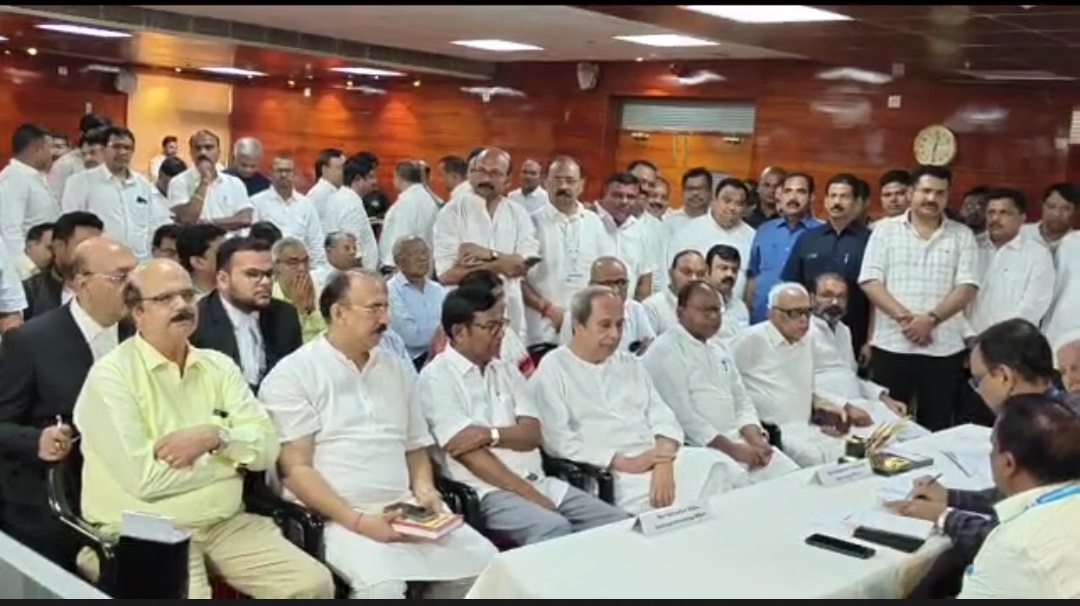
BHUBANESWAR: Yes, Naveen Patnaik has adopted a noticeably more aggressive stance recently, especially in the lead-up to the March 16, 2026 Rajya Sabha elections in Odisha. Reports describe this as his “new aggressive avatar” or “resurgent” approach, aimed at countering the ruling BJP, reviving BJD’s relevance as an opposition force, and preventing any repeat of past setbacks.
He has taken disciplinary action against some BJD MLAs suspected of being involved in plans to engineer cross-voting in favor of BJP-backed candidates (e.g., suspensions or punishments linked to potential defections or disloyalty ahead of the polls).
By fielding two candidates — Santrupt Misra (for BJD’s secure seat) and Datteswar Hota (as a “common” opposition candidate backed by Congress) — Patnaik is deliberately forcing a contested fight on the fourth seat, blocking BJP’s potential push for a third win.
This strategy disrupts BJP calculations, puts pressure on their surplus votes, and positions BJD as a defiant, united opposition bloc appealing for broader support against BJP dominance.
On the question of whether BJD will involve in cross-voting (i.e., BJD MLAs voting against party lines, such as for Dilip Ray or other BJP interests):
Unlikely in significant numbers, and Patnaik appears determined to prevent it. BJD leaders and allies (including Congress OPCC chief Bhakta Charan Das) have publicly asserted strong party discipline: “All our MLAs are united, and there is no chance of cross-voting.” They dismiss speculation as “misinformation” and highlight that MLAs recognize Patnaik’s past contributions.
The aggressive measures (e.g., actions against suspected disloyal MLAs) seem designed to avoid a 2002-style repeat, where cross-voting from BJD helped Dilip Ray win as an Independent.
For the fourth seat (Dilip Ray vs. Datteswar Hota), the math favors Hota if BJD (~48 MLAs) + Congress (14) stay united (~62 votes possible after their own seat), while BJP needs ~8 extra votes beyond their surplus to push Ray through. Without BJD defections or cross-votes, Ray’s path looks tough despite BJP backing.
Some speculation persists about isolated dissatisfaction in BJD (post-2024 loss), but current dynamics — with Patnaik’s proactive coordination, suspensions, and opposition unity push — make large-scale cross-voting improbable.
Overall, Patnaik’s aggression is more about preventing cross-voting and consolidating opposition votes than encouraging it. The election remains intriguing, but BJD’s internal controls and strategic moves tilt heavily against any major cross-voting from their side. The outcome on March 16 will clarify if discipline holds or if any cracks emerge.
Dilip Ray, the veteran politician and former Union Minister, has indeed announced his candidacy for the Rajya Sabha elections from Odisha as an Independent candidate in 2026, with explicit support from the ruling BJP. He filed his nomination on March 5, 2026 (on the birth anniversary of Biju Patnaik, his mentor).
He has publicly expressed confidence that history will repeat his 2002 success. In 2002, after expulsion from the BJD, he won as an Independent through significant cross-voting by MLAs from BJD and BJP, defying party lines in a dramatic upset.
Odisha Assembly has 147 MLAs.BJP holds ~79 seats (plus support from 3 Independents), comfortably winning 2 seats (each needing ~30 first-preference votes under STV system).
BJD has ~48 effective seats (after some suspensions/expulsions).Congress has 14.
Four seats are up for election (polling on March 16, 2026).
BJP has fielded Manmohan Samal and Sujeet Kumar for two seats.BJD has candidates like Santrupt Misra.There’s a common BJD-Congress backed candidate (Datteswar Hota) for another.
Dilip Ray is contesting for the fourth contested seat, backed by BJP — but as Independent, his win would depend on securing cross-votes or transfers, similar to 2002. Whether he can fully “repeat” 2002 (a surprise win via cross-voting against the odds) is uncertain. The dynamics differ now:
BJP is the ruling party with strong numbers and is openly backing him.This makes his path potentially easier than in 2002 (when he was expelled and relied on defiance).
Reports suggest he may need additional votes beyond BJP’s surplus (e.g., from disgruntled BJD MLAs or others), and some speculation exists about possible cross-voting or support from ex-BJD Independents.
Political analysts see it as a “fascinating contest” with intrigue, but BJP’s dominance reduces the “upset” factor compared to 2002.
Dilip Ray is actively trying to replicate his 2002 feat by running as an Independent with BJP support, and he’s confident it will happen. However, while conditions favor him more than in 2002 due to BJP’s strength, a exact repeat (dramatic cross-voting win) isn’t guaranteed — it depends on final vote math, any defections, and party discipline. The election outcome will be clear after March 16 counting.