



By Anurjay Dhal
BHUBANESWAR: With BJP Government is Odisha led by Chief Minister Mohan Charan Majhi completed 18 months in office, it is high time to compare the governance model with that of first 18 months of former Chief Minister Naveen Patnaik.
Governance and Political Style: Naveen Patnaik’s early tenure was marked by a strong anti-corruption stance, including sacking ministers like Nalini Mohanty on corruption charges in July 2001 and withdrawing tickets from senior leaders like Bijoy Mahapatra, creating an image of decisive but unpredictable leadership.
He formed a stable BJD-BJP coalition government after winning 106 out of 147 seats in the 2000 assembly elections, focusing on curbing communal tensions with no major riots until 2008.
However, his period saw challenges like the December 2000 police firing in Maikanch village, where three Adivasis died protesting an alumina project, highlighting early tensions over industrial development and tribal rights.
In contrast, Mohan Charan Majhi emphasized “people-first governance” and restoration of democratic processes, fulfilling pre-poll promises in his first 100 days and presenting a one-year report card in June 2025 that highlighted transparency and inclusive growth.
His administration approved schemes like the Baraputra Aitihya Gram Yojana in December 2025 for cultural preservation and enhanced risk allowances for security forces, while addressing tribal welfare through meetings with the Tribal Development Council.
Majhi’s style appears collaborative, with events like the Sampoornata Abhiyan Samman Samaroh in July 2025 celebrating grassroots progress. Challenges included opposition criticism from the BJD on reduced promises, but his government countered by comparing its eight months of work to the previous regime’s 24 years.
Economy and Industrial Development: Naveen Patnaik’s first 18 months laid groundwork for fiscal discipline and poverty reduction, with initial efforts in combating corruption to stabilize the economy post-1999 super cyclone recovery. Industrial policies were nascent, with MoUs for steel and alumina projects starting around 2002, but early protests like Maikanch indicated resistance to rapid industrialization.
Majhi accelerated industrialization, approving 343 large projects worth over Rs 7.1 lakh crore under the Utkarsh Odisha 2025 conclave by December 2025, aiming for a transformative economic journey.
Key events included inaugurating India’s first Integrated Global FinTech Capability Hub in August 2025, participating in SEMICON India 2025 in September to position Odisha as a semiconductor hub, and signing over 100 MoUs with investors in January 2025 (though slightly beyond 18 months, it builds on prior momentum).
In December 2025, he called for affordable rural electricity at the Global Energy Leadership Summit (GELS) 2025 and launched Rs 545 crore development projects in Koraput.
Agriculture and Farmer Welfare: Naveen Patnaik’s early focus was on poverty alleviation, with responses to the 2001 drought, though specific schemes were limited in the initial months; his overall legacy includes shifting from starvation deaths to food security.
Mohan Charan Majhi prioritized agriculture with Rs 37,800 crore under Samruddha Krushi Yojana, Rs 800 per quintal input assistance, and expansion of PM-KISAN and CM-KISAN schemes benefiting 51 lakh farmers. Events like PM-KISAN Diwas in August 2025 showcased aquaculture advancements and farmer technologies.
Social Welfare and Tribal Development: Naveen Patnaik aimed at inclusive growth but faced early backlash from tribal communities over land acquisitions, as seen in the 2000 Maikanch incident.
Mohan Charan Majhi, himself from a Santhali tribal background, focused on tribal upliftment, launching the Antyodaya Gruha Yojana for housing in March 2025 and attending the National Level Tribal Festival Parva-2025 in December. The Subhadra Yojana enrolled 1 crore women for financial aid, and initiatives like Godabarish schools enhanced education.
Education and Health: Limited specifics for Naveen Patnaik’s first 18 months, but his administration began emphasizing basic services amid post-cyclone rebuilding.
Mohan Charan Majhi launched the ‘Padhiba Gadhiba Odisha’ reading campaign in September 2025 for Classes I-VIII and unveiled a coffee table book on the NIPUN Odisha Mission’s first year. Health and education were highlighted in his August 2025 Independence Day address, with ongoing infrastructure projects.
Infrastructure and Other Initiatives: Naveen Patnaik’s early period involved stabilizing after the 1999 cyclone, with foundational work on disaster management that later became a model.
Mohan Charan Majhi inaugurated police infrastructure across 16 districts and a new SOG training hall in December 2025, attended the Odisha Masters 2025 badminton tournament, and announced global visions at the 18th Pravasi Bharatiya Divas in January 2025.
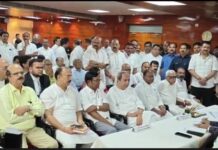
His government held BJP legislature meetings on schemes and met global leaders like SEMI CEO Ajit Manocha in September 2025.
Overall, Patnaik’s first 18 months focused on consolidation and anti-corruption amid challenges like protests and natural disasters, setting a foundation for long-term stability.
Majhi’s period shows aggressive implementation of welfare and industrial schemes, with a tribal-inclusive approach, achieving rapid milestones in 18 months amid a shift from the previous 24-year regime.