


By Our Correspondent
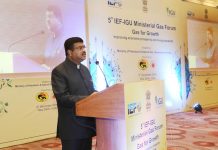
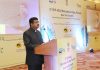
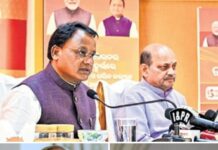
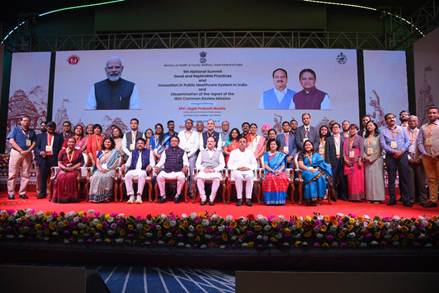
PURI/BHUBANESWAR: Union Health Minister Shri Jagat Prakash Nadda inaugurated the 9th National Summit on Good & Replicable Practices and Innovation in the Public Healthcare System in Puri, Odisha today in the presence of Shri Mohan Charan Majhi, Chief Minister, Odisha; Dr. Mukesh Mahaling, Health Minister, Odisha and Dr Sambit Patra, Member of Parliament (Lok Sabha) from Puri.
The 2 days summit will showcase and document various best practices and innovations adopted by States and UTs for addressing their public health challenges. It will also provide an opportunity for knowledge sharing and cross-learning among the States/UTs.
Addressing the session, Shri JP Nadda highlighted that India has made a significant stride in healthcare since 2014. He stated that the National Health Policy 2017 brought about a paradigm shift in approach from curative healthcare to one that encompasses curative as well as preventive, promotive and comprehensive aspects. Similarly, the Union Minister noted that the government has also given a lot of impetus to tertiary healthcare in addition to improving primary and secondary healthcare.
He noted that the Union Government’s focus is on ensuring quality and affordable healthcare services for the people. On this note, he stated that the work done on Ayushman Arogya Mandir under the National Health Mission has strengthened the foundation of primary healthcare in the overall healthcare pyramid.
Shri Nadda stated that “the decline of Maternal Mortality Rate (MMR) in India is double that of the global decline which highlights the effort taken in strengthening the healthcare system from the grassroot level. The Infant Mortality Rate (IMR) and Under 5 Mortality Rate has also seen a noteworthy downfall.” He also credited Odisha for its appreciable strides in IMR and MMR.
The Union Health Minister highlighted that “the WHO’s World Malaria Report 2024 acknowledges India’s significant reduction in malaria cases. Similarly, India has witnessed a noteworthy 17.7% decline in TB incidence from 2015 to 2023, a rate that is over twice the global average decline of 8.3% according to the WHO Global TB Report 2024”. He noted that despite the COVID-19 setback, India has not diluted its TB eradication target. He highlighted the ongoing 100-Day TB Elimination Campaign, spanning 455 districts across 33 states which has detected 5 lakh TB patients already.
Acknowledging the importance of Jan Bhagidari for the success of any campaign, the Union Health Minister credited the ASHA workers, SHOs and other grassroot level health workers for the achievements made in the healthcare sector. He stated that Panchayati Raj Institutions should be more empowered to further strengthen the healthcare base in India.
On the threat from Non-Communicable Diseases, Shri Nadda emphasized on the need for bringing lifestyle changes. He praised NHM for its ongoing Intensified Special NCD Screening Drive which is offering free of cost screening of Diabetes, Hypertension and 3 types of Cancer – Oral, Breast and Cervical cancer. He also highlighted a recent Lancet study which found that patients enrolled under AB PM-JAY saw a 90% rise in access to cancer treatment within 30 days, reducing delay in treatment and easing financial burden of cancer patients.
Shri Nadda noted that every district in the country will have day care cancer centers in the next 3 years with 200 districts to be covered in this year itself. He also emphasized on tele-medicine to strengthen healthcare further.
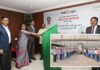
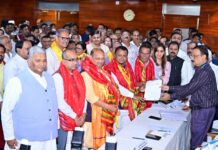
On the occasion, the Union Health Minister and other dignitaries released a Coffee Table Book on 9th National Summit on Best Practices, Report on the 16th Common Review Mission Report, Four Regional Conferences of NHM (2024-25) report and the Non-Communicable Diseases Conference Report (Jan 2025).