





By Our Correspondent
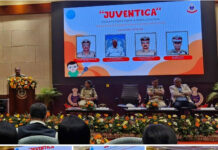
NEW DELHI:The Indian Institute of Corporate Affairs (IICA), under Ministry of Corporate Affairs, Government of India, convened the Fifth Inter-Ministerial Consultation on Responsible Business Conduct (RBC) and the Social Dimension of Environmental, Social and Governance (ESG) in New Delhi.
The consultation was organised by the School of Business Environment (SoBE), IICA, in collaboration with the International Labour Organisation (ILO) to strengthen policy coherence and institutional coordination on responsible business conduct and sustainability governance in India.
The Workshop commenced under the chairmanship of Shri Gyaneshwar Kumar Singh, Director General and CEO, Indian Institute of Corporate Affairs, who highlighted the growing significance of responsible business conduct in the context of evolving global supply chains and sustainability expectations. Mr Singh noted that responsible business practices today extend beyond corporate reporting frameworks and are increasingly linked to economic competitiveness, sustainable development, and international trade integration.
Shri Shantanu Mitra, Senior Economic Advisor, Ministry of Corporate Affairs, delivered an address that highlighted the policy significance of responsible business conduct within India’s corporate governance ecosystem and its growing relevance for businesses operating within global value chains. Shri. Mitra concluded that the mandate of responsible business is inbuilt in various provisions of the Companies Act 2013 and Ministry of Corporate Affairs is steadfast in ensuring that the statutory framework remains conducive for new age businesses and serves as a global benchmark for statutory and regulatory compliance.
The consultation also featured a special address by Ms. Michiko Miyamoto, Director, International Labour Organisation (ILO) Decent Work Technical Support Team for South Asia and Country Office for India, he shared global perspectives and laid emphasis on India’s championing progress in responsible business conduct. Ms. Miyamoto’s address further elucidated the importance of promoting decent work, labour standards, and inclusive growth within evolving corporate sustainability frameworks.
Prof. Garima Dadhich, Head, School of Business Environment, IICA, in her presentation outlined the evolution of India’s Responsible Business Conduct (RBC) journey, highlighting key policy milestones and regulatory developments that have shaped the country’s responsible business framework. She also shared insights from IICA’s ongoing research mapping national initiatives and policy measures to the nine principles of the National Guidelines on Responsible Business Conduct (NGRBC).
The participating representatives highlighted key initiatives of the their respective ministries and governmental bodies in the deliberations:
CEO of FSSAI, Shri Ranjit Punhani, drew attention to the parallel challenges faced by the food sector in balancing responsible product standards with compliance burden, particularly around front-of-pack nutrition labelling regulations.
Shri. Rajesh Dangeti, the Chief General Manager of SEBI, noted that the BRSR Core has rationalised disclosures to the most essential social, environmental and governance indicators, and underscored that as India aspires toward a USD 30 trillion economy, sustainability disclosures may be positioned not as a compliance burden but as a tool for market differentiation and access to capital.
Further, Shri. Shiv Anant Shanker, Chief General Manager of IBBI, highlighted the unique feature of the IBC that prioritises employee wage dues in liquidation, and proposed exploring how ESG considerations can be embedded into the resolution framework to incentivise responsible business conduct.
Shri. Prashant Baijal, Joint Director, Ministry of Labour and Employment highlighted the significant structural changes being introduced through the four Labour Codes, particularly on minimum wages, appointment letters, and social security coverage. He noted that the Social Security Code abolishes the area-specific notification system for ESIC, extending coverage on a PAN India basis, and making ESIC applicable to hazardous industries regardless of workforce size.
Dr. Renuka Mishra, Economic Advisor to the Ministry of Heavy Industries, indicated that a rolling review on global supply chains for auto components is already in pipeline, and that sector-specific guidelines under the PLI scheme can play an important role in embedding responsible business standards progressively across the auto and advanced manufacturing sector.
Secretary of the Capacity Building Commission, Shri. Jaydeep Gupta, flagged that public sector entities, given their scale and visibility, can serve as important early adopters and demonstration cases for responsible business practices, creating demonstration effects for private sector supply chains.
Shri. Arvind Kumar, Senior Consultant at Ministry of MSME, Shri. Jeevan Kumar Jethani, Scientist at Ministry of New and Renewable Energy, Shri. Arindam, Director at Ministry of External Affairs, Shri. Chinnaraja Naidu, Additional Legislative Counsel at Ministry of Law and Justice, Shri. Vinod Kumar, Deputy Secretary at Ministry of Home Affairs and Shri. Samir Kumar, Joint Secretary, National Human Rights Commission collectively reflected on the cross-sectoral nature of responsible business and sustainability governance, and identified key areas for follow-up action.
Like, including the embedment of social safeguards within PLI and sectoral policy design, integration of labour data from PLFS, ESIC, and EPFO with SEBI’s BRSR disclosure framework, development of tiered and voluntary RBC compliance mechanisms for micro and small enterprises, strengthening of access to remedy mechanisms for informal and migrant workers, and the incorporation of ESG considerations into insolvency and restructuring proceedings under the IBC.
It was noted that India has made significant progress in building a robust framework for responsible business conduct through initiatives such as the National Guidelines on Responsible Business Conduct (NGRBC), SEBI’s Business Responsibility and Sustainability Reporting (BRSR) framework, the Labour Codes, and evolving sustainable finance and due-diligence mechanisms.
Insights emerging from the consultation will contribute to ongoing research and policy work being undertaken by IICA on responsible business conduct and decent work, aimed at strengthening India’s responsible business ecosystem and supporting the continued evolution of sustainability governance frameworks.