








By Our Correspondent
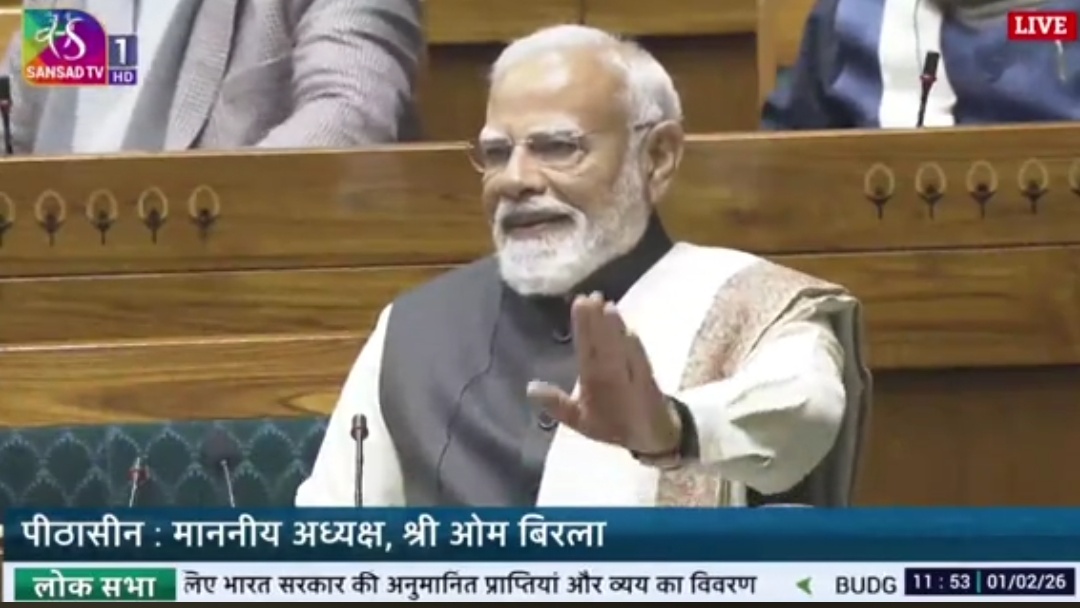
BHUBANESWAR/NEW DELHI: In the Union Budget 2026-27 presented on February 1, 2026, by Finance Minister Nirmala Sitharaman, the Indian government announced the establishment of dedicated rare earth corridors in four mineral-rich states: Odisha, Kerala, Andhra Pradesh, and Tamil Nadu.7
This initiative is part of a broader strategy to bolster India’s self-reliance in critical minerals, reducing dependence on imports, particularly from China, which dominates over 90% of global rare earth production and processing.The corridors are not traditional transport routes but specialized infrastructure zones or networks designed to foster an integrated ecosystem for rare earth elements (REEs), encompassing mining, processing, research, and manufacturing.
Rare earth elements are a group of 17 minerals essential for high-tech applications, including electric vehicles (EVs), wind turbines, smartphones, semiconductors, defence systems, aerospace, and clean energy technologies.India’s push for these corridors addresses growing domestic demand, projected to double by 2030 due to EV adoption and renewable energy expansion, against a backdrop of over 53,000 metric tonnes of rare earth magnets imported in the fiscal year ending March 2025.
Details of the Proposal: The dedicated rare earth corridors will support the creation of a complete domestic value chain for REEs, from extraction to advanced manufacturing.6b231e While specifics on funding, timelines, and exact infrastructure (such as processing plants or research hubs) are not yet detailed in the budget speech, the initiative emphasizes organized handling of REEs through government-backed networks.Some sources describe the corridors as “connecting” the four states, potentially implying a networked supply chain along India’s eastern and southern coasts, leveraging existing ports, industrial zones, and transport links for efficient mineral movement and collaboration.
The proposal builds directly on the Scheme for Rare Earth Permanent Magnets launched in November 2025, which has a financial outlay of Rs 7,280 crore to achieve 6,000 metric tonnes per annum (MTPA) production capacity. This scheme includes sales-linked incentives worth ₹6,450 crore over five years and a Rs 750 crore capital subsidy for integrated facilities, allocated via competitive bidding to five beneficiaries (each up to 1,200 MTPA). The corridors will scale this up by promoting mining and BSM ore processing in the targeted states.
States Involved and Selection Rationale:
Odisha: Known for its substantial mineral reserves, including coastal monazite deposits, and existing mining infrastructure.
Kerala: Features rich coastal mineral belts with proven REE potential, supported by ports for export and processing.
Andhra Pradesh: Selected for its mineral wealth and strategic location along the eastern coast, facilitating industrial integration.
Tamil Nadu: Hosts significant coastal reserves and is poised for growth in downstream manufacturing; it also holds political significance with Assembly polls scheduled later in 2026.
These states were chosen for their abundant REE deposits, particularly in monazite sands, combined with coastal advantages for logistics and existing industrial ecosystems.1c2a85 The focus on coastal states aligns with India’s critical minerals strategy, as these areas provide raw materials for high-strength permanent magnets used in EVs and renewables.
Objectives and Benefits
The primary objectives are to:
Promote domestic mining and processing to insulate against global supply disruptions.
Enhance research and innovation in REE technologies.
Boost manufacturing in strategic sectors like electronics, defence, and clean energy.bfea46
Reduce import costs and improve supply chain resilience.
Economic benefits include job creation, industrial growth, and investment attraction in high-tech sectors.Strategically, it positions India to compete globally, supporting macroeconomic stability and energy security amid a 7% growth trajectory. The corridors will also complement related budget proposals, such as increasing the Electronics Components Manufacturing Scheme outlay to ₹40,000 crore and launching India Semiconductor Mission 2.0.
Background on Rare Earth Elements in India: India possesses significant reserves of rare earth minerals, primarily in Beach Sand Minerals (BSM) ore, where monazite—a phosphate mineral containing uranium, thorium, and REEs—is abundant along coastal and inland regions.These deposits are concentrated in the eastern and southern coastal belts, making the selected states ideal for development. Historically, India has relied heavily on imports due to limited domestic processing capabilities and global supply chain vulnerabilities, exacerbated by China’s export controls.The corridors aim to transform India from a raw material exporter to a full-value-chain player in the global REE market.
Potential Challenges and Implementation Considerations:
While the announcement is promising, challenges may include environmental concerns related to BSM mining (like handling radioactive elements like thorium), regulatory hurdles for coastal extraction, and the need for skilled workforce development.Implementation details, such as funding allocation and timelines, remain to be clarified through subsequent policy guidelines. The government may adopt a cluster-based or challenge-based approach, similar to the proposed dedicated chemical parks.
Conclusion: The proposed rare earth corridors represent a strategic leap for India towards self-sufficiency in critical minerals, directly addressing geopolitical risks and fostering innovation-driven growth. By leveraging the mineral wealth of Odisha, Kerala, Andhra Pradesh, and Tamil Nadu, this initiative could transform these states into hubs for high-tech industries, contributing to India’s vision of a resilient economy. As details unfold post-budget, stakeholders in mining, manufacturing, and research will play key roles in realizing its potential.