


By Our Correspondent
BHUBANESWAR: Odisha has 10 Rajya Sabha seats in total. In April 2026, four seats will become vacant due to expiring terms:
Three regular seats from members elected in 2020 (currently held by two BJD members and one BJP member).
One additional seat from a bypoll (held by BJP’s Mamata Mohanta, whose term ends in 2026 after her resignation and re-election in 2024).
Elections to Rajya Sabha are indirect, via the Odisha Legislative Assembly (147 MLAs) using the single transferable vote (STV) system. The quota for winning a seat is roughly 147 / (4+1) + 1 ≈ 30 votes per seat (adjusting for exact mechanics).
Current MLA strength (unchanged since the 2024 assembly polls, with no major defections reported):
BJP: 79 MLAs (majority party, in power).
BJD: 50 MLAs including 2 suspended MLAs
Congress: 14 MLAs.
Others (CPI-M, independents): 4 MLAs.
Based on this, BJP can comfortably secure at least 2 seats (using ~60 votes), with potential to push for a third via leftover votes and strategic transfers. BJD can secure 1 seat reliably (using ~30 votes), but their leftovers (~21) might not guarantee a second without cross-party support or negotiations.
The “4th seat” in question refers to the contested or marginal one, where neither party has a clear lock without some cooperation or vote-splitting. In practice, these elections are often resolved unopposed through backroom deals, but if contested, it could go to BJP given their numbers and incumbency advantage.
Historical Precedent: BJD’s Support for Ashwini Vaishnaw: Ashwini Vaishnaw (BJP, Union Railways Minister) was elected to Rajya Sabha from Odisha twice with BJD’s backing:
2019 bypoll: BJD, then in power with a strong assembly majority, supported his nomination despite him being a BJP candidate. He won unopposed.
2024 biennial election: Even as BJD faced assembly polls (which they lost), they didn’t field a candidate against him for one of the three seats up, allowing his unopposed re-election. This was part of BJD’s broader pattern of supporting NDA on key issues at the center while maintaining distance in state politics.
This cross-support happened when BJD held sway in the assembly and often aligned with NDA informally (e.g., on bills in Parliament), despite no formal alliance since 2009.
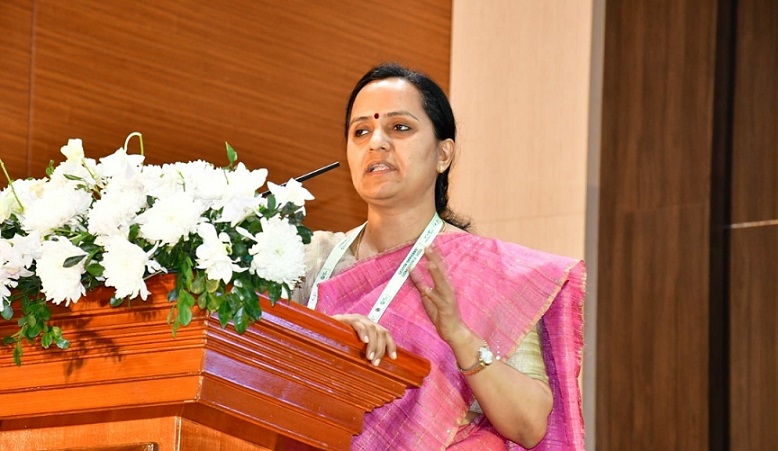
The Hypothetical Push for Sujata Kartikeyan: Sujata R. Karthikeyan is a former IAS officer and wife of V.K. Pandian (Naveen Patnaik’s close aide and a key BJD strategist). She hasn’t formally joined BJD yet but has been in the spotlight:
In 2024, she was transferred by the Election Commission amid BJP complaints of misusing her position (as Mission Shakti commissioner) to influence polls in BJD’s favor.
Recent buzz (as of late 2025) suggests BJD is considering her for Rajya Sabha, leveraging her administrative experience and ties to women’s self-help groups. Senior BJD leader Pravat Biswal publicly suggested sending her, and party suspensions of two MLAs (Sanatan Mahakud and Arvind Mohapatra) in early January 2026 are speculated to be aimed at preventing internal dissent or cross-voting that could derail such a nomination.
However, there’s significant internal BJD resistance: Many leaders blame the “Pandian couple” for BJD’s 2024 defeat (attributed to Pandian’s “outsider” image as a Tamil Nadu native and over-centralization of power). This has led to open divisions, with some viewing Sujata’s potential entry as favoritism.
Will BJP Back Sujata in This Scenario? Unlikely, but not impossible—here’s why: Electoral math favors BJP pushing for more seats: With 78 MLAs, BJP doesn’t need BJD’s cooperation to win 2-3 seats. They could contest the 4th aggressively and win it outright (or force a vote where BJD’s internal issues weaken them). Recent analyses project BJP taking 3 seats and BJD 1 without any deal. “Sharing” 2 to BJP and 1 to BJD might be a baseline, but BJP has little incentive to concede the 4th to BJD, especially for a controversial figure like Sujata.
No strong reciprocity incentive now: BJD’s past support for Vaishnaw was when they held power and sought central favors (e.g., on infrastructure). Roles are reversed—BJP rules Odisha and doesn’t rely on BJD for state stability. BJD is now a vocal opposition, criticizing BJP’s governance (like on new assembly building plans). Any “backing” would require a quid pro quo, like BJD softening in Parliament, but current tensions (post-2024 fallout) make that doubtful.
Political baggage around Sujata and Pandian: BJP campaigned hard against Pandian’s influence in 2024, portraying him as a “super CM” who alienated Odia voters. Supporting his wife could alienate BJP’s base and invite criticism. Plus, with BJD in turmoil (suspensions signaling disunity), BJP might exploit that rather than help.
Potential for yes? If Naveen Patnaik and Pandian negotiate a quiet deal (e.g., BJD supporting key central bills or toning down opposition), BJP might allow an unopposed win for the 4th seat as a gesture—mirroring past dynamics. Odisha politics has a history of pragmatic cross-support, and PM Modi’s recent visits emphasize investment over confrontation.But as of now, no public signs of warming relations.
In summary, BJP is positioned to prioritize its own candidates for the 4th seat rather than reciprocate, given their strength and the lack of mutual benefits. If this changes (e.g., via alliance talks), it could shift, but current trends point against it. This is all based on public reports—actual outcomes depend on closed-door negotiations ahead of nominations (likely in March 2026).