


By Our Correspondent
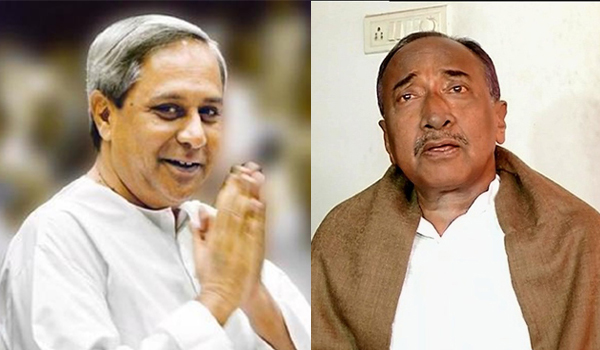
BHUBANESWAR: If Feud Escalates, Bijay Mohapatra might float a New Outfit or Align with Emerging Forces, Capitalizing on Anti-BJD Sentiments within Odisha’s Fractured Politics, Rivalry’s Future likely Hinges on BJD’s performance in ensuing Rajya Sabha elections; a weakened Naveen Patnaik could force Compromise, while a Resurgent BJD might Perpetuate the Exclusion.
Where Is It Heading?
As of January 2026, the cold war appears far from resolved and may be entering a new phase influenced by Odisha’s changed political dynamics. With Naveen no longer in power, his ability to marginalize rivals like Bijay is diminished, but the suspension of Patkura MLA Arvinda Mohapatra and Champua MLA Sanatan Makahud demonstrates his continued grip on the BJD and willingness to settle old scores.
Bijay, now 75 and without a party affiliation since his 2024 BJP expulsion, remains a wildcard. Recent buzz suggests he could rejoin the BJD, potentially as part of Naveen’s strategy to strengthen the opposition against the BJP government by bringing back veterans.This could lead to an ironic reconciliation, where Bijay’s experience bolsters the BJD’s revival efforts, especially if internal dissent grows.
Alternatively, if the feud escalates, Bijay might float a new outfit or align with emerging forces, capitalizing on anti-BJD sentiments within Odisha’s fractured politics. However, his age and history of electoral losses make a major comeback unlikely without strong backing. The rivalry’s future likely hinges on the BJD’s performance in upcoming bypolls or Rajya Sabha elections; a weakened Naveen could force compromise, while a resurgent BJD might perpetuate the exclusion.
Ultimately, this enduring conflict highlights Naveen’s reputation for calculated revenge—”a dish best served cold”—but in opposition, it risks alienating allies and further eroding his legacy. The next few months, including reactions to the suspensions, will clarify if this cold war thaws into alliance or freezes into irrelevance.
Recent Developments (2024-2026): The political landscape shifted dramatically in the 2024 Odisha Assembly elections, where the BJP defeated the BJD, ending Naveen’s 24-year rule as Chief Minister. Mohan Charan Majhi became the new CM, relegating Naveen to the role of opposition leader and BJD president.Amid BJP’s gains, the old rivalry resurfaced prominently in January 2026 when Naveen suspended two BJD MLAs for “anti-party activities”: Sanatan Mahakud and Arvind Mohapatra.
Arvind’s suspension, in particular, revived the cold war narrative, as it was widely interpreted as a targeted move against Bijay Mohapatra. Naveen cited Arvind’s alleged harassment of party workers and actions against BJD interests, but critics and party insiders saw it as an attempt to suppress Bijay’s lingering influence, labeling him a “fear factor” for Naveen due to his electoral clout and potential to challenge party discipline.
This action sparked dissatisfaction within the BJD, with speculation of internal rifts and even the formation of a new regional party centered around Bijay.Bijay publicly denied interfering in his son’s politics but highlighted his own 26 years of influence, including past victories with large margins.The timing, just before Rajya Sabha polls, suggested Naveen’s intent to consolidate control amid the party’s opposition status.
Key Dynamics and Tactics in the Cold War
The rivalry has been characterized by several recurring elements:
Personal Betrayal Narrative: Mohapatra frames the 2000 ticket denial as a deceitful act by Naveen to eliminate competition, while Naveen portrays Mohapatra as an opportunistic “back-stabber” who abandoned the party.c00edd This has fueled emotional campaigns, with Naveen often going “all guns blazing” in public speeches.
Electoral Sabotage: Naveen has consistently fielded strong candidates against Mohapatra or his allies, ensuring his defeats. Mohapatra, in turn, has used his influence to support anti-BJD forces, though with limited success.
Family Extension: The feud has extended to Mohapatra’s son, Arvind Mohapatra, who joined the BJD and became an MLA but faced internal pressures linked to his father’s legacy.
Historical Background of the Rivalry: The “cold war” between Naveen Patnaik, the long-time leader of the Biju Janata Dal (BJD) and former Chief Minister of Odisha, and Bijay (also spelled Bijoy) Mohapatra, a veteran politician and founding member of the BJD, traces its roots to the party’s formation and early power struggles. Following the death of Biju Patnaik in 1997, Mohapatra played a pivotal role in establishing the BJD, leveraging his experience as a four-term MLA and former Irrigation Minister under Biju Patnaik from 1990 to 1995.
Mohapatra was highly influential, controlling a significant portion of the party’s MLAs through grassroots networks in coastal Odisha, and was widely seen as the de facto power broker within the BJD. As chairman of the party’s political affairs committee, he was positioned as a potential successor or chief ministerial candidate, especially given Naveen’s initial inexperience in regional politics and his focus on national roles in Delhi.
The turning point came ahead of the 2000 Odisha Assembly elections. Mohapatra had prepared candidate lists, including his own nomination for the Patkura seat, which he had represented multiple times. However, in a calculated move, Naveen, as party president, abruptly cancelled Mohapatra’s ticket just hours before the nomination deadline and replaced him with Atanu Sabyasachi Nayak. This left Mohapatra unable to contest as an independent due to time constraints.
Supporters of Naveen viewed this as a masterstroke to neutralize a potential internal challenge, while Mohapatra’s allies saw it as a betrayal and Machiavellian deception. The incident marked the beginning of their visceral feud, with Mohapatra accusing Naveen of backstabbing a loyal ally to consolidate power. Naveen went on to win the elections and become Chief Minister, while Mohapatra’s exclusion led to a BJD defeat in Patkura, where he supported a Trinamool Congress candidate.
Post-2000, Mohapatra left the BJD, floated the Odisha Gana Parishad (which later merged with the Nationalist Congress Party), and eventually joined the Bharatiya Janata Party (BJP) in 2009. He contested several elections against BJD candidates, including from Mahakalapada in 2014, but consistently lost, often attributing his defeats to Naveen’s targeted campaigns labeling him a “betrayer.” Naveen publicly attacked Mohapatra during rallies, accusing him of disloyalty and backstabbing, further intensifying the personal animosity. This pattern of electoral confrontations underscored the “cold war” dynamic: a simmering, strategic rivalry rather than open conflict, with Naveen using his incumbency advantage to marginalize Mohapatra politically.
A notable escalation occurred in the 2019 Patkura bypoll, which symbolized the two-decade-old grudge. The seat, where Mohapatra was originally denied a ticket in 2000, became a battleground after the death of the BJD candidate. Mohapatra, contesting on a BJP ticket, aimed to break his losing streak and emerge as a strong opposition voice. However, BJD’s Sabitri Agrawalla (widow of the deceased candidate Bed Prakash Agarwal) won decisively, reinforcing Naveen’s dominance and Mohapatra’s repeated setbacks. Analysts noted that a Mohapatra victory could have split the BJD internally and bolstered the opposition, but the outcome followed familiar patterns of Naveen’s tactical edge.