









By Dr. Padmalochan Dash
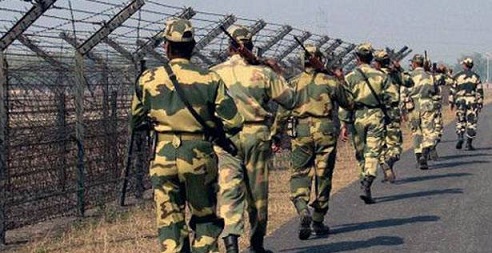
BHUBANESWAR:India’s inter-state borders have become exploitable seams where external actors collude with internal anti-national elements and sleeper cells to fuel disputes, crime, and subversion. An “Inter-Border Security Force (IBSF)” is the urgent need of the time to neutralise these vulnerabilities and transform fragile federal fault-lines into resilient corridors of national security.
The Fragile Seams of Federalism
India’s federal geography is the legacy of colonial cartography, which divided communities, languages, and resources without regard for long-term unity. These lines hardened into administrative boundaries but remain contested and unstable. In the Northeast, recurring clashes—Assam–Mizoram, Assam–Nagaland, Assam–Arunachal—demonstrate how unresolved disputes erupt into violence. In the south and west, linguistic and water-sharing conflicts like the Cauvery and the Maharashtra–Karnataka boundary issue show how quickly resource disagreements escalate.
The problem is compounded because state police forces are not neutral arbiters. They are answerable to state governments and influenced by local compulsions, ethnic solidarities, and political calculations. When disputes flare, this means one state’s police can directly confront another’s, transforming a governance issue into an armed clash. The Assam–Mizoram firefight in 2021, which left civilians dead and policemen facing each other at gunpoint, is emblematic of this structural fragility. The Indian Union currently lacks a neutral federal mechanism capable of managing these internal seams in real time.
When Borders Become Weapons
Inter-state boundaries, instead of acting as neutral demarcations, are repeatedly weaponised in political bargaining. Leaders assert authority through symbolic confrontation, while judicial and political remedies are too slow to prevent escalation. During these delays, extremist outfits, separatist groups, and external actors exploit uncertainty. They insert armed cadres, channel illicit funds, or spread propaganda, converting administrative disputes into security crises.
This phenomenon is not limited to the Northeast. Maoist insurgents in central India routinely exploit the “Red Corridor”, retreating across Chhattisgarh, Odisha, Jharkhand, and Maharashtra to evade jurisdiction. Their mobility is possible because each state’s security operations stop at its border. In effect, inter-state seams become operational sanctuaries for insurgents. Citizens in these belts find themselves doubly vulnerable: first to violence, and second to the absence of impartial enforcement.
Crime and Illicit Economies Along State Borders
Inter-state borders are the lifelines of illicit economies. Liquor smuggling across dry-state borders generates parallel markets and entrenches local patronage networks. Cattle smuggling corridors spanning multiple states sustain illegal slaughter industries that trigger communal flashpoints. Forest products such as tendu leaves, sal seeds, and medicinal herbs are trafficked across boundaries, providing insurgents with vital financing streams.
Illegal mining represents perhaps the deepest structural risk. Coal mafias in Jharkhand–West Bengal, bauxite cartels in Odisha–Andhra, and iron ore smuggling in Karnataka–Goa illustrate how resource theft corrodes governance. The sand mafia, operating across riverine systems like the Yamuna, Narmada, and Godavari, has grown into one of India’s most violent illicit economies. Trucks shift across jurisdictions at night to neutralise enforcement, while mafias attack police, revenue officials, and even journalists. These networks are not localised crimes but systemic challenges to governance and internal security.
Illegal Migration and Demographic Manipulation
Another critical dimension is illegal migration, particularly in border states like Assam, West Bengal, Tripura, Bihar, Odisha and others. Migrants entering through porous international borders often disperse into inter-state border villages where administrative neglect and jurisdictional confusion create “grey zones.” Over time, these settlements alter demographic balances, strain welfare resources, and reshape electoral patterns. Adversarial intelligence agencies exploit such demographic engineering to inflame tensions, creating identity-driven polarisation.
The absence of a neutral federal enforcement presence allows such settlements to go unchecked. State police forces are often reluctant to act because of political considerations or fear of social backlash. An IBSF with biometric verification powers, persistent patrolling, and corridor control would block unchecked migration into disputed or sensitive belts. By doing so, it would prevent small demographic shifts from becoming strategic triggers of instability.
Disasters and Pandemics: Borders as Barriers
The COVID-19 pandemic was a stark illustration of how borders paralyse humanitarian mobility. Migrant labourers were stranded, oxygen tankers were delayed, and trucks carrying medicines were blocked by arbitrary restrictions. Instead of acting as arteries of relief, inter-state borders became choke points that compounded suffering. Natural disasters have repeatedly shown similar fractures: Bihar–UP floods, Odisha–Andhra–Bengal cyclones, Himalayan earthquakes. Relief operations stumble when evacuation routes and supply chains clash with jurisdictional boundaries.
Adversaries use such chaos to their advantage, smuggling narcotics, spreading misinformation, or targeting distressed populations for recruitment. Every disaster act as a stress test, and India’s inter-state borders consistently fail that test.
Narco-Terror and Arms Flows
The Arabian Sea has become the main narcotics gateway. Heroin and synthetic drugs land on Gujarat’s coast and are quickly routed through Rajasthan into Punjab and Haryana. These flows devastate communities through mass addiction while simultaneously creating terror-financing pipelines that sustain extremist recruitment.
The Bay of Bengal littoral sustains arms smuggling pipelines. Consignments landing in Odisha or West Bengal move inland through forests and river corridors into insurgent zones in Nagaland, Manipur, and Assam. Contraband, counterfeit currency, and human trafficking networks land in Kerala, Tamil Nadu, Goa, and Maharashtra before dispersing into metropolitan hubs. These flows succeed because maritime interdiction ends at the shoreline, while inland policing is fragmented by jurisdictional limits. The absence of a bridging force leaves India’s hinterland vulnerable to external pipelines.
Conversion and Subversive Networks
Another layer of exploitation emerges in the form of conversion-driven subversive networks. Financed by extraterritorial sponsors and sometimes camouflaged as NGOs, these operations target vulnerable tribal belts and border populations. The pattern follows a conversion–radicalisation–subversion chain, where communities are not only alienated from mainstream institutions but also co-opted into extremist ecosystems. When linked with narcotics, hawala channels, or illegal migration pipelines, these networks create a hybrid threat ecosystem.
The administrative “blind spots” at inter-state belts—where neither state has full capacity or will to enforce—provide fertile ground for these networks. IBSF patrols, permanent watch posts, and intelligence integration with NIA, ED, and IB would disrupt these pipelines, shielding communities from manipulation. Without such a buffer, external actors will continue exploiting identity and religion as tools of destabilisation.
Technology and Hybrid Threats
Inter-state borders are increasingly exploited by hybrid warfare that combines physical infiltration with cyber-enabled disruption. Drone drops of narcotics, encrypted money transfers, and targeted digital propaganda all converge at weak enforcement points. Static checkpoints and manual policing cannot cope with these complexities.
IBSF would deploy AI-based surveillance grids capable of detecting anomalies in cargo movement, drone patrols with infrared for forest and riverine belts, blockchain-secured cargo tracking to prevent invoice fraud, and BNRI-linked command centres to feed resilience metrics into national planning. This approach shifts enforcement from reactive policing to predictive resilience, turning borders into intelligent security corridors.
Critical Infrastructure, Supply Lines, and Supply Chains
Dams, refineries, power grids, telecom hubs, highways, and freight corridors that straddle inter-state boundaries are vital arteries of national resilience yet remain dangerously exposed during disputes and crises. Water conflicts such as the Cauvery dispute have shown how mobs can target dams, canals, and headworks, paralysing both agriculture and urban supply systems. The COVID-19 pandemic highlighted how oxygen tankers and essential convoys were stranded at state borders, collapsing supply chains when national coordination was most urgent. Beyond emergencies, highways, railways, and riverine corridors serve as conduits for narcotics, counterfeit goods, and contraband, exploited by organised crime and subversive networks that thrive on jurisdictional gaps.
The National Highways Authority of India (NHAI), despite building and managing some of the country’s most strategic road arteries, has no dedicated security cadre of its own. Protection of highways, bridges, and freight corridors remains fragmented between state police and occasional central deployments, leaving critical assets vulnerable during disputes, unrest, or organised criminal exploitation. In this gap, IBSF must serve as the federal security complement to NHAI’s developmental role, ensuring that national highways and freight lines operate not only as engines of growth but also as resilient arteries of security and governance.
An Inter-Border Security Force (IBSF) would thus provide a neutral federal guard over such movement, ensuring that political tensions or local unrest do not paralyse critical infrastructure or strategic supply lines. By securing freight yards, tunnels, and bridges, patrolling industrial belts, and working in integration with the Railways, NHAI, and port authorities, IBSF would guarantee the uninterrupted flow of goods and essentials. With AI-driven monitoring, blockchain cargo tracking, and geo-fenced corridors, the force could create a seamless layer of resilience, ensuring that India’s economic lifelines remain protected against both disruption and exploitation.
The Case for a Neutral Federal Force
The Inter-Border Security Force would fill a precise gap in India’s federal security framework. Its jurisdiction would extend 5–10 km into either side of notified borders, with powers of search, seizure, arrest, and evidence custody, while prosecutions remain under state courts. Its mandate would be to prevent escalation in disputes, guarantee humanitarian corridors, secure economic arteries, and provide continuity between maritime interdiction and inland enforcement.
Its structure would include zonal commands, riverine and coastal wings, counter-drone units, and humanitarian detachments. Its technology stack would integrate ANPR/FASTag, GSTN feeds, blockchain cargo, drone reconnaissance, and IoT monitoring of bridges, canals, and tunnels. Staffing would combine lateral inductions, deputations, and technical specialists. Most importantly, IBSF’s doctrine would emphasise neutrality, “minimal force, impartial protocols, and rights-forward crowd management.”
Closing the Critical Gap
Adversaries no longer need to invade across India’s borders. They exploit the seams within—through narcotics, arms, illegal migration, conversion, cyber manipulation, and disaster opportunism. These seams exist because no neutral force currently manages inter-state boundaries. By establishing IBSF, India would decisively close this gap.
IBSF would prevent disputes from escalating into firefights, dismantle mafias that thrive on sand and minerals, block illegal migration pipelines, disrupt conversion–subversion networks, and guarantee humanitarian corridors in disasters. It would harden economic arteries with technology and ensure maritime-to-inland continuity against narco-terror and arms flows.
India’s sovereignty in the twenty-first century depends as much on securing its internal seams as on defending its external frontiers. By guarding the unseen borders, IBSF transforms fragile lines of division into resilient corridors of governance. It ensures that diversity strengthens unity rather than fragments it, and that the nation’s arteries—water, energy, transport, industry, communication—remain protected even under stress.
Inter-Border Security Force (IBSF) – How It Must Manifest
The IBSF must be created through a dedicated Act of Parliament with a mandate that is precise, limited, and distinct from the functions of state police. Its jurisdiction should cover disputed inter-state belts, disaster-prone corridors, critical infrastructure nodes, illicit economy routes, and maritime–inland continuities. To remain neutral and flexible, IBSF should not evolve into a separate, rigid cadre; instead, manpower must be drawn from existing central armed police forces such as BSF, CRPF, CISF, ITBP, and SSB, supplemented by deputations from state police and induction of technical specialists. This rotational model prevents duplication, ensures diversity of expertise, and sustains operational credibility.
Operationally, IBSF must be intelligence-led, cyber-electronic enabled, and geo-fence controlled. Real-time fusion of intelligence from NIA, IB, ED, NCB, and state agencies should guide deployments, supported by AI-based surveillance grids, counter-drone systems, blockchain cargo tracking, and BNRI-linked resilience dashboards. A specialised cyber-electronic wing should monitor IoT-linked infrastructure, neutralise digital subversion, and manage forensic-ready evidence gathering. Its doctrine must emphasise “minimum force, impartiality, and cooperative federalism”, positioning IBSF as a stabiliser in contested corridors rather than a competitor to state agencies.
A critical dimension lies in protecting national highways, freight corridors, bridges, tunnels, refineries, and ports, which often straddle state lines and remain vulnerable to disruption, intrusion, and sabotage. The National Highways Authority of India (NHAI), despite its developmental role, has no dedicated security cadre, leaving a vacuum that fragmented policing cannot fill. Here, IBSF would function as the external periphery guarding force for critical infrastructure, preventing infiltration, sabotage, or organised disruption. At the same time, it would serve as the federal security complement, linking state police, central forces, and industrial security into a seamless architecture. Integration with Railways, NHAI, port authorities, and existing agencies would ensure that developmental infrastructure is simultaneously secured as a matter of national security.
In essence, IBSF must manifest as a neutral, adaptive, and technology-driven federal buffer, designed to close India’s most dangerous seams without unsettling the federal balance. By drawing manpower from the existing pool of India’s internal security forces, embedding intelligence-led precision, and leveraging advanced cyber-physical tools, IBSF would transform fragile inter-state boundaries into resilient arteries of governance, ensuring that India’s internal cohesion is defended against disputes, illicit economies, and hybrid threats as decisively as its external frontiers are protected.
About the Writer
The author, Dr. Dash is a defense and security expert with a strong focus on India’s evolving security architecture. He writes extensively on politics, diplomacy, and international affairs, while specialising in internal security and critical infrastructure protection. His work bridges policy, strategy, and practice, offering insights that connect ground realities with national resilience imperatives.