



By Our Correspondent
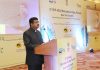
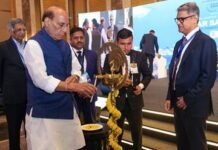
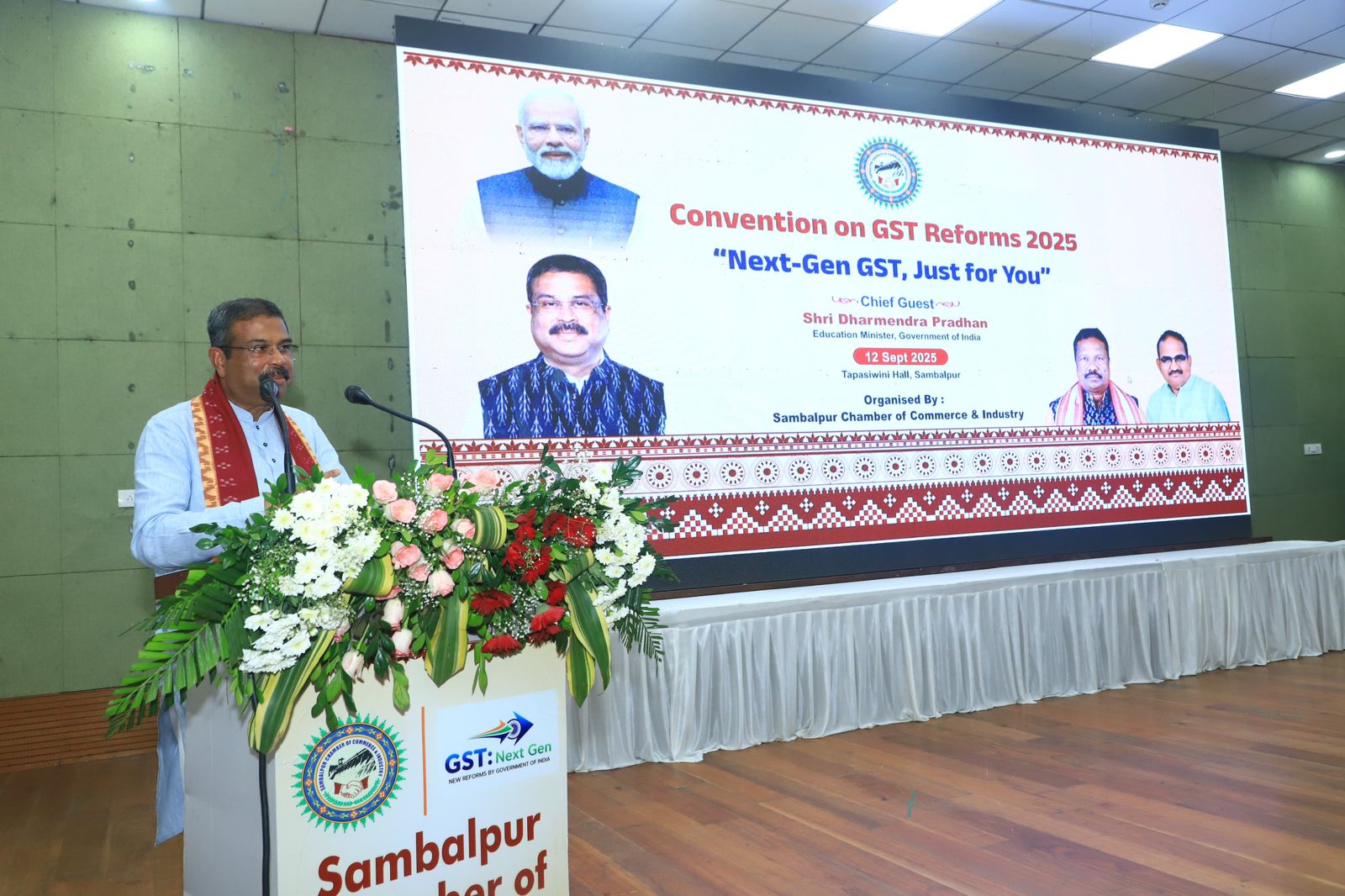
SAMBALPUR: GST Reform 2.0 is a historic decision of the Modi government. The decision taken in the 56th GST Council meeting will benefit the common citizens and strengthen the economy from village to country, said Union Education Minister Dharmendra Pradhan while participating in the “ Convention on GST Reforms – 2025 ” program on GST reform organized by the Sambalpur Chambers of Commerce on Friday.
Through the presentation, Shri Pradhan highlighted the unprecedented changes brought about by the Modi government through simplification of tax procedures and the benefits that will accrue to Odisha. Giving details, Shri Pradhan said that after Prime Minister Narendra Modi took charge in 2014, GST was implemented in 2017. At that time, many intellectuals including columnists criticized Modi’s decision. However, ‘One Nation, One Tax’ in the country was later welcomed by people from all walks of life. The reforms in the GST process and simplification in GST rates under the Modi government will accelerate key economic sectors and usher in a new era of ease of living along with economic growth.
He further said that India has become the world’s fourth largest economy with a GDP of 4.2 trillion US dollars. In the next two to three years, our economy will be 7 trillion US dollars and will be the world’s third largest economy. He further said that to understand the economy, one has to understand exports and imports. In 2013-14, the country’s exports were 466.22 billion US dollars, while today they have increased by 77 percent to 824.9 billion US dollars. India’s economic growth has increased from 6.3 percent to 6.8 percent. Similarly, there were about 4.9 crore investors in the country in 2019. This number has increased threefold in 5 years to 13.2 crore. This is the biggest achievement of the implementation of GST.
He further said that Foreign Direct Investment (FDI) in the country was 36.05 billion US dollars in 2013-14. This figure has doubled to 81.04 billion US dollars. The country’s GDP has tripled from 106.57 billion in 2014-15 to 331.03 billion. The foreign exchange reserves (forex reserves) in our country have increased by 697.9 billion US dollars. Inflation has been controlled. GST collection was 11 lakh crore in 2020, but now it has increased to 22 lakh crore. An average of 2 lakh crore rupees is being collected as GST every month. The credit for this goes to Indian consumers and traders. Recently, a survey conducted by Deloitte showed that 85% of large, micro, small and medium businessmen expressed satisfaction with the implementation of GST. In 2017, 6.7 million traders were covered by GST. This number is expected to increase to 1.5 crore by 2025, which is part of the formalization of our economy and structural reforms.
The Union Minister said that after our country gained independence in 2047, it became a 1 trillion dollar economy in 2007. That is, it took India 60 years to become a 1 trillion dollar economy. Later, the country became a 2 trillion dollar economy in 2014, 3 trillion dollar in 2021 and 4 trillion dollar in 2025. That is, before Modi’s rule, the country became a 2 trillion dollar economy in 67 years of rule and a 2 trillion dollar economy in Modi’s 11 years of rule.
GST 2.0 will make daily necessities like paste and soap cheaper. Starting from school going students, the country’s poor and middle class citizens, farmers, MSMEs, middle class, women and youth will benefit. The GST slab on cotton has been reduced from 18% to 5%. This decision will benefit more than 15 lakh people associated with the cotton industry. GST on cotton has been reduced from 12% to 5% and this will benefit the weavers of Odisha, especially the western parts of the state. GST on coal has been increased to 18%. Odisha will benefit especially from this.
Odisha being an agricultural state, the proposed step to reduce GST on various agricultural equipment such as sprayers, harvesting equipment, tractors and their tyres and raw materials used for fertilizers will reduce the financial burden of farmers and reduce the cost of agricultural production. A decision has been taken to make the registration process simpler and easier for small and start-up entrepreneurs. The decision not to levy tax on health and life insurance related services is a welcome one. Medicines, dairy products and many other items used by the common man, including food, have been exempted from GST. This reform will bring about a major change in the education sector of the country. While the formal education sector (schools and universities) was earlier exempted from GST, now various education-related services, books and learning aids, etc. have been exempted from GST. This will boost India’s growth, control inflation and accelerate the ease of living. Circular economy will get a big boost. Shri Pradhan expressed gratitude to the Prime Minister, the Union Finance Minister and the GST Council for this historic decision.
Shri Pradhan further said that a record amount of rice is being produced in Odisha. A market has to be created for this. Arrangements will be made to export rice to foreign countries. Similarly, Shri Pradhan expressed his views towards making Sambalpur a new age economy and highlighted the need to promote local products, especially Sambalpuri sarees, clothes, agricultural products under the Sambalpuri brand.
State Panchayati Raj and Drinking Water Minister Ravi Narayan Naik and Sambalpur MLA Jai Narayan Mishra were prominent participants in the event.