


By Our Correspondent
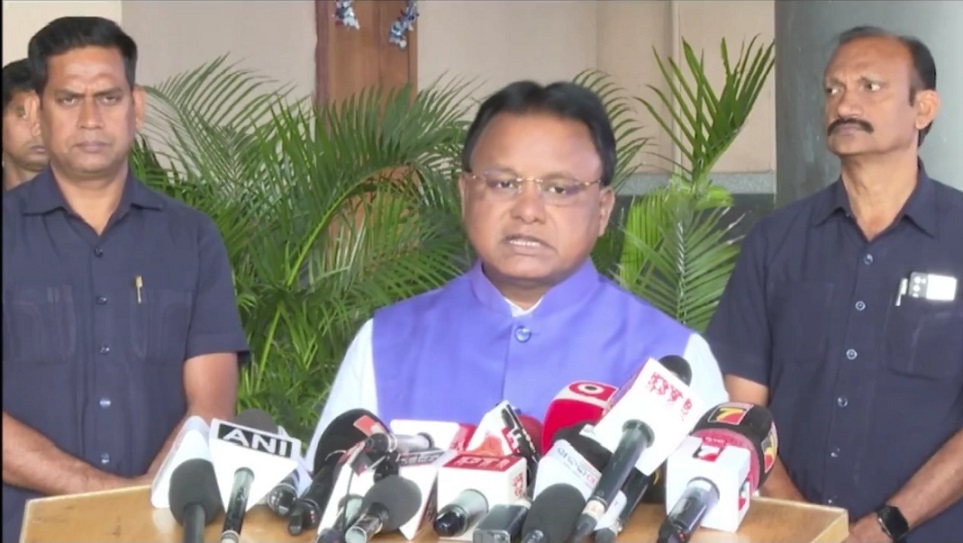
BHUBANESWAR: Freebies offered by Odisha Chief Minister Mohan Charan Majhi led BJP Government may face judicial scrutiny after Supreme Court agreed to hear a PIL challenging the practice of Political Parties promising or distributing “Irrational Freebies” from Public Funds before Elections.
This development came when a bench led by Chief Justice Surya Kant (and Justice Joymalya Bagchi) accepted the plea for listing after it was mentioned by petitioner-advocate Ashwini Kumar Upadhyay.
The Apex Court will hear a PIL in March 2026 on “irrational freebies” promised by political parties during elections to win power. CJI Suryakant said “This is an issue of paramount importance and serious public interest” while responding to Petitioner Ashwini Upadhyay , who argued “Only the sun and moon are left to be promised”
This move came as wake up call for BJP in Odisha which banks on freebies. Potential Impact on the Odisha Government (Led by CM Mohan Charan Majhi) Odisha’s BJP-led government has rolled out several welfare schemes since mid-2024, many involving direct financial aid, subsidies, or free provisions (often labeled “freebies” in political debates).
Key ones include:
Subhadra Yojana — Cash transfers to over 1 crore women (e.g., phased installments of Rs 5,000–Rs 10,000 via DBT).
Mukhyamantri Kanya Bibaha/Vivah Yojana — Rs 60,000 marriage assistance per eligible bride (including cash and gifts).
Additional free rice distributions (like 5 kg extra per month to poor families in select districts).
Free Mahaprasad for pilgrims in Puri.
Continued/expanded interest-free loans to SHGs, health coverage under rebranded schemes, etc.
These are targeted at women empowerment, poverty alleviation, food security, and cultural support—often framed as welfare rather than “irrational” giveaways.
How the SC hearing could affect Odisha:
Direct impact unlikely in the short term — The PIL primarily targets pre-election promises/manifestos that influence voters unduly. Odisha’s assembly elections were in 2024 (BJP won), and the next are years away (2029). Current schemes are post-election implementations or continuations, not fresh poll promises. The SC has previously (like, in 2013 Subramaniam Balaji case) upheld welfare schemes if they don’t corrupt the electoral process.
Overall, the March 2026 hearing is more about setting guidelines for future elections than disrupting ongoing schemes immediately. Outcomes could range from status quo (if SC defers to legislature/ECI) to stricter regulations (like requiring parties to disclose funding sources or fiscal viability of promises). For Odisha, it might encourage more transparent, targeted welfare in the long run, but major disruptions seem low unless the court takes a hard line against DBT-style transfers.
Broader fiscal and policy pressure — If the SC rules against “irrational freebies” (e.g., defining criteria, mandating fiscal impact disclosures, or empowering ECI to regulate), it could scrutinize high-expenditure DBT-heavy schemes. Odisha has seen rising subsidies (per CAG/RBI data trends), and critics might argue schemes like large-scale cash to women strain budgets without long-term productivity gains.
Political angle — The Majhi government positions these as empowering (e.g., creating “Lakhpati Didis”) rather than populist. A restrictive SC guideline might force future governments (including Odisha’s) to justify schemes better (e.g., via sustainability assessments) or shift toward conditional/productive aid.
No Odisha-specific mention — The PIL is national/general, not targeting any state. Odisha isn’t singled out in recent reports on this PIL. Past SC observations have noted states like Odisha for subsidy rises, but emphasize distinguishing welfare from vote-buying largesse.
Key Details of the PIL:
The petition seeks directions to the Election Commission of India (ECI) to seize election symbols or deregister political parties that promise or distribute such “irrational freebies.”
It argues that these promises unduly influence voters, disturb the level playing field, vitiate the purity of the electoral process, and amount to bribing the electorate at public expense.
The court described the issue as one of “paramount importance” and “public interest,” suggesting it may be heard by a larger (for example three-judge) bench.
This builds on earlier hearings in related pleas (dating back to 2022), where the SC has expressed concerns about freebies leading to fiscal strain, creating dependency, and potentially hindering development—while distinguishing them from legitimate welfare investments for marginalized sections. The hearing is set for March 2026 (exact date not specified yet), and no final judgment has been issued
The Odisha government under Chief Minister Mohan Charan Majhi (who assumed office in June 2024 after the BJP’s victory) has focused on welfare schemes, many of which involve direct financial assistance, subsidies, or free provisions—often referred to as “freebies” in political discourse. These build on manifesto promises (like the Subhadra Yojana for women) and include new launches, continuations, or rebranded initiatives from prior schemes.
Here are the key notable welfare-oriented schemes and announcements with “free” or heavily subsidized elements:
Subhadra Yojana (Flagship Women’s Empowerment Scheme)
This is one of the most prominent schemes launched and implemented by the Majhi government. It provides financial assistance to eligible women (economically vulnerable, aged roughly in the working group). Beneficiaries receive installments (like Rs 5,000 or ₹10,000 per phase) via Direct Benefit Transfer (DBT). Over 1 crore (10 million) women have benefited, with disbursements of thousands of crores (e.g., Rs 5,000 crore to 1 crore women in one phase, additional phases for pending/new beneficiaries). Aims at economic independence, entrepreneurship, and has been highlighted for creating “Lakhpati Didis” (women with high income potential). Rolled out in phases since late 2024/early 2025, with massive coverage.
Mukhyamantri Kanya Bibaha / Vivah Yojana (Marriage Assistance Scheme):
Launched in early 2026 (or late 2025) to support poor families with daughters’ marriages. Provides Rs 60,000 per eligible bride (brides aged 18–35, grooms 21–35, Odisha residents). Breakdown: Rs 45,000 directly to bride’s bank account + Rs 15,000 for wedding expenses. Includes traditional gifts (saree, bangles, household items) and promotes mass weddings, widow remarriage, and anti-dowry practices. Budget: Over Rs 59 crore over 5 years (2025–26 to 2029–30). Launched with mass ceremonies ( at temples like Maa Taratarini).
Free / Additional Rice Distribution:
In August 2025, CM Majhi announced 5 kg additional free rice per month for 3 months to about 27 lakh (2.7 million) poor families in 11 districts (including KBK regions like Boudh, Gajapati, Kandhamal). Provided under Garib Kalyan Anna Yojana (in addition to regular PDS rice). Aimed at supporting vulnerable families during lean periods, with a cost of around Rs 180 crore.
Free Mahaprasad Scheme (Shree Jagannath Darshan Yojana):
Announced in the 2025–26 budget (February 2025). Provides free Mahaprasad (sacred cooked food from Lord Jagannath Temple) to devotees visiting Puri for darshan.
Part of efforts to enhance pilgrimage experience.
Other Welfare and Support Measures
Gopabandhu Jana Arogya Yojana (GJAY): Rebranded/continued universal health coverage scheme (integrated with Ayushman Bharat), offering cashless treatment—effectively “free” healthcare up to certain limits.
Interest-free loans to women’s Self-Help Groups (SHGs) under Mission Shakti: Continued and expanded (like Rs 126 crore to thousands of groups in some districts), up to Rs 10 lakh per group with zero interest.
No widespread announcements found for free electricity or free water (unlike some other states’ populist promises). Focus has been more on women, marriage, food security, health, and targeted aid. Several prior schemes were renamed (like from “Biju” prefixed to neutral/national names) but many welfare benefits continued or enhanced.
These initiatives emphasize women empowerment, poverty alleviation, and cultural/religious support. Many are DBT-based for transparency. For the latest eligibility or status, check official Odisha government portals (like CMO Odisha or scheme-specific sites). Note that “freebies” critiques often arise in politics, but these are presented as targeted welfare by the government.