









By Our Correspondent
BHUBANESWAR: Focus on integrated care, creation of supportive environment at the work place and proper health policies for all could bolster the battle against diabetes, experts said on Friday.
“The problem today is that Type 2 diabetes is found in even school children who are found to be obese. The need is to intervene early as treating the diabetic persons alone will not help in this battle,” Prof. (Dr.) Anoj Kumar Baliarsinha, former Head of the Department of
Endocrinology at the SCB Medical College and Hospital at Cuttack, said.
The incidence of diabetes in the world is said to be 589 million of which India accounts
for 107 million patients, Prof. (Dr.) Baliarsinha said while speaking at a program organised to mark the World Diabetes Day at the Institute of Medical Sciences and SUM Hospital here.
The incidence of persons with diabetes in India is about 10.2 per cent of the urban
population while it accounts for 7 per cent of the rural population while Pakistan has the
highest prevalence at 37 per cent, he said adding the known incidence of the medical
condition is only the tip of the iceberg.
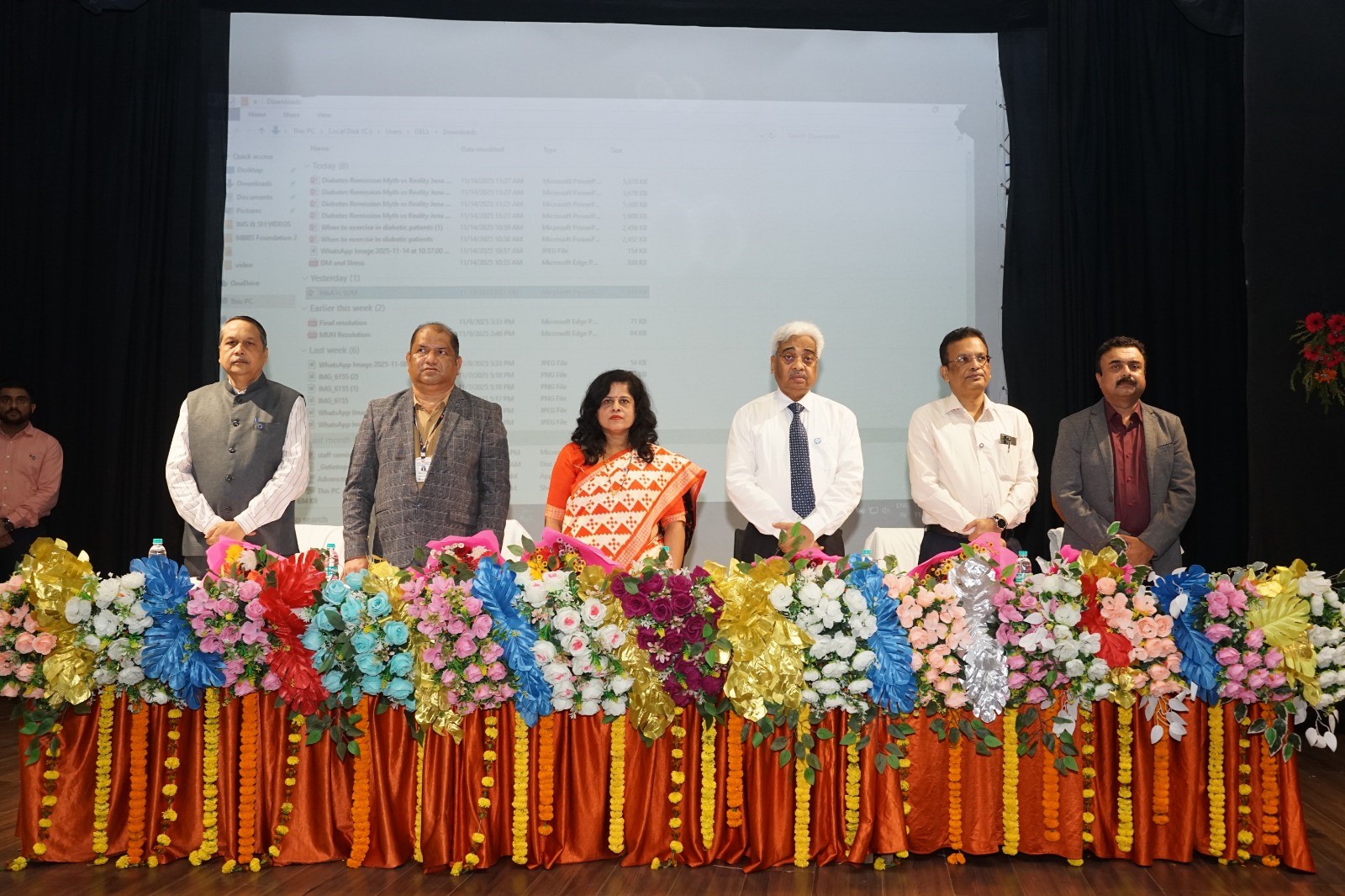
The program, which included a walkathon earlier in the day to spread awareness about
diabetes, was also addressed by Prof. (Dr.) Sanghamitra Mishra, Dean of IMS and SUM
Hospital, Prof. (Dr.) Pusparaj Samantasinghar, Medical Superintendent, Prof. (Dr.) Lalit
Meher, medicine specialist, Prof. (Dr.) Jayabhanu Kanwar, Head of department of
Endocrinology and Prof. (Dr.) Samir Sahu, Head of department of medicine in the hospital.
The World Diabetes Day is observed on November 14 to commemorate the birthday of
Sir Frederick Banting who was awarded the Nobel Prize for discovering insulin which
revolutionized treatment of diabetes.
Prof. (Dr.) Baliarsinha said that the treating doctors should have adequate knowledge
about the patients under their care. “In only 10 per cent of clinics, the foot of the diabetic
person is examined which can reveal the manifestation of the disease,” he said.
Prof. (Dr.) Mishra stressed on adoption of a holistic approach to tackle diabetes while
pointing out that adolescent diabetes had emerged as a problem today. The National
Medical Commission was emphasizing on preventive and promotive health care, she said.
Prof. (Dr.) Samantasinhar said awareness was needed at every level in the battle
against diabetes.
“Diabetes is a challenge and is the leading cause of cardiovascular diseases, kidney
failure and eye damage and the efforts made so far to battle this health condition has not
yielded the required result,” Prof. (Dr.) Meher said.
Prof. (Dr.) Kanwar said prevention was the only way to combat diabetes and the
primary goal should be to have a good environment at work place in which the diabetic are
not discriminated against. “It is because of discrimination that many people try to hide their medical condition,” he said. Prof. (Dr.) Sahu said that before insulin was discovered the treatment for the medical condition was starvation in which people were allowed only 150 calories of food per day.