

By Our Correspondent
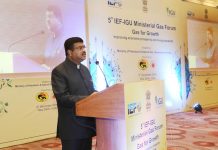
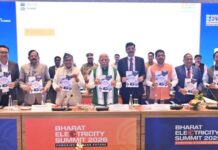
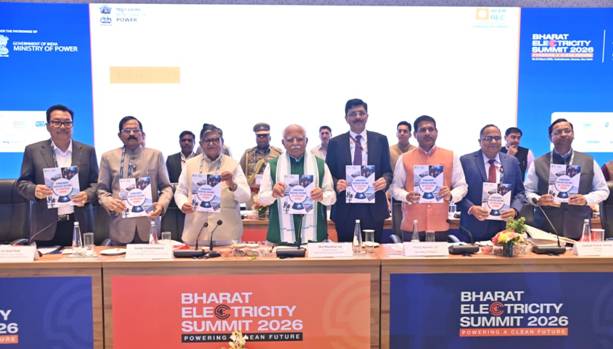
NEW DELHI:A National Power Ministerial Meet was convened on the second day (20.3.2026) of the Bharat Electricity Summit 2026 under the chairmanship of Union Minister for Power, Shri Manohar Lal.
The meeting was co-chaired by Shri Shripad Naik Minister of State for Power and New & Renewable Energy, and attended by Shri Gulab Chand Kataria Administrator of Chandigarh and Punjab, Shri Pankaj Agarwal, Secretary Power, Shri Santosh Kumar Sarangi Secretary (MNRE), and Energy Ministers and senior officials from various States/UTs.
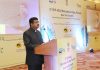
Addressing the gathering, Shri Manohar Lal stated that the BES 2026 will play a crucial role in achieving the vision of Viksit Bharat 2047. Emphasizing that power is fundamental to economic growth and infrastructure, he highlighted India’s achievements of over 520 GW installed capacity, improved DISCOM performance, large-scale smart meter deployment, and reduced power shortages.
He called for coordinated efforts between Centre and States to ensure affordable and efficient power generation, transmission, and distribution. Stressing the importance of energy security amid global uncertainties, he underlined the need to enhance per capita energy consumption and accelerate the transition towards renewable energy. He also noted the potential of nuclear energy as a clean energy source and termed the SHANTI Act a significant step forward.
Shri Manohar Lal assured States of full support from the Centre in implementing necessary reforms, including legal and administrative measures.
Shri Shripad Naik highlighted the role of technology and Artificial Intelligence in transforming the power sector, citing smart metering as a key example. He noted that half of India’s installed capacity is – non-fossil fuel sources and emphasized the importance of the new draft National Electricity Policy that outlines strategies to achieve the vision of Viksit Bharat @ 2047.
The meeting focused on ensuring energy security and enhancing power generation, particularly through on-fossil energy sources. Secretaries of Power and MNRE also stressed the need for collective and coordinated action to meet the country’s growing energy demands.
KEY REPORTS RELEASED
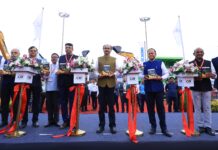
During this meeting two reports for FY 2024-25 were released by Ministry of Power – Consumer Service Ratings of DISCOMS (CSRD) and the Distributing Utilities Ranking (DUR) Report for FY 2024-25.
Consumer Service Ratings of DISCOMS (CSRD) Report
The CSRD evaluates DISCOMs’ performance in consumer service by setting baseline standards and expectations, including prompt and accurate metering and billing, timely and effective grievance redressal and fair, transparent tariff-setting .The CSRD report aims to craft a comprehensive strategy to elevate consumer satisfaction and foster cross-disciplinary learning. It examines a range of consumer centric services, using the Electricity Rules’ service standards for assessing DISCOMs across key areas, and it monitors and evaluates their compliance with
and implementation of these rules.
Based on the submitted data and resulting scores, DISCOMs receive one of seven grades: A+, A,B+, B, C+, C, or D. This tiered grading is intended to stimulate healthy competition and encourage continuous improvements in service quality. Of the 66 DISCOMs evaluated – 6 DISCOMs were rated as A+, 21 were rated A and 27 were rated B+.
DISCOMs’ performance has strengthened, reflected by a higher proportion receiving top grades and more consumers benefiting from improved services, signaling a positive national trajectory. Simultaneously, fewer DISCOMs and consumers fall into the lower bands (C and D), indicating progress at the bottom end of the scale
Distributing Utilities Ranking (DUR) Report
The DUR offers a comprehensive and objective assessment of the performance of power distribution utilities across the country. Building on insights from previous editions, the report goes beyond traditional performance indicators to adopt a multi-dimensional evaluation framework encompassing institutional capability, financial sustainability, operational efficiency, and service delivery outcomes. The DUR initiative aims to contribute to the creation of a financially sustainable, operationally efficient, and consumer-centric power distribution ecosystem, supporting India’s long-term energy transition and development goals. This year total 66 utilities have participated in DUR assessment exercise.