









By Our Correspondent
BHUBANESWAR: Odisha Chief Minister Mohan Charan Majhi Government’s target to complete Kanpur Irrigation Project in Keonjhar in July this year went in vain but Water Resources Department OSD-cum EIC Chandra Sekhar Padhi continues to enjoy Patronage despite Odisha High Court blow .
The failure to complete the project attributed to gross failure of EIC Padhi , who designed this Earth Dam and Er Mahendra Bhuyan who is responsible major Dam Constructions . Recently, CM Majhi, who holds the Water Resources portfolio, extended service of Padhi for another 6 months soon after his retirement in June last this year. High Court already criticised the Government on this issue and issued direction in this regard.
The order of Government in Re-engagement of Sri Chandrasekhar Padhy as OSD-cum-EIC ,Water Resources for six months after retirement has been slammed by High Court in its order dtd 08.07.2025 in WP(C) no 18537/2025 . The High Court reiterated that no retired employee shall get in regular vacant post .
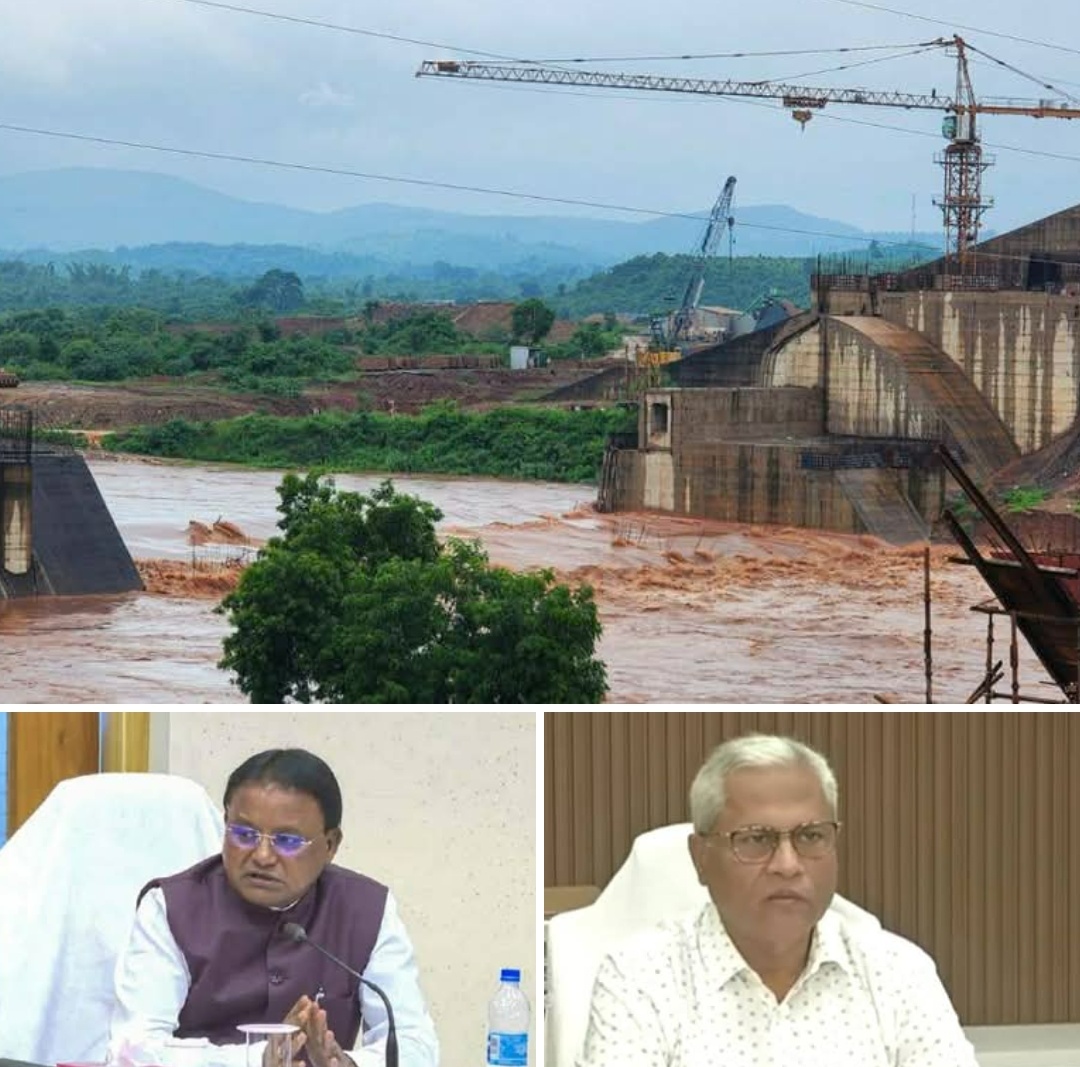
Dam completed and spillway under construction while no water supply yet hitting farmers in Keonjhar, home turf of Chief Minister Majhi. Kanpur Dam is situated across the Baitarani River, near the village Basudevpur in Keonjhar district
The Baitarani River originates from the Gonasika hill in Keonjhar district, flowing over 360 km before merging with the Brahmani river near Dhamara in Bhadrak district, and ultimately draining into the Bay of Bengal. A major dam project at the river’s upper catchment area, near Kanpur under Joda block in Keonjhar district, was commissioned in 1968. The construction began in 1980 and is yet to complete, even though the BJP Government in May this year had reviewed the project through Development Commissioner and Additional Chief Secretary Water Resources , Anu Garg.
Dam’s role in irrigating 13,000 hectares this Kharif season and 29,000 hectares post-completion, now under threat due to delay.
Technical delays in depletion sluice works have disrupted downstream water flow, affecting 10 villages.
Sources said that the dam authorities, without making any alternative arrangements, have stopped the river’s flow and are now building a depletion switch. As a result, the complete cutoff of water is severely impacting both agriculture and industry on downstream of the river. Failure of the Dam reported at 431M level in right side of the spillway
The various components of the project are:
3460 m long and 39.5 m height earth dam across river Baitarani with gross storage capacity of 33,102 Mm3.
213 m long centrally located Ogee type gated concrete spillway to cater to a design flood of 14,450 m3/sec.
12 nos. of redial gates of size 15m x 12m.
280 m long dyke on the left flank.
77.673 km long unlined right main canal with Head discharge of 44.95 m3/sec.
The project was approved by Planning Commission in 2002 at an estimated cost of Rs.428.32 crore (1998 price level) and envisaged irrigation to CCA of 29,578 ha, with annual irrigation of 47,709 ha. The project was started in 1991-92 and the entire project was brought under AIBP in the year 2003-04.
The latest revised estimated cost of the project is for Rs.1067.51 crore (2008 price level), which has been accorded investment clearance by Planning Commission vide letter No. 2(267)/2007 –WR dated 02.12.2009.
Purpose: Primarily for irrigation, serving to provide water to farmland in the region and also moderating flood situations in the Baitarani River basin.
Location: Situated across the Baitarani River, near the village Basudevpur in Keonjhar district.
Construction: The project, initiated decades ago, is the second largest of its kind in Odisha and involves an earthen dam and a canal system for water distribution.
Irrigation Potential: Once fully completed, the dam is projected to irrigate approximately 30,000 hectares of farmland, benefitting numerous farmers.
Completion Target: The Odisha government has set a July 2025 deadline for the completion of the Kanupur Spillway.
Benefits: Besides irrigation, it will also play a role in flood control and potentially provide drinking water to communities in the mineral-rich areas of Odisha.