



By Our Correspondent
BHUBANESWAR: The Nuapada assembly by-election in Odisha was held on November 11, 2025, with vote counting on November 14, 2025. It was triggered by the death of sitting Biju Janata Dal (BJD) MLA and former minister Rajendra Dholakia on September 8, 2025, due to kidney-related issues.
BJP’s loss in this prestige battle raises questions about its dominance in Odisha ahead of 2029 polls, especially in tribal belts. It boosts Congress’s momentum as a viable alternative, while BJD risks further erosion. Voter turnout was robust, reflecting high stakes in this “shifting political alignment.” For BJP, the defeat underscores the need for stronger local alliances and delivery on promises to counter resurgent rivals.
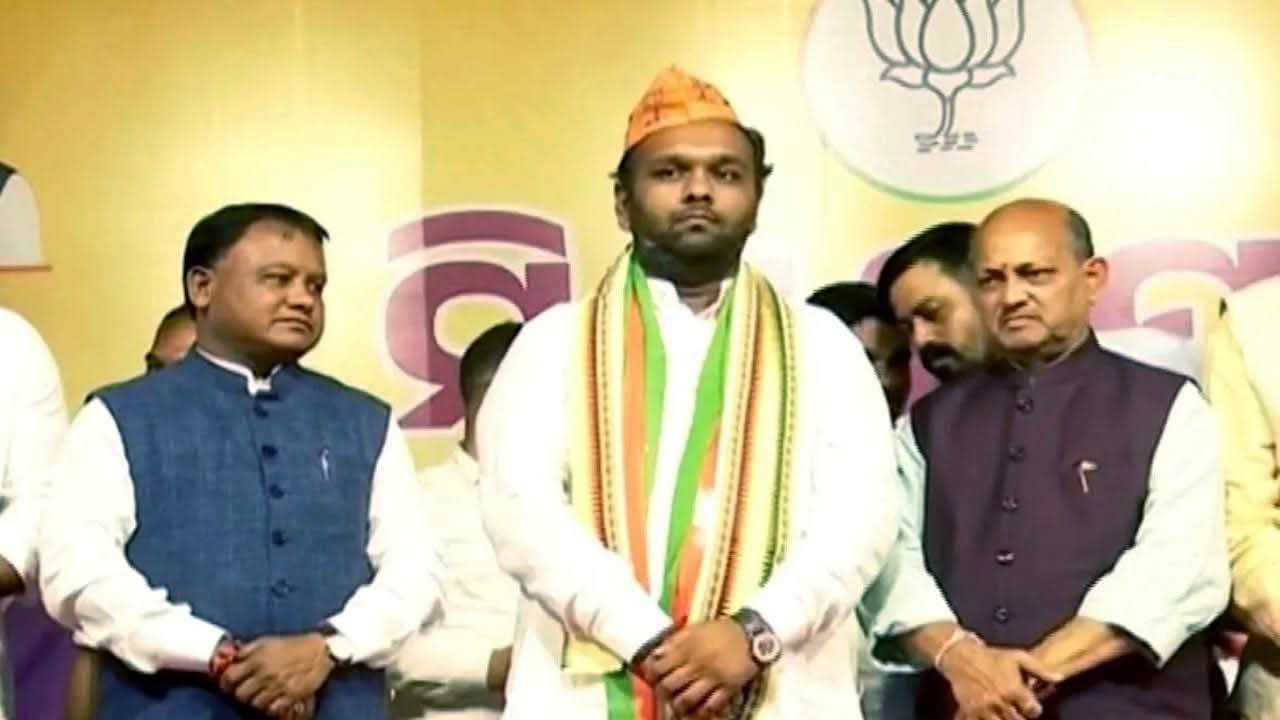
BJP’s decision to field Jay Dholakia, the late MLA’s adopted son who defected from BJD just days before nominations, was widely criticized as opportunistic “horse-trading” and an attempt to hijack sympathy votes. BJD leaders, including Dibya Shankar Mishra, accused BJP of “political corruption” and unethical poaching, calling it a betrayal of local sentiments.
This alienated BJD sympathizers and tribal voters, who viewed it as BJP undermining the legacy of a four-term BJD MLA. Local tribal associations, like Nuapada’s largest one, publicly exposed a “BJP-BJD conspiracy” to defame Congress’s Majhi and extended unconditional support to Congress instead.
The move unified anti-BJP votes, with BJD’s base fragmenting further. Pre-poll buzz on social media highlighted this as a “massive setback” to the BJP-BJD “duo.”
Despite being the ruling party, BJP faced early fatigue after 16 months in power. Voters in tribal-heavy Nuapada prioritized regional identity, development, and welfare—issues where BJP was seen as lagging. Critics noted delays in manifesto promises like enhanced tribal schemes and infrastructure in western Odisha.
As the first post-2024 bypoll, it tested CM Majhi’s leadership. A loss signaled weak grassroots consolidation, with BJP’s 2024 third-place finish (under 40% votes) not improving enough. Local reports described it as a “litmus test” BJP failed due to perceived over-reliance on central leadership rather than local outreach.
Surveys showed BJP’s vote share stuck at 30%, unable to capitalize on ruling-party advantages like “largesse” distribution, which typically favors incumbents in bypolls.
Congress, under state president Bhakta Charan Das, mounted an aggressive campaign, positioning itself as the “true opposition” against BJP’s “arrogance” and BJD’s “surrender.” Over 3,000 BJP-BJD workers, including AAP’s Nuapada VP Arif Baig and several sarpanches, defected to Congress in the final weeks, boosting its machinery.
Majhi, a tribal leader and 2024 runner-up, resonated with voters by highlighting local issues like Naxal-affected areas and development neglect. Support from CPI(M) and tribal groups amplified this. Congress framed the poll as “#NuapadaMaangeNyay” (Nuapada Demands Justice), capitalizing on BJD’s perceived weakness.
Congress’s vote share surged to 53-55%, signaling a potential comeback in Odisha. This polarization hurt BJP, as Congress absorbed anti-BJP/BJD votes that might have otherwise split.
BJD, still reeling from its 2024 defeat (blamed partly on its “bonhomie” with BJP nationally), struggled with internal crises, leadership vacuum post-Naveen Patnaik, and defections. Its vote share plummeted to 15-18%, with voters seeing it as “vanishing” and “no different from BJP.”
Allegations of secret BJD-BJP understanding (e.g., transferring Dholakia to BJP) further eroded BJD’s credibility, pushing its base toward Congress. BJD’s campaign was lackluster, with limited star power from Patnaik.
The triangular fight fragmented opposition votes less than expected, but BJD’s collapse indirectly benefited Congress, squeezing BJP’s space.
BJP faced complaints of violating the Model Code of Conduct, including misusing government property (e.g., posters on electricity poles and highways), which BJD escalated to the Chief Electoral Officer.
While minor, these fueled perceptions of overreach. Tribal voters, comprising a large chunk of the 2.5 lakh electorate, prioritized issues like security in Naxal zones and basic amenities. BJP’s inability to address these, amid 358 polling booths (56 new, including 47 in sensitive areas), amplified discontent.
These factors, combined with high transparency measures like webcasting, ensured a fair but punishing verdict for BJP.
Nuapada is a tribal-dominated constituency in western Odisha, historically a BJD stronghold—Dholakia had won it four times, including in 2024 with 52% vote share (61,822 votes). In the 2024 assembly polls, BJP finished a distant third with about 40,000 votes.
This was the first major electoral test for the BJP-led government under Chief Minister Mohan Charan Majhi, 16 months after BJP ended BJD’s 24-year rule in the 2024 state elections.
BJP’s Jay Dholakia (late MLA’s adopted son, who defected from BJD), BJD’s Snehangini Chhuria, and Congress’s Ghasiram Majhi (a 2024 independent runner-up with 50,941 votes).
Pre-poll surveys suggested Congress leading at 53-55%, BJP at 29-30%, and BJD at 15-18%, reflecting anti-incumbency against BJP and BJD’s declining appeal.
Congress emerged victorious, marking a significant setback for BJP. Below are the key reasons for BJP’s loss, based on analyses from political observers, local reports, and ground-level dynamics.