






By Our Correspondent
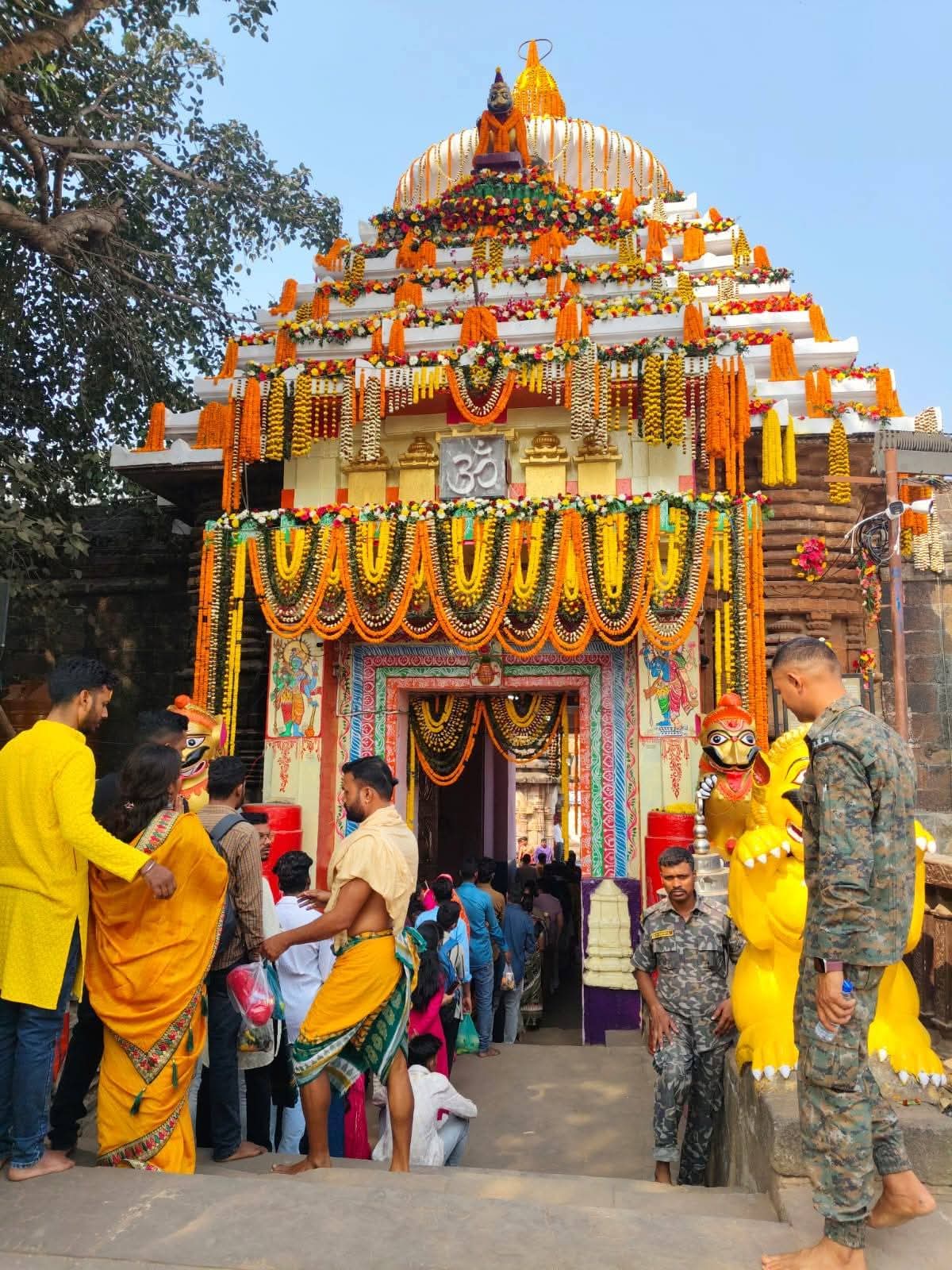
BHUBANESWAR: Today, February 15, 2026, marks Maha Shivratri (also known as Mahashivratri or Jagar in Odisha), a major Hindu festival dedicated to Lord Shiva. At the historic Lingaraj Temple in Bhubaneswar, Odisha—one of the most revered Shiva shrines in the state and often called India’s biggest Mahashivratri celebration—the day is filled with immense devotion, massive crowds, and elaborate rituals.
Key Details and Atmosphere
Massive Devotee Footfall: Lakhs (hundreds of thousands) of devotees have thronged the temple since early morning. The premises, along with the surrounding Bindu Sagar tank, are packed as people perform ritual baths, offer prayers, and seek darshan of Lord Lingaraj (the deity form of Shiva here).
Temple Illumination and Decor: The temple complex is spectacularly lit up with thousands of earthen diyas (lamps) and golden decorations, creating a magical, glowing aura. Drone footage and social media visuals show the entire area bathed in warm golden light, making it a breathtaking sight—often described as the city of temples transforming into a divine spectacle.
Security and Arrangements: Tight security is in place, with over 41 platoons of police and around 200 officers deployed to manage the crowds and ensure smooth celebrations.
Main Rituals and Schedule Highlights (for Today):
The temple opened early at around 3:00 AM for essential rituals like Mangal Alati and Abakasha.
Sahan Mela Darshan (general public viewing) runs from about 3:30 AM through much of the day (up to around 11:00 AM or longer based on flow).
Special Abhishek (sacred bathing of the deity) and other pujas are performed throughout the day.
The highlight of the night is the Mahadeep (or Mahadeepa) ritual: A massive sacred lamp is raised to the top of the temple spire at 10:00 PM. This symbolizes the victory of light over darkness and marks the peak of the vigil. Devotees stay awake (jagar) through the night for prayers and the four Prahar pujas.
Post-Mahadeep, rituals continue with Harihara Bheta, Badasinghara, and Pahuda, concluding around 5:30 AM the next morning.
Devotees observe fasting, chant “Har Har Mahadev” and “Om Namah Shivaya,” and participate in night-long vigils.
There were reports of a brief scuffle among some servitors (temple priests) inside the premises amid the crowds, but it appears to have been minor and resolved without major disruption to the overall celebrations.
The festival emphasizes spiritual awakening, with the temple’s ancient architecture and vibrant energy drawing pilgrims from across Odisha and beyond.
It’s an incredibly auspicious and energetic day in Bhubaneswar—Har Har Mahadev! If you’re in the area or planning to visit, expect large crowds and prepare accordingly.