


By Anurjay Dhal
BHUBANESWAR: A successful BJD-Congress pact would signal emerging Opposition consolidation, potentially extending to Local Body Elections of 2027 or the 2029 Assembly Polls in Odisha, it could embolden smaller parties like CPI(M), CPI to join, challenging BJP’s dominance, If BJD and Congress pool resources for 4th Seat, their combined strength (48 + 14 = 62 MLAs) allows them to secure 2 Seats collectively.
With BJD-Congress Alliance Scenario: If the BJD and Congress pool resources for the fourth seat, their combined strength (48 + 14 = 62 MLAs) allows them to secure two seats collectively. The BJD could allocate 30 votes to its own candidate for the first seat, leaving 18 BJD votes + 14 Congress votes = 32 for a joint candidate (exceeding the quota).
This joint nominee could be a Congress leader, a BJD figure, or even a “distinguished personality” from Odisha, as suggested by Odisha Pradesh Congress Committee (OPCC) president Bhakta Charan Das. The alliance would effectively block the BJP from a third seat, as the opposition’s consolidated votes would minimize transferable surpluses favorable to the ruling party. Additional support from the CPI(M) MLA or opposition-aligned Independents could further solidify this.
Political Context and Feasibility of the Alliance: The scenario of a BJD-Congress tie-up is not mere speculation; it aligns with ongoing political buzz in Odisha as of late January 2026. Both parties are in opposition to the BJP-led state government, which came to power in 2024 after ending the BJD’s 24-year rule. This shared anti-BJP stance provides a strong rationale for coordination, especially in the Upper House where opposition unity could influence national legislation.
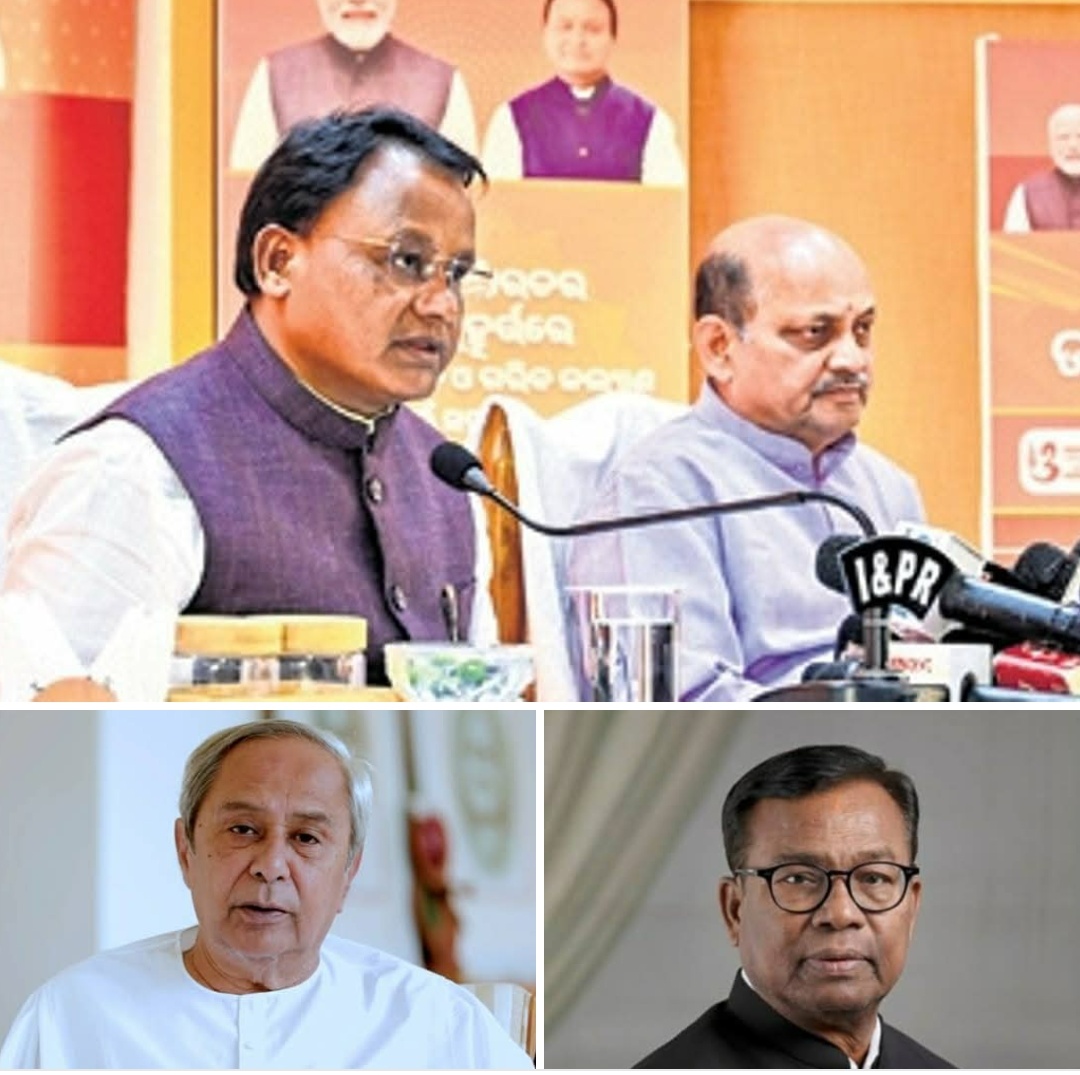
Recent Developments Fueling Buzz: OPCC president Bhakta Charan Das has openly expressed willingness to ally, stating, “We and the BJD are opposition parties. If we unite, a candidate can win.” He has sought a meeting with BJD supremo and Leader of Opposition Naveen Patnaik in early February to discuss “political coordination,” including fielding a joint candidate. This comes amid reports of behind-the-scenes meetings, such as Patnaik’s discussion with former BJD minister AU Singh Deo at Naveen Nivas.On the BJP side, senior leader Dilip Ray (a former Rajya Sabha MP with cross-party ties) met Law Minister Prithiviraj Harichandan, sparking speculation about Ray’s potential candidacy for the BJP. Ray’s history includes winning a Rajya Sabha seat as an Independent in 2002 with BJD support and BJP second-preference votes, highlighting Odisha’s fluid political alliances.
Reasons for Alliance: For Congress, with only 14 MLAs, independent nomination yields no chance of victory, but allying could secure representation in the Rajya Sabha, boosting morale and visibility ahead of future elections. For the BJD, reduced to 48 MLAs after defections (down from 51 post-2024), partnering ensures a second seat without risking internal splits. Broader opposition unity against the BJP—echoing the national INDIA bloc—could prevent the ruling party from dominating the state’s Rajya Sabha delegation (Odisha has 10 total seats). Das has emphasized this, noting the alliance could counter BJP’s “sweep” attempts.
Electoral Mathematics and Seat Allocation: The Odisha Legislative Assembly currently has 147 members, with the following party-wise strength as of January 2026: Bharatiya Janata Party (BJP) with 79 MLAs, Biju Janata Dal (BJD) with 48 MLAs, Indian National Congress (Congress) with 14 MLAs, Communist Party of India (Marxist) (CPI(M)) with 1 MLA, and Independents totaling 5 (3 supporting the BJP-led government and 2 in the opposition).This composition is crucial because Rajya Sabha members are elected by MLAs through a system of proportional representation using the single transferable vote (STV).
For the four seats falling vacant on April 2, 2026 (held by BJP’s Mamata Mohanta and Sujeet Kumar, and BJD’s Munna Khan and Niranjan Bishi),cc657a the quota required to win a seat is calculated using the Droop formula: floor(total valid votes / (number of seats + 1)) + 1. Assuming all 147 MLAs vote (no abstentions or invalid votes), the quota is floor(147 / 5) + 1 = 29 + 1 = 30 first-preference votes per seat.
BJP’s Position: With 79 MLAs (plus 3 supportive Independents, effectively 82), the BJP can comfortably secure two seats by allocating roughly 41 votes to each of two candidates (totaling 82 votes, well above the 60 needed for two quotas). This leaves a remainder of about 22 votes (including Independents) that could be directed toward a third candidate, but alone, this falls short of the 30 needed for a clean win without external support.
BJD’s Position: With 48 MLAs, the BJD can secure one seat by assigning 30 votes to a primary candidate, leaving a remainder of 18 votes. This is insufficient to guarantee a second seat independently, as 48 votes total less than the 60 required for two quotas.
Without Alliance Scenario: The BJP would likely take two seats, the BJD one, and the fourth would become a contest of remainders and transfers under STV. The BJP’s surplus (after securing two) would be around 22, BJD’s 18, Congress’s 14, and the remaining Independents/CPI(M) (about 4 votes) could scatter. In STV, if no candidate reaches the quota initially, lower-ranked candidates are eliminated, and preferences are transferred. Historically, this could favor the BJD’s remainder if they nominate a second candidate and secure transfers from sympathetic Independents or cross-votes. However, the BJP, as the ruling party, might leverage its position to attract defections or second-preference votes from disgruntled opposition MLAs, potentially snatching the fourth seat. BJP Law Minister Prithiviraj Harichandan has publicly stated that the party will field a candidate for a third seat and secure it, indicating confidence in such maneuvers.
Broader Implications:
For Odisha Politics: A successful BJD-Congress pact would signal emerging opposition consolidation, potentially extending to local body elections or the 2029 assembly polls. It could embolden smaller parties like CPI(M) to join, challenging BJP’s dominance. Conversely, if the BJP secures three seats, it would consolidate Chief Minister Mohan Charan Majhi’s control, allowing smoother implementation of state policies.
For National Politics: The Rajya Sabha’s composition is shifting toward the NDA by 2026, with 75 seats (including Odisha’s four) up for election across India. An opposition win in Odisha’s fourth seat would add to the anti-NDA bloc, aiding filibusters or amendments on contentious bills (for example on federalism or economic reforms). If the joint candidate aligns with Congress (part of the INDIA alliance), it strengthens the bloc; if BJD-nominated, the party’s occasional NDA support could dilute this.
In summary, the BJD-Congress alliance for the fourth seat is mathematically viable and politically timely amid anti-BJP sentiment, but its success hinges on negotiations and discipline. The elections, likely in February-March 2026, will test Odisha’s opposition resilience against the ruling BJP’s arithmetic edge.